Estudio de caso de corrección del factor de potencia fotovoltaica distribuida: How an SVG Upgrade Solved Power Factor Penalties in an Industrial Solar Project
As more factories, industrial parks, bonded zones, and logistics facilities install distributed photovoltaic (PV) sistemas, many operators are discovering an unexpected problem after grid connection: their power factor starts to fail utility assessment requirements.
At first glance, this can be confusing. The solar system appears to be working normally. The facility is generating electricity, reducing utility consumption, and lowering energy costs. En muchos casos, the original capacitor bank or reactive power compensation cabinet is still in operation. Yet despite all of this, the site begins receiving power factor penalties or reactive power fines from the utility.
This case shows how one industrial site in Xi’an, Porcelana, solved exactly that issue through a complete SVG reactive power compensation upgrade, combined with meter data mirroring, wireless networking, and remote monitoring.
The result was a significant improvement in system performance, with real-time power factor reaching 0.999 and the accumulated power factor increasing to 0.95, successfully meeting utility assessment standards.
Descripción general del proyecto

Project Name
Distributed PV Power Factor Improvement Project
Location
Xi’an Aviation Base Comprehensive Bonded Zone, Porcelana
Solicitud
Industrial power distribution system with distributed photovoltaic generation
Core Challenge
Low power factor and utility penalties after distributed PV grid connection
The Problem: Why Power Factor Dropped After Solar Installation?
This project took place in a large industrial power distribution system where a 10kV utility supply fed multiple transformers across the site. The system included seven transformers, and Transformer No. 7 was connected to a distributed photovoltaic generation system
Before the PV system was installed, the site already had a conventional low-voltage reactive power compensation cabinet in operation. Under traditional grid-only load conditions, that setup was generally sufficient.
Sin embargo, after the distributed solar system was connected, the customer began facing a new and costly issue:
- The power factor at the utility metering point dropped below the required standard
- The site failed the monthly utility assessment
- The customer incurred repeated reactive power/power factor penalties
- The original capacitor compensation system could no longer respond effectively
- The problem became more severe as PV generation increased
This is a common issue in industrial solar applications, especially when the utility billing and power factor assessment are based on a shared metering point.
Why Distributed PV Systems Can Cause Low Power Factor
To understand the issue, it is important to examine how a distributed PV system alters power flow within a facility.
In a typical self-consumption-with-surplus-export configuration, solar generation is first used by the facility’s internal loads. Only the excess energy is exported back to the grid.
That sounds ideal from an energy-saving perspective, but it creates a challenge for reactive power management.
Here’s why:
A photovoltaic system mainly supplies active power (kW).
But most industrial loads—such as motors, pumps, compresores, admiradores, sistemas de climatización, and production equipment—still require reactive power (izquierda).
So as the solar system output increases:
- The facility draws less active power from the utility
- But it may still require similar reactive power from the grid
This changes the relationship between active power and reactive power at the metering point.
Como resultado:
- The power factor measured by the utility meter decreases
- In some operating conditions, the site may even experience reverse active power flow
- Traditional capacitor-based compensation often becomes unstable or ineffective
This is especially problematic when:
- PV output is close to the facility’s load demand
- PV output exceeds the on-site load, and power is exported
- Load demand and solar generation fluctuate at the same time
Why Traditional Capacitor Compensation Was No Longer Enough
The site originally relied on a conventional step-switching capacitor bank compensation system.
While this type of system is widely used in industrial facilities, it is often not ideal for distributed solar applications.
Main limitations of traditional capacitor banks:
1. Step-based compensation is not precise enough
Conventional capacitor banks compensate in fixed steps rather than continuously. That means they cannot accurately match rapidly changing reactive power demand.
2. Slow response under fluctuating conditions
When solar output and industrial load both change frequently, the compensation system must react very quickly. Mechanical capacitor switching is often too slow for this kind of dynamic environment.
3. Frequent switching shortens equipment life
Under unstable power conditions, capacitors may switch on and off repeatedly. Over time, this can lead to:
- contactor wear
- capacitor degradation
- reduced compensation performance
- cabinet reliability issues
4. Poor adaptability under reverse power flow
When the PV system exports surplus power back to the grid, traditional reactive power controllers may fail to correctly interpret power direction, especially if they are not designed for four-quadrant operation.
For facilities with distributed PV, this often means one thing:
The original reactive power compensation cabinet is no longer designed for the actual operating conditions of the site.
That is why the customer in this project required a more advanced and more flexible solution.
The Solution: SVG-Based Dynamic Reactive Power Compensation
To solve the issue, the project team implemented a complete upgrade centered around the actual utility metering point, rather than only compensating locally at the low-voltage side.
The final solution included four major components:
1. Upgrading the Original Capacitor Cabinets to SVG
The first step was to retrofit the existing 400V reactive power compensation cabinets under three transformers.
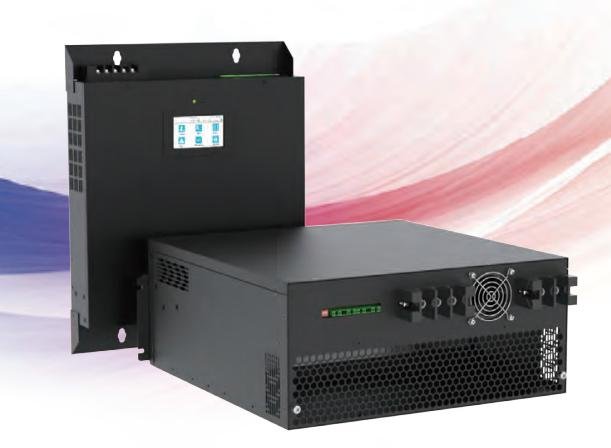
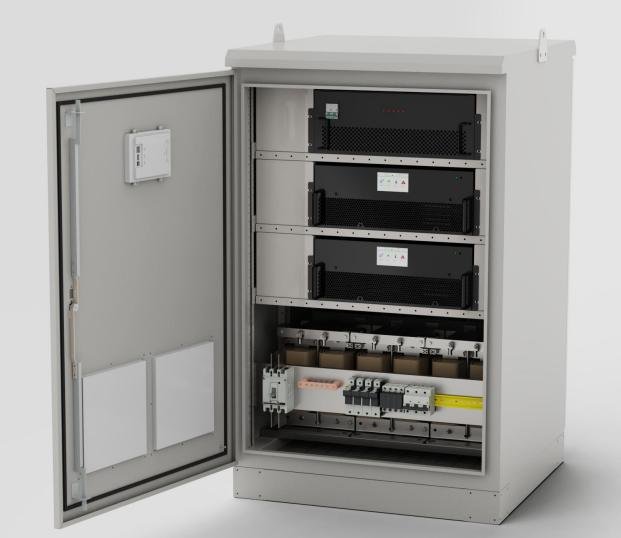
The original capacitor and reactor equipment inside the cabinets was removed and replaced with Static Var Generator (SVG) equipo.
Installed Capacity
- CoEpower SVG 200kVar × 3 sets
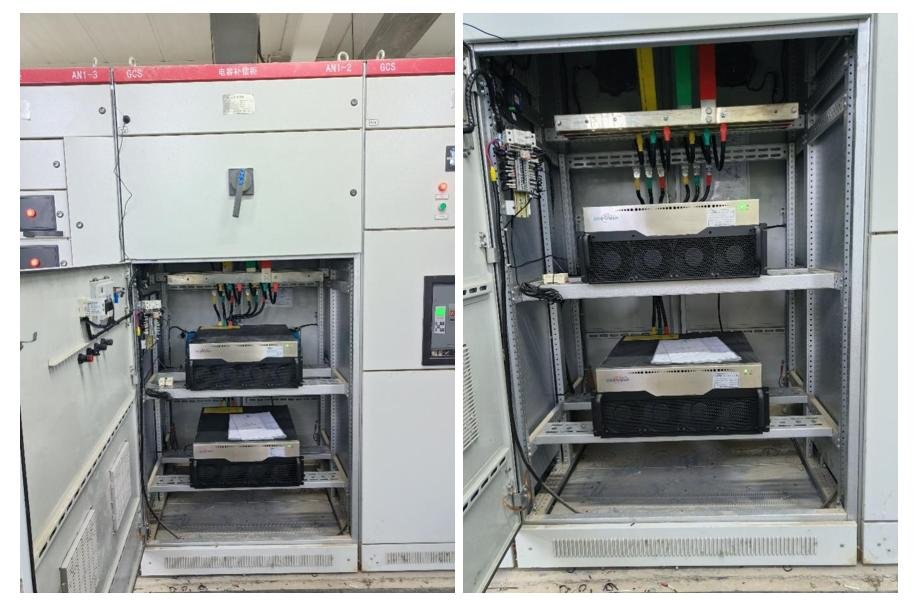
This upgrade dramatically improved the compensation performance of the system.
Unlike conventional capacitor banks, SVG provides:
- continuous dynamic compensation
- respuesta rápida
- high accuracy
- bidirectional reactive power compensation
- better suitability for fluctuating PV environments
En términos simples, SVG can track the system’s reactive power demand in real time and output exactly what is needed, rather than switching compensation in large steps.
That makes it especially effective for:
- distributed solar systems
- unstable load conditions
- industrial facilities with power factor penalties
- sites requiring high power quality performance
Cabinet Retrofit Design for Efficient On-Site Installation
To reduce retrofit complexity and keep installation practical, the original compensation cabinet structure was reused.
The upgrade included:
- ventilation openings on the cabinet front and rear doors
- airflow optimization for front air intake and rear exhaust
- internal support structure for SVG module installation
- preservation of selected original front-door components where appropriate
This type of retrofit is highly valuable for existing industrial sites because it minimizes:
- falta del tiempo
- civil work
- structural changes
- total upgrade cost
For many factory and plant users, this is a more realistic path than replacing the entire cabinet system from scratch.
2. Adding a Multifunction Meter at the Original High-Voltage Metering Position
One of the most important parts of this project was not the SVG itself, but where the compensation data came from.
The customer’s power factor penalties were based on the high-voltage utility metering point, not simply on local low-voltage load conditions.
That meant the compensation system needed to “see” the same electrical behavior that the utility meter was using for assessment.
To achieve this, a new multifunction meter was added.
The meter was installed in parallel with the original high-voltage metering point and used as a mirrored measurement source.
This allowed the system to create a usable real-time data reference without interfering with the original utility meter.
That mirrored data was then transmitted to the SVG compensation control system, enabling compensation logic to be based on the actual assessed metering point.
This is a critical design principle for projects like this:
If the utility is assessing power factor at one point, compensation should be optimized based on that same point.
That is one of the key reasons this project achieved a successful outcome
3. Building a Local Wireless Communication Network with LoRa
The site was divided across eight separate distribution rooms, incluido:
- 1 high-voltage 10kV distribution room
- 7 low-voltage 0.4kV distribution rooms
Because these rooms were physically separated and some communication paths would require outdoor cabling, a conventional wired communication network would have been expensive and inconvenient to install.
So instead of hardwiring everything together, the project used a LoRa wireless networking solution.
Communication structure:
- Local devices communicate through RS485
- Data is collected through LoRa DTU transmission units
- Distribution rooms are connected via LoRa wireless networking
- Data is aggregated and uploaded to the platform
This approach offered several practical benefits:
- reduced cabling work
- easier retrofit in existing industrial sites
- lower installation complexity
- stable communication across separated power rooms
For large facilities, bonded zones, and industrial campuses, this kind of wireless architecture can be far more efficient than rebuilding the site around new communication cabling.
4. Cloud Monitoring for Remote Access and System Visibility
To improve long-term system management, the project also included cloud-based remote monitoring.
All major operating data from the site can be uploaded through a 4G cloud platform, allowing operators to access system information remotely.
This gives both the end user and service provider better visibility into:
- SVG operating status
- metering data
- compensation effectiveness
- system performance trends
For modern industrial customers, remote visibility is no longer just a convenience—it is often a necessary part of efficient electrical asset management.
Final Results: Real-Time Power Factor Reached 0.999
After system installation, communication integration, and full commissioning, the project entered stable operation.
According to the project data, the following values were all aligned and performing correctly:
- SVG internal measurement
- newly added multifunction meter
- original system meter
- background monitoring platform
Final performance results:
- Real-time power factor reached 0.999
- Accumulated power factor reached 0.95 after 15 natural days of operation
This confirmed that:
- sampling logic was correct
- communication was stable
- SVG compensation was effective
- the metering-point-oriented control strategy worked successfully
Most importantly, the site was able to solve its utility power factor compliance issue and eliminate the recurring penalty risk described in the project documentation
This case demonstrates that for distributed solar applications, effective power factor correction often requires more than simply “adding more capacitors.”
En cambio, it may require a smarter system that combines:
- dynamic SVG compensation
- metering-point data logic
- communication integration
- remote monitoring capability
That is what makes this project valuable, not just as a successful installation, but as a repeatable engineering solution.
Recommended Applications for This Solution
A similar solution is especially suitable for:
- industrial factories with rooftop solar
- bonded zones and industrial parks
- logistics and warehouse facilities
- plantas de fabricación
- multi-transformer power systems
- sites with utility power factor penalties
- facilities experiencing low power factor after solar installation
- projects where original capacitor banks no longer perform effectively
If your site has experienced any of the following after installing a distributed PV system:
- power factor dropping unexpectedly
- capacitor banks switching too frequently
- monthly utility penalties
- unstable compensation behavior
- poor power quality after solar integration
then an SVG-based reactive power compensation upgrade may be the right next step.
En conclusión, distributed photovoltaic systems can deliver major energy savings—but they also change the electrical behavior of industrial power systems in ways that traditional compensation methods are often not prepared to handle.
This case from Xi’an demonstrates how a properly designed solution can restore system performance and bring the site back into compliance.
By combining:
- SVG dynamic reactive power compensation
- high-voltage metering data mirroring
- LoRa wireless communication
- cloud-based remote monitoring
the project successfully solved a real-world low power factor problem caused by distributed solar generation.
For industrial users, EPC contractors, system integrators, and power quality engineers, this project offers a practical reference for how to improve power factor in distributed PV systems—not only in theory, but in actual field operation.
Need a Power Factor Correction Solution for Your Distributed PV Project?
If your industrial solar system is causing low power factor, reactive power penalties, or unstable compensation performance, we can help you design a more suitable solution based on your actual metering structure and site conditions.
Contact us to discuss your project, or send us your single-line diagram for technical evaluation.
Etiquetas: distributed PV power factor correction, SVG reactive power compensation, photovoltaic power factor solution, low power factor after solar installation, industrial reactive power compensation, power factor penalty solution, SVG for distributed solar systems, reactive power compensation for PV systems, static var generator project case, Power factor improvement for industrial solar, reactive power compensation cabinet upgrade, distributed solar power quality solution, wireless metering for power factor correction, proveedor, fabricantes, fábrica, compañía, Porcelana, al por mayor, comprar, precio, cotización, a granel, a venta, empresas, existencias, costo.