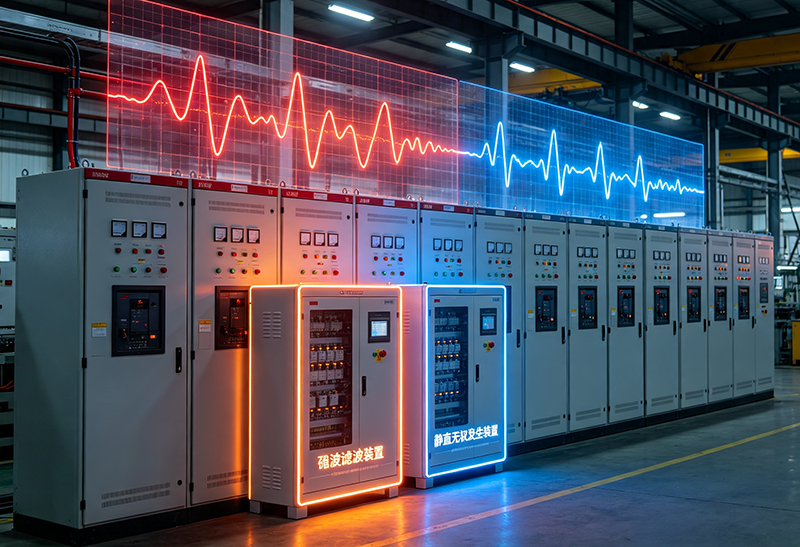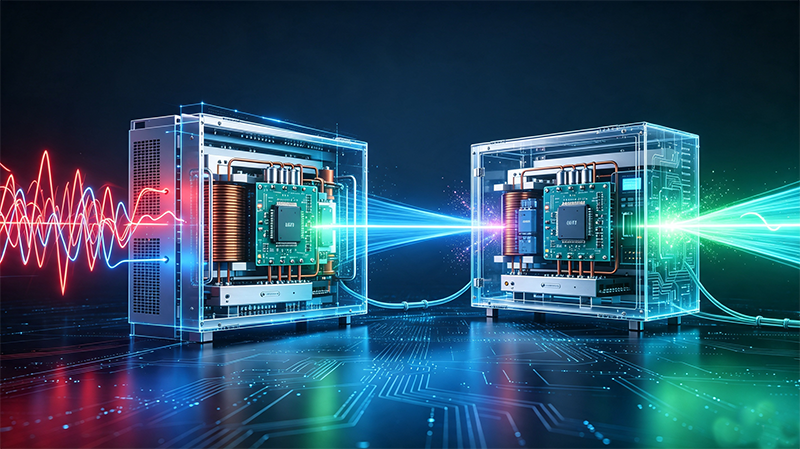
Introducción: Perspectiva de ingeniería sobre la calidad de la energía industrial
Como ingeniero eléctrico senior en CoEpower Electric, He trabajado en numerosos proyectos de calidad de energía industrial en sectores como la manufactura., metalurgia, e infraestructura. Destaca un desafío recurrente: dinámica, cargas no lineales que degradan el rendimiento del sistema.
Este estudio de caso de Xinjiang es un ejemplo de libro de texto.. Una instalación que operaba máquinas de soldadura de armaduras de alta frecuencia enfrentaba un factor de potencia bajo persistente, inestabilidad del transformador, y crecientes multas por electricidad. Ya se habían implementado soluciones tradicionales, pero fracasaron.
Así es como diagnosticamos el problema y diseñamos una solución que arrojó resultados técnicos y financieros mensurables..
Antecedentes de proyectos: Lo que encontramos en el sitio
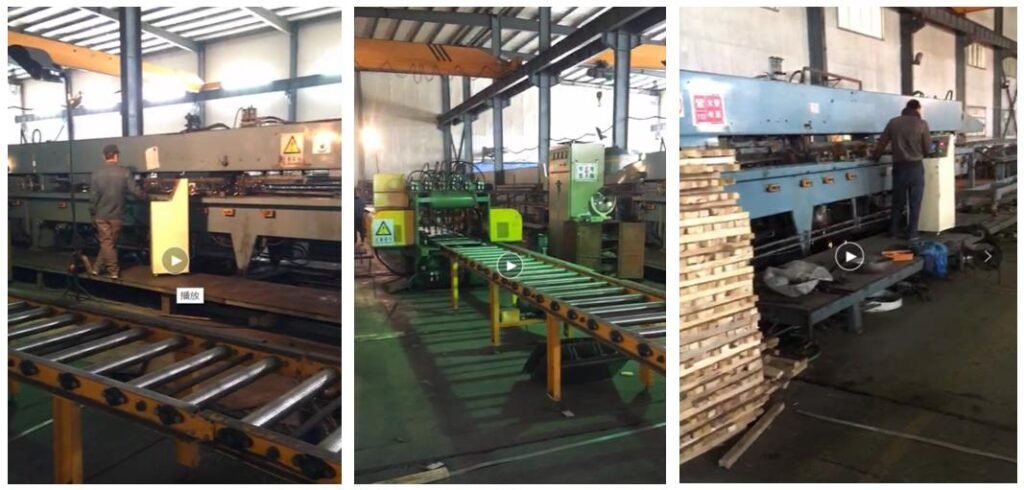
Descripción general de las instalaciones
- Solicitud: Soldadura de armaduras para la producción de estructuras metálicas
- Transformador: 630 kva, 0.4 sistema de baja tensión kV
- Tipo de carga: Máquinas de soldar altamente dinámicas
- Rango de corriente medido: 200Un – 900A
- Ciclo de carga: ~20 ciclos, fluctuación rápida
Problema central
El cliente informó:
- Viajes frecuentes del transformador
- Penalizaciones por factor de potencia
- Comportamiento inestable del sistema
Cuando realizamos mediciones in situ utilizando un analizador de calidad eléctrica FLUKE 430-II, las causas fundamentales se hicieron claras.
Diagnóstico de ingeniería: Por qué estaba fallando el sistema
1. Factor de potencia extremadamente bajo
Factor de potencia promedio medido: 0.6–0,7
Esto está muy por debajo de los requisitos de servicios públicos y resulta directamente en multas..
2. La potencia reactiva era muy volátil
observamos:
- Picos de potencia reactiva que duran menos de 0.5 artículos de segunda clase
- Fluctuaciones de alta frecuencia ligadas a los ciclos de soldadura.
- El banco de condensadores no puede responder en tiempo real
3. Limitaciones del banco de condensadores
El sistema ya contaba con una batería de capacitores instalada.. Sin embargo, desde el punto de vista de la ingeniería, esta solución no coincidía fundamentalmente con el perfil de carga.
Por qué falló:
- Retardo de conmutación mecánica (segundos vs milisegundos requeridos)
- Compensación basada en pasos: no continua
- No hay capacidad para rastrear la variación rápida de la carga
- Riesgo de resonancia y sobrecompensación.
4. Disparos de tensión y protección del transformador
la combinación de:
- Alta corriente reactiva
- Cambios rápidos de carga
condujo a frecuentes disparos de los sistemas de protección de transformadores, afectando la continuidad de la producción.
Diseño de solución: Por qué seleccionamos SVG
Según las características de carga., Recomendé implementar un Generador de var estático (SVG) sistema.
Justificación de la ingeniería
Un SVG es ideal cuando:
- Los cambios de carga son rápidos e impredecibles
- La demanda de potencia reactiva es muy dinámica
- Se requiere compensación de precisión
A diferencia de los bancos de condensadores, SVG funciona utilizando electrónica de potencia basada en IGBT, permitiendo:
- Compensación en tiempo real (<10 respuesta ms)
- Ajuste continuo (no basado en pasos)
- Control estable y preciso del factor de potencia.
Implementación: Lo que hicimos en el sitio
Detalles de instalación
- Modelo: SVG-400/4L-400
- Capacidad: 400 izquierda
- Punto de instalación: Terminal de salida del gabinete de entrada (lado de baja tensión)
Proceso de puesta en servicio
Desde una perspectiva del flujo de trabajo de ingeniería:
1, Medición previa a la instalación
- Datos de calidad de energía de referencia capturados
2, Integración del sistema
- CT instalados para muestreo de corriente en tiempo real
- SVG conectado al sistema de distribución
3, Configuración de parámetros
- Establecer el factor de potencia objetivo
- Estrategia de compensación adaptada
4, Activación paso a paso
- Módulos SVG activados secuencialmente
- Respuesta del sistema monitoreado
5, Validación
- Comparación de tendencias y formas de onda pre/post
Resultados: Mejoras de rendimiento medidas
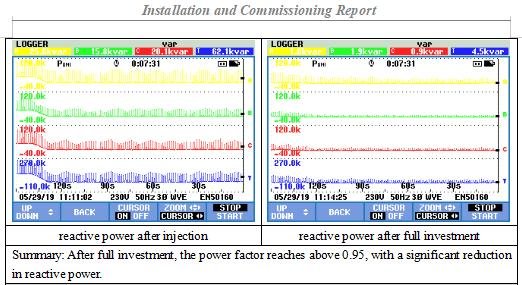
1. Corrección del factor de potencia
- Antes: ~0,65
- Después: ≥0,95 (estable, cerca de la unidad)
Desde una perspectiva de ingeniería, Esto indica una compensación óptima de la potencia reactiva sin oscilación..
2. Estabilización de potencia reactiva
Los datos posteriores a la instalación mostraron:
- Reducción significativa de la potencia reactiva base.
- Fuerte disminución de los picos transitorios
- Comportamiento más fluido del sistema
3. Manejo de carga dinámica
El SVG respondió eficazmente a:
- Cambios de carga en menos de un segundo
- Fluctuaciones del ciclo de soldadura.
Esto es algo que los bancos de condensadores simplemente no pueden lograr..
4. Estabilidad de la protección del transformador
Después del despliegue:
- No más tropiezos molestos
- Estrés térmico reducido
- Fiabilidad operativa mejorada
Impacto financiero: Ingeniería que se amortiza
De los datos de facturación del cliente:
- Antes de SVG: Penalización de potencia reactiva = 9,972.94 RMB
- Después de SVG: Recompensa del factor de potencia = 91.55 RMB
Perspectiva de ingeniería
Este es un caso clásico en el que la mejora de la calidad de la energía se traduce directamente en ganancias financieras..
El retorno de la inversión está impulsado por:
- Eliminando sanciones
- Reducir las pérdidas del sistema
- Mejorar la eficiencia general
Conclusiones técnicas: Lecciones del campo
- Haga coincidir la tecnología con el perfil de carga
Los bancos de condensadores son adecuados para:
- Estable, cargas predecibles
Se requiere SVG para:
- Cambio rápido, cargas no lineales
2. El tiempo de respuesta es fundamental
en este proyecto:
- Los eventos reactivos ocurrieron en <0.5 artículos de segunda clase
- Sólo SVG podría responder lo suficientemente rápido
3. La calidad de la energía es ingeniería a nivel de sistema
Mejorando el factor de potencia también:
- Reduce la corriente RMS
- Reduce las pérdidas en transformadores y cables.
- Mejora la vida útil del equipo
4. Obras de ingeniería basadas en datos
Usando herramientas de medición reales (como los analizadores FLUKE) nos permitió:
- Identificar el verdadero problema
- Validar la solución cuantitativamente.
Dónde se aplica esta solución
De mi experiencia, Este tipo de implementación SVG es muy eficaz en:
- Plantas de soldadura y fabricación.
- Industria siderúrgica y pesada
- Fabricación de automóviles
- Operaciones mineras
- Cualquier instalación con cargas inductivas fluctuantes.
Conclusión: Valor de ingeniería entregado
Este proyecto de Xinjiang es un claro ejemplo de cómo las decisiones de ingeniería correctas (no solo las actualizaciones de equipos) generan resultados..
Implementando una solución SVG, logrado:
- Mejora del factor de potencia de 0.65 a 0.95+
- Eliminación de penalizaciones por potencia reactiva.
- Operación del sistema estable y confiable
- Beneficios económicos inmediatos y medibles
Pensamientos finales del ingeniero
Si estás lidiando con:
- Cargas inestables
- factor de potencia bajo
- Penalizaciones inesperadas
No se limite a añadir más condensadores.
Analice primero la dinámica del sistema.. En muchos entornos industriales modernos, Sólo una solución de compensación dinámica como SVG realmente resolverá el problema..
Etiquetas: Generador de var estático, Caso de proyecto SVG, compensación de potencia reactiva, Corrección del factor de potencia, Calidad de potencia de la máquina de soldar., ahorro de energía industrial, mitigación armónica, Solución CoEpower SVG, Mejora de la calidad de la potencia, banco de condensadores vs SVG, proveedor, fabricantes, fábrica, compañía, Porcelana, al por mayor, comprar, precio, cotización, a granel, a venta, empresas, existencias, costo.