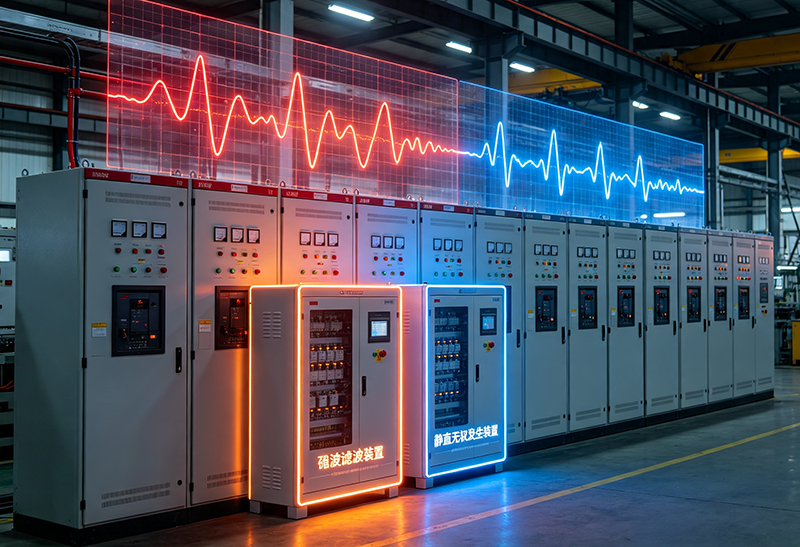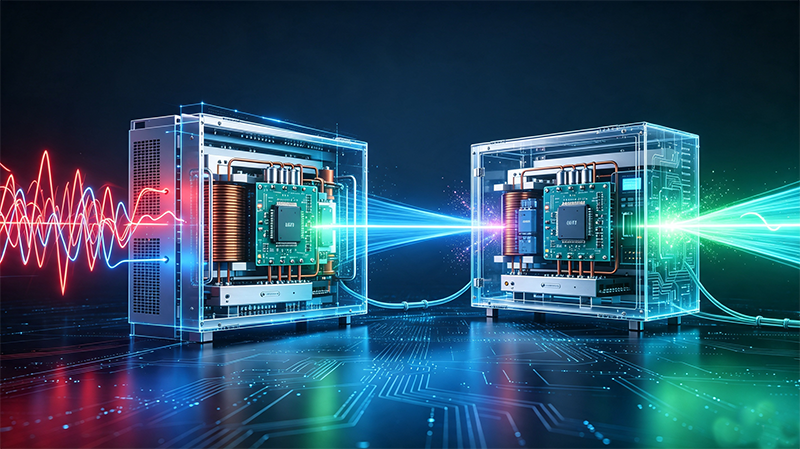
A medida que los sistemas eléctricos industriales se vuelven cada vez más complejos, Mantener la calidad de la energía nunca ha sido más desafiante. Las instalaciones modernas dependen en gran medida de los variadores de frecuencia (VFDS), Sistemas UPS, servoaccionamientos, máquinas de soldadura, EV CARGERS, inversores de energía renovable, y equipos de centro de datos. Si bien estas tecnologías mejoran la productividad y la eficiencia energética, También introducen armónicos., fluctuaciones de voltaje, y demandas de energía reactiva que cambian rápidamente.
Durante décadas, Los bancos de condensadores han sido la solución estándar para la corrección del factor de potencia.. Sin embargo, Muchos ingenieros están descubriendo que los bancos de condensadores ya no son suficientes para los entornos eléctricos no lineales actuales..
Si sus instalaciones están experimentando fallas en los capacitores, transformadores de sobrecalentamiento, viajes molestos del interruptor, o sanciones elevadas a los servicios públicos a pesar de instalar bancos de condensadores, no estas solo.
En este artículo, Explicaré por qué los bancos de condensadores tradicionales tienen dificultades en los sistemas de energía modernos y cómo Generadores de var estáticos (SVG) y Filtros armónicos activos (AHFS) proporcionar un servicio mucho más confiable, inteligente, y una solución preparada para el futuro.
Por qué los bancos de condensadores ya no son suficientes
Un banco de condensadores está diseñado para suministrar potencia reactiva fija o escalonada para mejorar el factor de potencia.. Si bien este enfoque funcionó bien en plantas industriales tradicionales con cargas inductivas relativamente estables, Los sistemas eléctricos actuales se comportan de manera muy diferente..
Las cargas modernas cambian continuamente.
Por ejemplo:
- Unidades de frecuencia variable (VFDS)
- Máquinas CNC
- Líneas de producción robóticas.
- Centros de datos
- Sistemas solares fotovoltaicos
- Sistemas de almacenamiento de energía en baterías.
- Estaciones de carga de vehículos eléctricos
Estas cargas producen corrientes armónicas significativas y demandas de potencia reactiva que cambian rápidamente a las que los bancos de capacitores convencionales simplemente no pueden responder de manera efectiva..
Problemas comunes del banco de condensadores
1. Resonancia Armónica
Una de las mayores preocupaciones con los bancos de condensadores es la resonancia..
Los condensadores interactúan naturalmente con la inductancia de transformadores y sistemas de distribución.. Cuando las frecuencias armónicas coinciden con la frecuencia resonante del sistema, Puede producirse una amplificación armónica peligrosa..
Las consecuencias incluyen:
- Sobrecalentamiento del condensador
- Fusibles del condensador quemados
- Reemplazo frecuente de capacitores
- Sobrecalentamiento del transformador
- Mayor distorsión de voltaje
- Fallos inesperados del equipo
En lugar de mejorar la calidad de la energía, Los bancos de condensadores en realidad pueden empeorar los problemas armónicos..
2. La compensación fija no puede seguir cargas dinámicas
La mayoría de los bancos de condensadores cambian la compensación en pasos.
Por ejemplo:
- 25 izquierda
- 50 izquierda
- 75 izquierda
- 100 izquierda
Sin embargo, La demanda real de potencia reactiva cambia cada segundo..
Este desajuste a menudo conduce a:
- Compensación excesiva
- Subcompensación
- Mal factor de potencia
- Cargos de multa por servicios públicos
- voltaje inestable
Las plantas de fabricación con cargas que cambian con frecuencia se ven especialmente afectadas.
3. Envejecimiento del condensador y corta vida útil
Los condensadores son componentes consumibles..
Los factores que aceleran el envejecimiento incluyen:
- Temperatura ambiente alta
- Corrientes armónicas
- Cambio frecuente
- Sobretensiones
- Sobretensión
Muchas instalaciones se ven obligadas a sustituir los bancos de condensadores cada pocos años., aumento de los costos de mantenimiento y el tiempo de inactividad de la producción.
4. Sin capacidad de filtrado de armónicos
Quizás la mayor limitación es que las baterías de condensadores no eliminan los armónicos..
De hecho, en realidad pueden atraer corrientes armónicas.
Si su distorsión armónica total (Thd) supera IEEE 519 recomendaciones, Los bancos de condensadores por sí solos no pueden resolver el problema..
Los síntomas típicos incluyen:
- sobrecalentamiento del motor
- Zumbido del transformador
- Errores de comunicación del PLC
- Mal funcionamiento del equipo sensible
- Vida útil reducida del equipo
5. Tiempo de respuesta lento
Los contactores mecánicos requieren cientos de milisegundos, o incluso segundos, para conmutar las etapas del condensador..
Mientras tanto, Las cargas industriales pueden cambiar en milisegundos..
El resultado es una compensación retrasada y un factor de potencia inestable..
¿Qué es un generador de var estático? (SVG)?
A Generador de var estático (SVG) es un dispositivo electrónico de potencia avanzado que proporciona compensación de potencia reactiva en tiempo real utilizando tecnología IGBT de alta velocidad en lugar de conmutación de condensadores..
En lugar de agregar pasos de capacitores fijos, un SVG genera continuamente corriente reactiva capacitiva o inductiva según sea necesario.
Piensa en ello como “Compensación inteligente de potencia reactiva.”
A diferencia de los bancos de condensadores, Los SVG ajustan automáticamente la salida cada pocos milisegundos.
Ventajas de SVG sobre los bancos de condensadores
1. Compensación dinámica en tiempo real
El tiempo de respuesta de SVG suele ser inferior a 10 milisegundos.
Realiza un seguimiento continuo de los cambios de carga y mantiene un factor de potencia cercano a la unidad..
Los beneficios incluyen:
- voltaje estable
- Factor de potencia mejorado
- Penalizaciones de servicios públicos reducidas
- Mayor confiabilidad de la producción
2. Sin transitorios de conmutación
Dado que SVG utiliza electrónica de potencia en lugar de contactores mecánicos, hay:
- Sin sobretensiones
- Sin desgaste de contacto
- Sin arcos
- Sin ruido de conmutación del condensador
Esto mejora enormemente la confiabilidad del sistema..
3. Salida de potencia reactiva continua
A diferencia de los bancos de condensadores escalonados, SVG proporciona una salida continua y fluida desde la capacidad nominal negativa a la positiva.
Esto significa:
- Sin sobrecompensación
- Sin compensación insuficiente
- Mayor precisión
4. Vida útil más larga
Sin componentes de conmutación mecánicos, Los sistemas SVG requieren mucho menos mantenimiento.
Hay:
- Sin contactores de condensador
- Mantenimiento reducido
- Mayor confiabilidad
- Vida operativa más larga
¿Qué es un filtro armónico activo? (AHF)?
Un Filtro armónico activo (AHF) Es un moderno dispositivo de calidad de energía que monitorea continuamente las corrientes armónicas e inyecta corrientes de compensación iguales pero opuestas..
Esto cancela efectivamente los armónicos en tiempo real..
A diferencia de los filtros armónicos pasivos, Los AHF se adaptan automáticamente a las condiciones de carga cambiantes sin crear resonancia.
Por qué los filtros armónicos activos superan a las soluciones pasivas
1. Mitigación armónica dinámica
Los AHF detectan armónicos al instante.
Si la fuente armónica cambia cada segundo o cada milisegundo, el filtro ajusta continuamente la compensación.
Esto los hace ideales para:
- Variadores de frecuencia
- Centros de datos
- Hospitales
- Fabricación de semiconductores
- Edificios comerciales
2. Múltiples órdenes armónicas
Los AHF pueden compensar:
- 3tercer armónico
- 5º armónico
- 7º armónico
- 11º armónico
- 13º armónico
- Armónicos de orden superior
Una sola unidad puede abordar múltiples frecuencias armónicas simultáneamente.
3. Sin riesgo de resonancia
A diferencia de las baterías de condensadores y los filtros pasivos, Los AHF no introducen resonancia en la red eléctrica.
Esto mejora significativamente la estabilidad del sistema..
4. Vida útil mejorada del equipo
Reducir la distorsión armónica ayuda:
- Prolongar la vida útil del transformador
- Bajar la temperatura del motor
- Proteger generadores
- Mejore la confiabilidad del UPS
- Aumentar la vida útil del condensador.
- Reducir el calentamiento del cable
Por qué SVG y AHF funcionan mejor juntos
Los sistemas eléctricos modernos rara vez sufren de un solo problema.
La mayoría de las instalaciones enfrentan ambos:
- Problemas de potencia reactiva
- distorsión armónica
La instalación únicamente de bancos de condensadores no soluciona ninguno de los problemas de manera efectiva.
La combinación de SVG y AHF proporciona una mejora integral de la calidad de la energía.
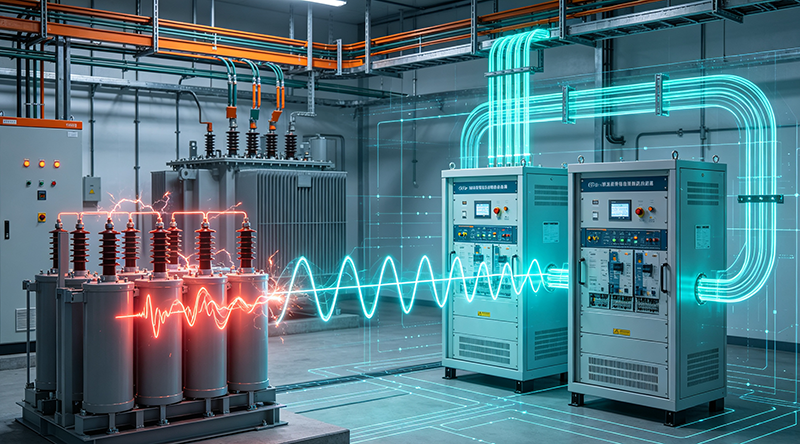
juntos pueden:
- Corregir el factor de potencia cerca de la unidad.
- Eliminar corrientes armónicas
- Estabilizar el voltaje
- Reducir las pérdidas del transformador
- Menor consumo de energía
- Prevenir el sobrecalentamiento del equipo
- Aumentar la eficiencia del sistema
- Prolongar la vida útil del equipo
Esta solución integrada es especialmente valiosa en instalaciones con cargas no lineales que cambian rápidamente..
Aplicaciones típicas
Las soluciones CoEpower SVG y AHF se utilizan ampliamente en:
- Plantas de fabricación
- acerías
- Plantas de cemento
- Instalaciones petroquímicas
- Operaciones mineras
- Plantas de tratamiento de agua
- Centros de datos
- Hospitales
- Edificios comerciales
- Aeropuerto
- Sistemas de tránsito ferroviario
- Instalaciones de energías renovables
- Estaciones de carga EV
Estas industrias requieren estabilidad, confiable, y sistemas eléctricos energéticamente eficientes.
Por qué cada vez más ingenieros están reemplazando los bancos de condensadores
En muchas industrias, Los ingenieros están reemplazando los viejos sistemas de bancos de capacitores con equipos inteligentes de calidad de energía porque necesitan:
- Menores costos de mantenimiento
- Mejor supresión armónica
- Compensación dinámica más rápida
- Mayor factor de potencia
- Mejora de la eficiencia energética
- Tiempo de inactividad reducido
- Cumplimiento de IEEE 519 estándares armónicos
- Mejor compatibilidad con cargas no lineales modernas
El cambio no se trata simplemente de adoptar tecnología más nueva, sino de abordar las limitaciones de las soluciones tradicionales en los exigentes entornos eléctricos actuales..
¿Por qué elegir CoEpower??
En CoEpower, Nos especializamos en soluciones avanzadas de calidad de energía diseñadas para sistemas de energía industriales y comerciales modernos..
Nuestro Generadores de var estáticos (SVG) entrega ultrarrápida, compensación de potencia reactiva precisa, mientras nuestro Filtros armónicos activos (AHFS) Suprime eficazmente la distorsión armónica causada por cargas no lineales.. Juntos, ayudan a mejorar el factor de potencia, reducir las pérdidas de energía, proteger equipos críticos, y mejorar la confiabilidad general del sistema.
Las ventajas clave de las soluciones CoEpower incluyen:
- Tecnología DSP e IGBT de alta velocidad
- Compensación dinámica en tiempo real
- Diseño modular y escalable
- Espacio de instalación compacto
- Monitoreo y comunicación inteligentes
- Fácil integración con sistemas eléctricos existentes.
- Operación confiable en entornos industriales exigentes
- Bajos requisitos de mantenimiento
Ya sea que esté actualizando un sistema de banco de capacitores antiguo o diseñando una nueva red de distribución de energía, CoEpower ofrece soluciones personalizadas adaptadas a su aplicación.
Pensamientos finales
Los bancos de condensadores han servido bien a la industria eléctrica durante décadas, pero la rápida adopción de cargas no lineales ha cambiado fundamentalmente los requisitos para la corrección del factor de potencia y la gestión de la calidad de la energía..
Si sus instalaciones enfrentan fallas recurrentes en los capacitores, distorsión armónica, factor de potencia inestable, o aumentar los costos de mantenimiento, Puede que sea el momento de considerar un enfoque más inteligente..
Generadores de var estáticos (SVG) proporcionar rápido, preciso, y compensación de potencia reactiva de fácil mantenimiento, mientras Filtros armónicos activos (AHFS) elimine los armónicos dañinos antes de que puedan dañar su equipo. Juntos, Crean una solución integral de calidad de energía que mejora la eficiencia., protege activos valiosos, y soporta un funcionamiento fiable en sistemas de energía industriales modernos.
En CoEpower, Estamos comprometidos a ayudar a los clientes a construir productos más limpios., más seguro, y redes eléctricas más eficientes con tecnologías innovadoras de calidad de energía diseñadas para el futuro.
Etiquetas: problemas con el banco de capacitores, falla del banco de capacitores, Filtro armónico activo, AHF, generador de var estático, SVG, compensación de potencia reactiva, filtro armónico, Corrección del factor de potencia, mitigación armónica, reemplazo del banco de capacitores, Calidad de potencia industrial, distorsión armónica, soluciones inteligentes de calidad de energía, proveedor, fabricantes, fábrica, compañía, Porcelana, al por mayor, comprar, precio, cotización, a granel, a venta, empresas, existencias, costo.
Productos relacionados
Blogs relacionados
Obtenga una cotización hoy