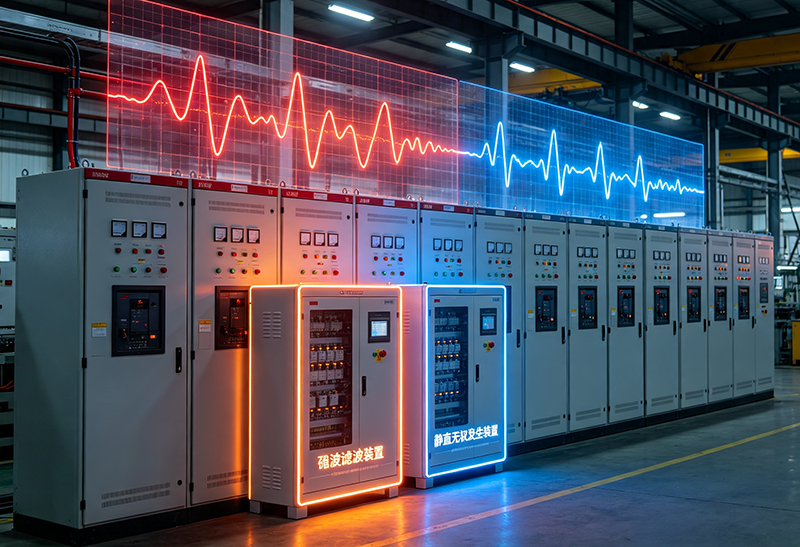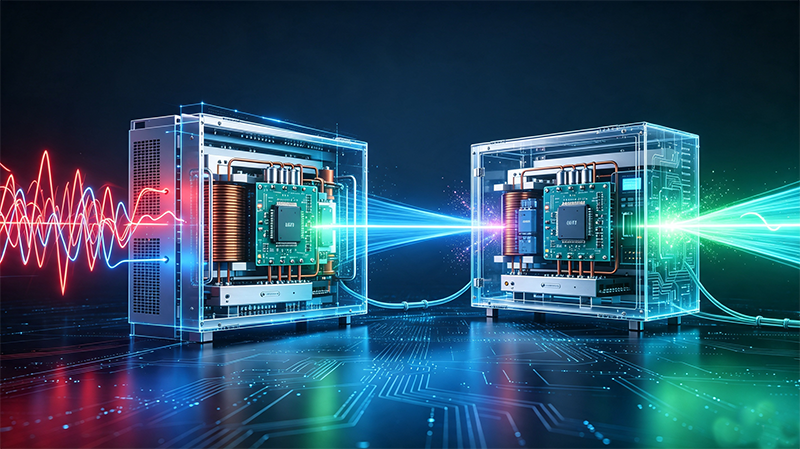
Las instalaciones industriales modernas dependen en gran medida de la electrónica de potencia, Unidades de frecuencia variable (VFDS), servosistemas, Unidades UPS, EV CARGERS, líneas de producción robóticas, y sistemas de energía renovable. Si bien estas tecnologías mejoran la eficiencia y la productividad, También introducen nuevos desafíos en la calidad de la energía que los bancos de capacitores tradicionales ya no pueden resolver de manera efectiva..
Como ingeniero eléctrico senior en Coeperar, Con frecuencia recibo la misma pregunta de los clientes.:
“¿Debemos instalar un Filtro armónico activo (AHF), a Generador de var estático (SVG), o ambos?”
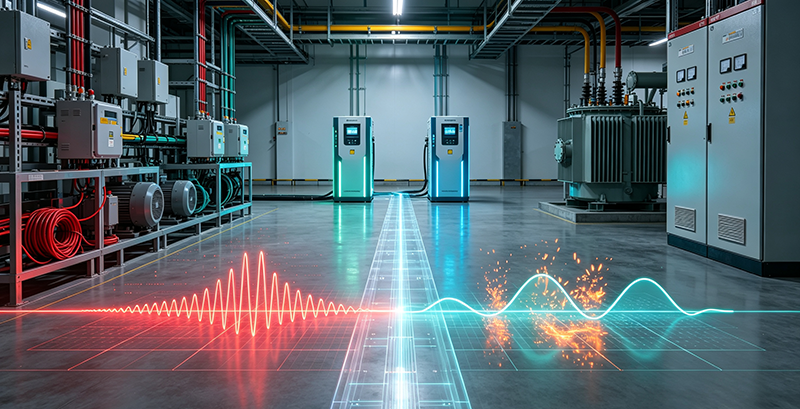
La respuesta depende enteramente de los problemas de calidad de energía presentes en su sistema eléctrico.. Instalar la solución incorrecta puede desperdiciar dinero y no resolver el problema real..
En esta guía, Explicaré las diferencias entre filtros armónicos activos y generadores de var estáticos., como funcionan, sus aplicaciones ideales, y cómo determinar si su instalación requiere uno o ambos.
Comprender los problemas actuales de calidad de la energía
La calidad de la energía generalmente implica cuatro cuestiones principales:
- distorsión armónica
- factor de potencia bajo
- Fluctuaciones de voltaje
- Desequilibrio trifásico
En las fábricas modernas, Estos problemas a menudo ocurren simultáneamente..
Las fuentes comunes incluyen:
- Unidades de frecuencia variable (VFDS)
- Servomotores
- Sistemas UPS
- Máquinas CNC
- Equipo de soldadura
- Centros de datos
- Inversores de energía renovable
- Estaciones de carga EV
- Equipo de imágenes médicas
Estas cargas no lineales generan corrientes armónicas mientras consumen potencia reactiva., lo que resulta en mayores costos de electricidad, sobrecalentamiento del equipo, sobrecarga del transformador, y tiempo de inactividad inesperado.
¿Qué es un filtro armónico activo? (AHF)?
Un Filtro armónico activo (AHF) es un dispositivo electrónico de potencia inteligente diseñado para eliminar corrientes armónicas en tiempo real.
En lugar de utilizar inductores y condensadores pasivos sintonizados a frecuencias específicas, un AHF monitorea continuamente la corriente de carga e inyecta corrientes armónicas iguales pero opuestas en la red eléctrica.
Los armónicos no deseados se cancelan efectivamente antes de que puedan propagarse por todo el sistema de energía..
Funciones principales de un filtro armónico activo
- Eliminar armónicos de orden 2 a 50
- Reducir la distorsión armónica total (Thd)
- Prevenir el sobrecalentamiento del transformador
- Proteger equipos sensibles
- Reducir la corriente del conductor neutro
- Mejorar la confiabilidad del sistema de energía
- Prolongar la vida útil del equipo
Los AHF modernos pueden lograr eficiencias de compensación armónica que exceden 95%, haciéndolos ideales para instalaciones con cargas que cambian rápidamente.
Aplicaciones típicas de filtros de armónicos activos
Los AHF se instalan comúnmente en:
- Plantas de fabricación
- Centros de datos
- Fábricas de semiconductores
- Hospitales
- Edificios comerciales
- Instalaciones de tratamiento de agua
- Aceite & instalaciones de gas
- Plantas de acero
- Operaciones mineras
- Estaciones de carga EV
Estos entornos contienen importantes cargas no lineales que generan armónicos continuamente..
¿Qué es un generador de var estático? (SVG)?
A Generador de var estático (SVG) Es un dispositivo avanzado de compensación de potencia reactiva diseñado para mejorar dinámicamente el factor de potencia..
A diferencia de los bancos de condensadores convencionales, Un SVG utiliza tecnología IGBT de alta velocidad para generar corriente reactiva en adelanto o en retraso instantáneamente según la demanda de carga..
En lugar de esperar a que los contactores cambien las etapas del condensador, un SVG responde en milisegundos.
Esto permite una continua, Corrección precisa del factor de potencia sin sobrecompensación..
Funciones principales de un SVG
Un SVG proporciona varios beneficios importantes:
- Compensación dinámica de potencia reactiva
- Corrección del factor de potencia hasta 0.99
- Estabilización de voltaje
- Reducción de pérdidas de línea
- Mayor utilización de la capacidad del transformador.
- Mejora de la eficiencia energética
- Compensación de cargas inductivas y capacitivas.
A diferencia de los bancos de condensadores, Los SVG no se ven afectados por la resonancia armónica y permanecen estables bajo cargas que fluctúan rápidamente.
Aplicaciones típicas de generadores estáticos de var
Los SVG funcionan excepcionalmente bien en:
- Fabricación de automóviles
- acerías
- Plantas de cemento
- Fábricas textiles
- Puerto
- Aeropuerto
- Parques eólicos
- Plantas de energía solar
- Complejos comerciales
- Grandes sistemas HVAC
Cualquier instalación con cargas inductivas fluctuantes puede beneficiarse significativamente de la tecnología SVG.
Filtro de armónicos activo frente a generador de var estático
| Característica | Filtro armónico activo (AHF) | Generador de var estático (SVG) |
| Función principal | Mitigación armónica | Compensación de potencia reactiva |
| Resuelve armónicos | ✔Excelente | ✘No |
| Mejora el factor de potencia | Limitado | ✔Excelente |
| Estabilidad de voltaje | Moderado | Excelente |
| Respuesta dinámica | <1 EM | <10 EM |
| Elimina la resonancia | ✔ Sí | ✔ Mejor que los bancos de condensadores |
| Mejor para | Cargas no lineales | factor de potencia bajo |
| Beneficio principal | Disminución del THD | Menores cargas de potencia reactiva |
Un error común es que un SVG puede eliminar armónicos..
no puede.
Similarmente, mientras que algunos AHF pueden proporcionar una compensación de potencia reactiva limitada, su objetivo principal es la supresión de armónicos en lugar de la corrección total del factor de potencia..
¿Cuándo debería instalar un filtro de armónicos activo??
Un AHF es la elección correcta si sus instalaciones experimentan:
Alta distorsión armónica
Los indicadores típicos incluyen:
- THDi > 20%
- THDv superior a IEEE 519 recomendaciones
- Viajes frecuentes del interruptor
- Sobrecalentamiento del transformador
- sobrecalentamiento del motor
- Mal funcionamiento del equipo sensible
Grandes cantidades de VFD
Las instalaciones con muchos variadores de velocidad a menudo experimentan una contaminación armónica grave..
Sistemas UPS
Las grandes instalaciones de SAI producen importantes corrientes armónicas.
Centros de datos
Servidores, fuentes de alimentación conmutadas, y los sistemas UPS generan armónicos continuamente.
Líneas de Producción con Electrónica de Potencia
La fabricación automatizada moderna depende en gran medida de inversores y servoaccionamientos..
¿Cuándo debería instalar un generador de var estático??
Se recomienda un SVG cuando:
El bajo factor de potencia aumenta las facturas de electricidad
Las empresas de servicios públicos suelen imponer sanciones cuando el factor de potencia cae por debajo de los niveles requeridos..
Un SVG puede mejorar el factor de potencia cercano a la unidad.
Cargas que cambian rápidamente
Los ejemplos incluyen:
- Grúas
- Ascensores
- soldadura por puntos
- Compresores
- Máquinas de moldeo por inyección
Los bancos de condensadores tradicionales no pueden responder lo suficientemente rápido.
Fluctuación de voltaje
Los SVG proporcionan soporte reactivo dinámico para estabilizar el voltaje.
Fallas del banco de condensadores
Muchas instalaciones reemplazan los bancos de capacitores antiguos con SVG porque los SVG:
- requieren menos mantenimiento,
- eliminar transitorios de conmutación, y
- evitar la degradación del condensador.
¿Cuándo debería instalar tanto un AHF como un SVG??
En muchas instalaciones industriales, Tanto la distorsión armónica como los problemas de potencia reactiva existen simultáneamente..
Los ejemplos típicos incluyen:
- Fabricación de automóviles
- producción de acero
- Fabricación de semiconductores
- Centros de datos
- Plantas petroquímicas
- Fábricas inteligentes
- Estaciones de carga EV
En estos casos, La instalación de ambas tecnologías ofrece los mejores resultados a largo plazo..
Beneficios de un ICA combinado + Solución SVG
Integrando un filtro armónico activo con un generador de var estático, las instalaciones pueden lograr:
- Supresión armónica
- Corrección dinámica del factor de potencia.
- Multas de electricidad reducidas
- Estabilidad de voltaje mejorada
- Temperatura más baja del transformador
- Mayor eficiencia del sistema
- Mayor vida útil del equipo
- Mayor fiabilidad de producción
- Cumplimiento de IEEE 519 y otros estándares de calidad de energía
Muchos gabinetes modernos de calidad de energía integran módulos AHF y SVG en una solución compacta, reduciendo el espacio de instalación y simplificando el mantenimiento.
Por qué los bancos de condensadores tradicionales ya no son suficientes
Durante décadas, Los bancos de condensadores fueron la solución estándar para la corrección del factor de potencia..
Sin embargo, Los sistemas eléctricos actuales son dramáticamente diferentes..
Los bancos de condensadores tienen varias limitaciones.:
- Velocidad de respuesta lenta
- Desgaste de contactos mecánicos
- Riesgo de resonancia armónica
- Pasos de compensación fijos
- Mal rendimiento bajo cargas fluctuantes
A medida que las instalaciones adoptan la automatización, energía renovable, y fabricación digital, Los dispositivos de compensación inteligentes se han convertido en la solución preferida..
Los SVG y AHF proporcionan compensación en tiempo real sin los inconvenientes asociados con los bancos de condensadores convencionales..
Cómo CoEpower ayuda a mejorar la calidad de la energía
En Coeperar, entendemos que cada sistema eléctrico es único. Seleccionar la solución de calidad de energía adecuada requiere más que simplemente elegir un producto: requiere un análisis exhaustivo de su red eléctrica..
Nuestro equipo de ingeniería comienza evaluando parámetros clave como:
- Distorsión armónica total (Thd)
- Factor de potencia
- Perfil de carga
- Carga del transformador
- Fluctuaciones de voltaje
- Demanda de energía reactiva
- Ampliación de capacidad futura
Basado en esta evaluación, Recomendamos la solución más rentable.:
- Filtro armónico activo para mitigación armónica,
- Generador de var estático para compensación dinámica de potencia reactiva, o
- Un ICA combinado + solución SVG para una mejora integral de la calidad de la energía.
Nuestros sistemas cuentan con control DSP avanzado, respuesta dinámica rápida, diseño modular para una expansión de capacidad flexible, y rendimiento confiable en entornos industriales exigentes. Ya sea que su instalación esté actualizando un sistema eléctrico existente o diseñando una nueva instalación, Las soluciones CoEpower ayudan a reducir las pérdidas de energía, mejorar la confiabilidad del equipo, y garantizar el cumplimiento a largo plazo de los estándares internacionales de calidad de energía.
Pensamientos finales
No existe una solución universal para los problemas de calidad de la energía..
Si su instalación tiene problemas principalmente con la distorsión armónica, un Filtro armónico activo es la inversión adecuada.
Si el factor de potencia deficiente y la potencia reactiva fluctuante aumentan los costos operativos, a Generador de var estático Ofrece una solución más eficaz que las baterías de condensadores convencionales..
Sin embargo, Muchas instalaciones industriales modernas experimentan ambos problemas simultáneamente.. En estos casos, La combinación de un AHF con un SVG ofrece el más alto nivel de calidad de energía., confiabilidad mejorada del sistema, costos de energía reducidos, y mejor protección para equipos eléctricos críticos.
A medida que los sistemas de energía industriales se vuelven cada vez más complejos, La gestión proactiva de la calidad de la energía ya no es opcional: es esencial para maximizar la eficiencia., minimizando el tiempo de inactividad, y apoyar operaciones sostenibles.
Preguntas frecuentes (Preguntas frecuentes)
¿Puede un filtro de armónicos activo reemplazar un generador de var estático??
No completamente. Si bien algunos AHF pueden proporcionar una compensación de potencia reactiva limitada, Están diseñados principalmente para eliminar armónicos.. Para una corrección significativa del factor de potencia, un SVG es la mejor solución.
¿Un SVG elimina los armónicos??
No. Un SVG está diseñado para compensar la potencia reactiva y estabilizar el voltaje.. No suprime activamente las corrientes armónicas..
¿Puedo usar un AHF y un SVG en el mismo sistema eléctrico??
Sí. De hecho, Muchas instalaciones industriales se benefician de la instalación de ambos dispositivos para abordar la distorsión armónica y la compensación de potencia reactiva simultáneamente..
¿Son los AHF y SVG mejores que los bancos de condensadores??
Para sistemas eléctricos modernos con cargas no lineales y que cambian rápidamente, Los AHF y SVG ofrecen una respuesta más rápida, mayor precisión, y confiabilidad mejorada en comparación con los bancos de capacitores convencionales.
Etiquetas de palabras clave
Filtro armónico activo, AHF, Generador de var estático, SVG, Mejora de la calidad de la energía, Corrección del factor de potencia, Filtro armónico, Compensación de potencia reactiva, Mitigación armónica, Distorsión armónica total, Reducción, Compensación de potencia reactiva dinámica, Reemplazo del banco de capacitores, Calidad de energía industrial, Soluciones de calidad de energía eléctrica, Ieee 519 Cumplimiento, Equipos de calidad de energía, Coeperar, Calidad de energía de fábrica inteligente, Eficiencia energética, Estabilización de voltaje, proveedor, fabricantes, fábrica, compañía, Porcelana, al por mayor, comprar, precio, cotización, a granel, a venta, empresas, existencias, costo.
Productos relacionados
Blogs relacionados
Obtenga una cotización hoy