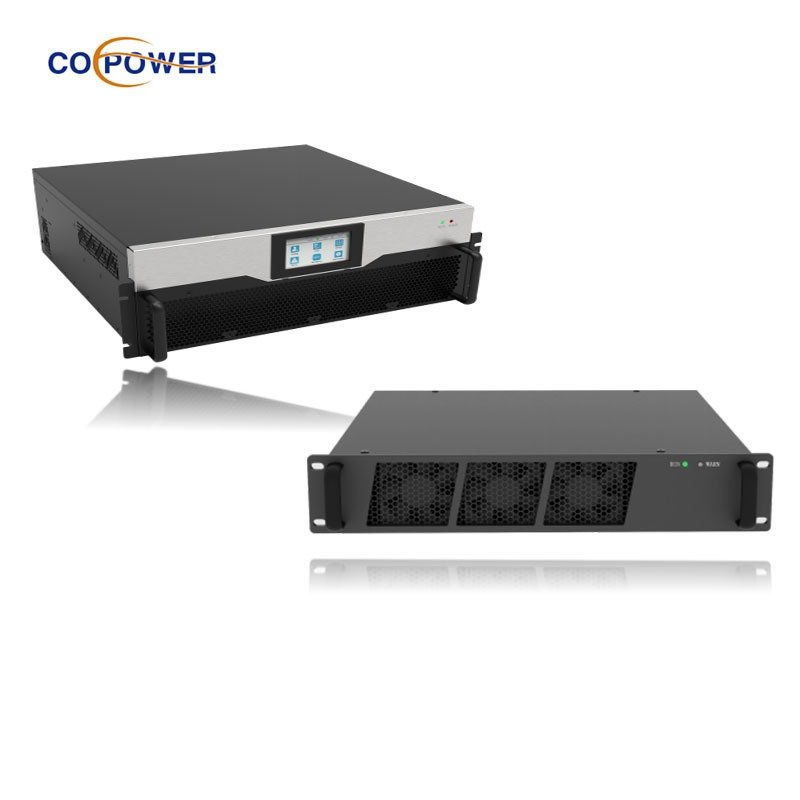
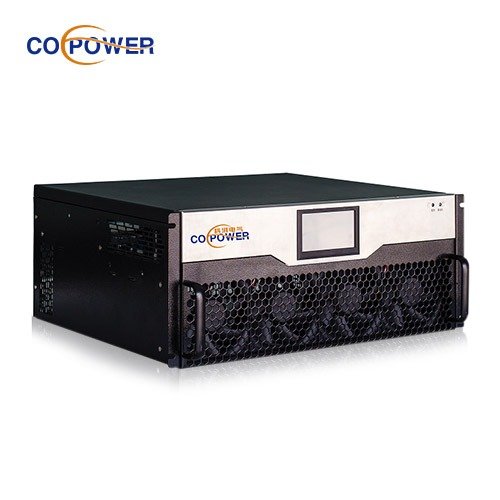
As a professional power quality solutions manufacturer, CoEpower hat entworfen, Herstellung, and deploying Active Harmonic Filters (Ahfs) for industrial and commercial power systems worldwide. Through thousands of field installations across manufacturing plants, Rechenzentren, Krankenhäuser, und kommerzielle Gebäude, one design principle has proven consistently effective:
Single-module AHF current ratings between 30A and 150A provide the best balance of performance, reliability, und Skalierbarkeit.
In this article, CoEpower shares its engineering logic and real-world experience behind this industry-standard current range and explains how customers can benefit from modular AHF design.
What Does AHF Current Rating Mean?
From a manufacturer’s standpoint, misunderstanding AHF current rating is one of the most common issues in project specification.
At CoEpower:
AHF rated current (A) = maximum harmonic compensation current
It does not equal:
Load current
Transformer rated current
Feeder nominal current
Zum Beispiel, a 100A CoEpower Active Harmonic Filter is capable of dynamically injecting up to 100A of harmonic current to cancel distortion generated by non-linear loads.
This distinction is critical for correct system sizing and cost optimization.
Why CoEpower Standardizes Single-Module AHFs at 30A–150A
1. Optimized Power Electronics Design
From an engineering and manufacturing perspective, the 30A–150A range is the most efficient operating window for modern power electronics.
CoEpower designs its AHF modules based on:
High-performance IGBT / SiC power devices
Optimized DC-link capacitor lifetime
Advanced thermal management systems
High switching frequency with low losses
Beyond 150A in a single module, challenges increase significantly:
Higher thermal stress
Larger cabinet size
Reduced component lifespan
Higher failure risk
By keeping single modules within 30A–150A, CoEpower ensures long-term reliability and consistent performance.
2. Modular Architecture: The Core of CoEpower AHF Systems
CoEpower Active Harmonic Filters are built on a true modular design philosophy.
Instead of manufacturing oversized monolithic units, CoEpower provides:
30A / 50A / 75A / 100A / 150A modules
Parallel operation capability
Scalable cabinet-based or wall-mounted systems
This modular approach allows customers to:
Match harmonic compensation capacity precisely
Expand systems in the future without redesign
Improve system redundancy and uptime
In practice, a 600A harmonic mitigation requirement is best served by six 100A modules, not one oversized unit.
3. Real Harmonic Data From CoEpower Field Projects
Based on CoEpower’s project data:
Harmonic currents typically account for 15%–35% of total load current
Most feeders require less than 150A harmonic compensation
Larger systems are better served by multiple parallel modules
CoEpower Standard Single-Module AHF Ratings and Applications
30A Active Harmonic Filter – Compact Entry-Level Solution
Typical applications:
Small VFD-driven motors
Office UPS systems
Laboratory equipment
CoEpower advantage:
Ultra-compact design, low installation cost, fast commissioning.
50A Active Harmonic Filter – Commercial Power Quality Control
Typical applications:
LED lighting panels
Small commercial buildings
CNC -Maschinen
Why customers choose it:
Excellent cost-performance ratio for light industrial loads.
75A Active Harmonic Filter – Flexible Mid-Range Module
Typical applications:
Production line sub-panels
Packaging machinery
Mixed VFD clusters
Engineering note:
Often selected as a standard module for scalable cabinet solutions.
100A Active Harmonic Filter – CoEpower’s Most Popular Model
Typical applications:
Industrial distribution boards
Hospitals and medical facilities
Data centers and commercial complexes
Why it dominates the market:
Perfect balance between capacity, size, and efficiency.
150A Active Harmonic Filter – High-Density Harmonic Loads
Typical applications:
Large UPS systems
Textile and plastic extrusion machinery
Heavy automation systems
CoEpower insight:
Preferred where installation space is limited but harmonic levels are high.
Single-Module vs Modular Parallel AHF Systems (CoEpower Comparison)
Artikel
Single 30A–150A Module
Modular Parallel System
Installation
Schnell
Flexibel
Expandability
Beschränkt
Exzellent
Redundanz
NEIN
Ja
Wartung
Simple
Hot-swappable
Typische Verwendung
Panel-level
Plant-level
CoEpower strongly recommends modular parallel designs for critical loads.
Key Selection Guidelines From CoEpower Engineers
1. Measure Harmonic Current Accurately
CoEpower recommends conducting on-site power quality measurements before final selection.
2. Define Target THDi
Most projects aim to comply with IEEE 519, requiring THDi < 5%.
3. Allow Design Margin
We recommend 10%–20% spare capacity for load expansion.
4. Consider Environmental Conditions
High ambient temperature or altitude may require derating.
CoEpower’s Engineering Commitment to Modular AHF Design
From CoEpower’s manufacturer perspective, the widespread adoption of 30A–150A single-module Active Harmonic Filters is the result of careful engineering, extensive field validation, and customer-centric design.
This current range delivers optimal performance, reliability, Skalierbarkeit, and lifecycle cost for modern power quality applications.
Whether you need a single 50A module for a small panel or a multi-megawatt modular AHF system, CoEpower’s solutions are designed to grow with your power system—efficiently and reliably.
Tags: Active Harmonic Filter manufacturer, Coepower AHF, AHF current rating 30A–150A, modular active harmonic filter, 100Ein aktiver harmonischer Filter, harmonic mitigation solutions, power quality manufacturer, industrieller harmonischer Filter, IEEE 519 harmonische Kontrolle, Lieferanten, Hersteller, Fabrik, Großhandel, kaufen, Preis, Zitat, Schüttgut, zu verkaufen, Unternehmen, Aktie, kosten.
Da industrielle Stromversorgungssysteme zunehmend von nichtlinearen Lasten dominiert werden – wie beispielsweise Antrieben mit variabler Frequenz (VFDs), UPS -Systeme, Ladegeräte für Elektrofahrzeuge, Und
Warum Oberschwingungskontrolle in modernen elektrischen Systemen wichtig ist, nichtlineare Lasten wie Frequenzumrichter (VFDs), UPS -Systeme, PWM-basierte Ausrüstung,