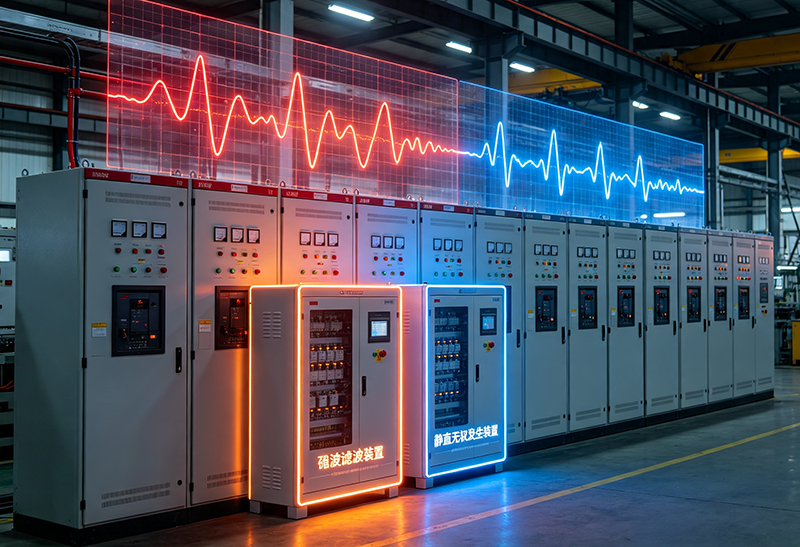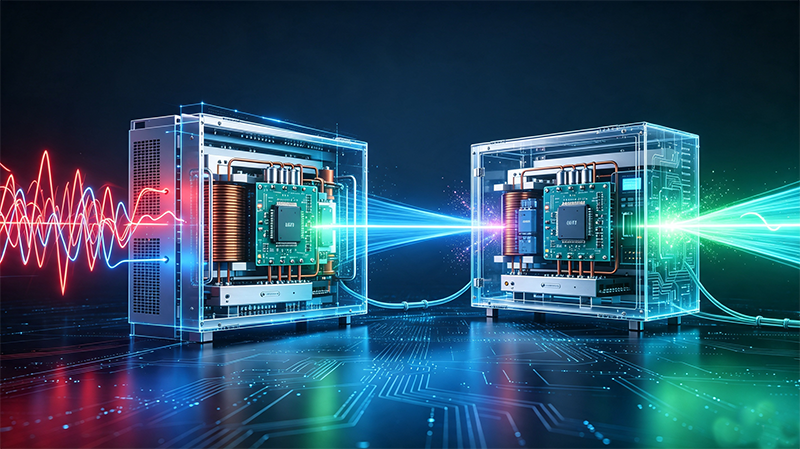
En modernas instalaciones industriales, sectores manufactureros especialmente intensivos en energía, como la producción de silicio monocristalino, Mantener una alta calidad de energía es fundamental para la confiabilidad operativa., eficiencia energética, y longevidad del equipo. A medida que la automatización de la producción y la electrónica de potencia se vuelven cada vez más frecuentes, La contaminación armónica se ha convertido en uno de los problemas de calidad de energía más desafiantes..
En CoEpower, Recientemente completamos con éxito un proyecto de mitigación de armónicos para un fabricante líder de silicio monocristalino ubicado en Ningxia., Porcelana. Al implementar nuestro CoEpo-APF-1200/0.4 Filtro de potencia activo, reducimos significativamente la distorsión armónica, restablecimiento del funcionamiento estable del sistema de compensación, y rendimiento eléctrico general mejorado.
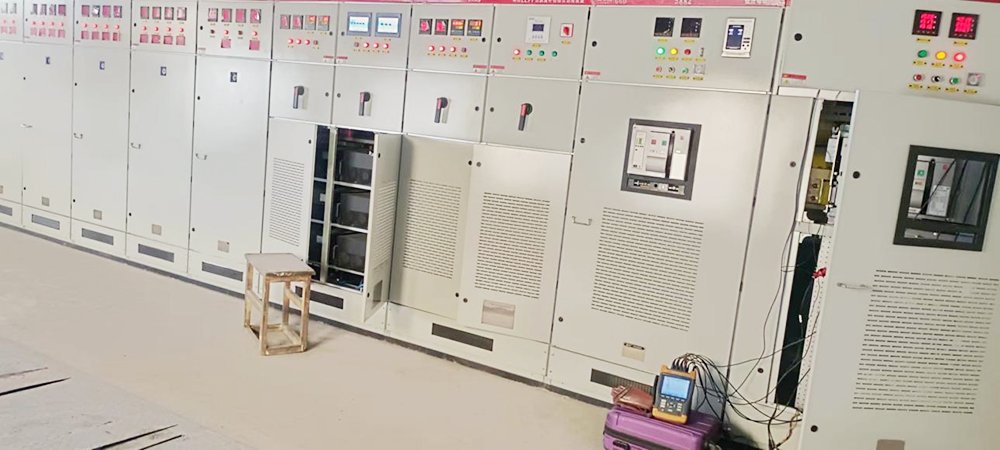
Este artículo presenta los antecedentes del proyecto., desafíos, diseño de solución, resultados de la puesta en marcha, y lecciones aprendidas en el campo.
Antecedentes de proyectos
El cliente opera una instalación de fabricación de silicio monocristalino a gran escala.. El proceso de producción depende en gran medida de hornos monocristalinos., que son cargas no lineales que generan corrientes armónicas sustanciales.
Durante las inspecciones de rutina de la calidad de la energía., El cliente descubrió una distorsión armónica severa en toda la red de distribución de baja tensión.. El sistema de compensación pasiva existente fallaba con frecuencia y no podía proporcionar una compensación de potencia reactiva efectiva debido a problemas de resonancia armónica..
Según mediciones en sitio, El principal equipo afectado fue un:
- 3150 transformador kVA
- 10 kV / 0.4 sistema de distribución kV
- Múltiples hornos de silicio monocristalino.
El cliente necesitaba una solución inmediata y fiable capaz de:
- Reducir la distorsión armónica
- Protección de equipos eléctricos
- Restaurando el funcionamiento del banco de condensadores
- Mejora del factor de potencia
- Garantizar el cumplimiento de los estándares de calidad eléctrica.
Por qué los armónicos son un problema grave en la fabricación de silicio
Las instalaciones de producción de silicio monocristalino utilizan una gran cantidad de:
- Unidades de frecuencia variable (VFDS)
- Rectificadores
- Convertidores electrónicos de potencia
- Equipos de calefacción de alta potencia.
Estos dispositivos extraen corrientes no sinusoidales de la red., creando armónicos que pueden conducir a:
Sobrecalentamiento del transformador
Las corrientes armónicas excesivas aumentan las pérdidas de cobre y hierro., reduciendo la esperanza de vida del transformador.
Fallas de condensadores
Los bancos de condensadores pueden resonar con la inductancia del sistema, causando sobrecalentamiento y tropiezos frecuentes.
Mal funcionamiento del equipo
Los sistemas de control sensibles pueden experimentar activaciones falsas, fallas de comunicacion, y paradas inesperadas.
Mayores pérdidas de energía
Un mayor contenido de armónicos produce pérdidas adicionales en el sistema y una reducción de la eficiencia energética..
Factor de potencia deficiente
Los armónicos distorsionan las formas de onda actuales, afectando negativamente la potencia aparente y aumentando las penalizaciones de los servicios públicos..
Para este proyecto de Ningxia, Los niveles armónicos ya habían alcanzado un punto en el que el sistema de compensación existente ya no podía funcionar de manera confiable..
Diseño de solución CoEpower
Después de realizar un estudio exhaustivo del sitio y un análisis de la calidad de la energía, Nuestro equipo de ingeniería recomendó la instalación de un sistema de filtrado activo de armónicos de alta capacidad..
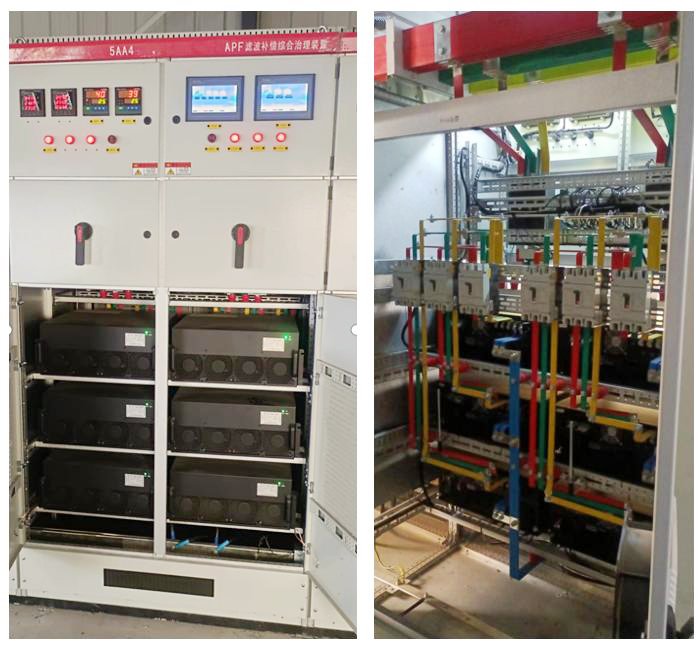
Equipo instalado
| Parámetro | Especificación |
| Modelo de producto | CoEpo-APF-1200/0.4 |
| Capacidad total de compensación | 1200A |
| Cantidad de instalación | 1 Gabinete |
| Capacidad del transformador | 3150 kva |
| Voltaje del sistema | 400V |
| Ubicación de instalación | Detrás del gabinete de compensación |
Las dimensiones del gabinete APF fueron:
1200mm × 1000 mm × 2200 mm
La solución fue diseñada para detectar y compensar dinámicamente corrientes armónicas en tiempo real., Garantizar una mejora continua de la calidad de la energía en condiciones de carga variables..
Cómo funcionan los filtros de potencia activos
A diferencia de los filtros pasivos tradicionales que apuntan a frecuencias armónicas específicas, Los filtros de potencia activos monitorean continuamente el sistema eléctrico e inyectan corrientes armónicas iguales pero opuestas..
Este proceso cancela efectivamente los armónicos no deseados antes de que se propaguen a través de la red..
Las ventajas clave incluyen:
- Compensación armónica en tiempo real
- Adaptación de carga dinámica
- Sin riesgo de resonancia
- Compensación simultánea de potencia reactiva
- Requisitos de mantenimiento reducidos
- Fiabilidad mejorada del sistema
Para instalaciones con cargas de producción que cambian rápidamente, Los APF suelen ser la solución preferida en comparación con las tecnologías de filtrado pasivo.
Instalación y puesta en servicio
El proceso de puesta en servicio se llevó a cabo en condiciones normales de producción para garantizar una evaluación precisa del rendimiento..
Equipo de prueba
Las mediciones se realizaron utilizando un:
Analizador de calidad eléctrica FLUKE 435-II
Especificaciones clave incluidas:
- IEC 61000-4-30 Cumplimiento de clase A
- Precisión de voltaje: 0.1%
- Precisión actual: 0.5%
- Capacidad integral de análisis armónico
El lugar de prueba fue el gabinete de distribución de entrada., permitiéndonos evaluar el rendimiento general del sistema antes y después de la activación de APF.
Resultados de mitigación armónica
Los datos de puesta en servicio demostraron mejoras sustanciales en la calidad de la corriente y el voltaje..
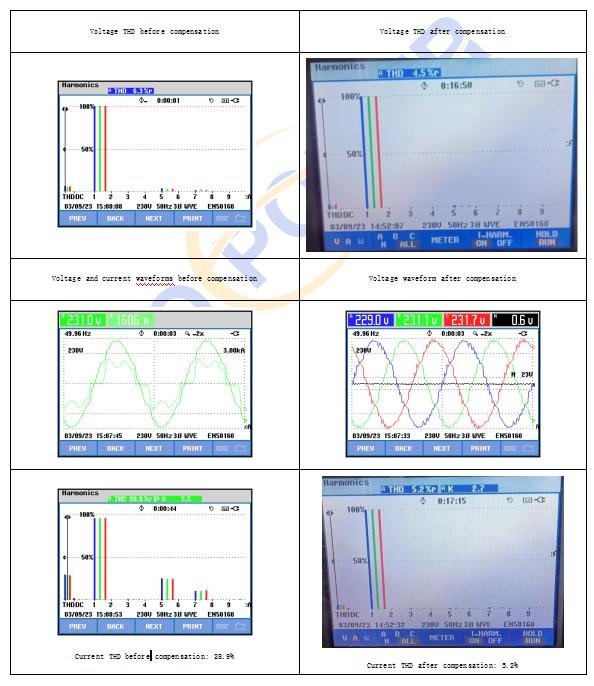
Reducción de THD actual
Antes de la compensación
Distorsión armónica total actual (Thd):
28.9%
Después de la compensación
Distorsión armónica total actual (Thd):
5.2%
Esto representa un aproximado:
82% reducción de la distorsión armónica actual.
Mejora de la calidad del voltaje
Antes de la operación APF
Tensión THD:
6.3%
Después de la operación APF
Tensión THD:
5.2%
Aunque la distorsión de voltaje fue menos severa que la distorsión de corriente, El APF aún produjo una mejora mensurable en la calidad de la forma de onda de voltaje..
Análisis de orden armónico
Los armónicos más dominantes observados en el sitio fueron los:
- 5º armónico
- 7º armónico
- 11º armónico
La APF suprimió efectivamente estos componentes..
| Orden armónico | Antes de la APF | Después de la FPA | Reducción |
| 5th | 398.3 A | 19.6 A | 95% |
| 7th | 169 A | 12.5 A | 92.6% |
| 11th | 123.9 A | 10.5 A | 91.5% |
La reducción de estos armónicos dominantes mejoró significativamente la estabilidad general del sistema y redujo la tensión eléctrica en transformadores y bancos de condensadores..
Mejora de la forma de onda
Uno de los indicadores más visibles de la eficacia del APF fue la transformación de las formas de onda del sistema..
Antes de la compensación:
- Distorsión severa de la forma de onda
- Contenido armónico significativo
- Aumento del estrés eléctrico
Después de la compensación:
- Las formas de onda se volvieron casi sinusoidales
- Niveles de distorsión más bajos
- Eficiencia de transmisión de energía mejorada
Esta mejora contribuye directamente a una mayor vida útil del equipo y a una reducción de los costes de mantenimiento..
Optimización del factor de potencia
Además de la mitigación armónica, El sistema APF fue configurado para proporcionar compensación de potencia reactiva..
Después de habilitar el modo de compensación:
Factor de potencia alcanzado
FP = 1.0
Lograr el factor de potencia unitario proporciona varios beneficios:
- Penalizaciones de servicios públicos reducidas
- Utilización mejorada del transformador.
- Menores pérdidas del sistema
- Mayor eficiencia eléctrica
- Mejor regulación de voltaje
Para usuarios industriales con alto consumo energético mensual, Incluso pequeñas mejoras en el factor de potencia pueden generar ahorros sustanciales de costos con el tiempo..
Beneficios del cliente
Después de la puesta en servicio, el cliente experimentó varias ventajas inmediatas:
Confiabilidad de producción mejorada
La reducción de la interferencia armónica minimizó los riesgos de paradas inesperadas de los equipos..
Protección mejorada del equipo
Las corrientes armónicas más bajas redujeron el estrés térmico en los transformadores., cables, y SwitchGear.
Operación estable del condensador
El sistema de compensación existente ahora podría funcionar sin fallos relacionados con la resonancia.
Costos de mantenimiento reducidos
Una calidad de energía más limpia se traduce en una mayor vida útil del equipo y menos reparaciones.
Preparación para la expansión futura
El APF proporciona una compensación dinámica capaz de adaptarse al crecimiento futuro de la producción.
Conclusión
Este proyecto demuestra cómo la tecnología avanzada de Active Power Filter puede resolver eficazmente problemas armónicos graves en aplicaciones industriales de alta energía, como la fabricación de silicio monocristalino..
Al instalar el Filtro de potencia activa CoEpower CoEpo-APF-1200/0.4, las instalaciones de Ningxia lograron:
✔ THD actual reducido de 28.9% a 5.2%
✔ Tensión THD reducida de 6.3% a 5.2%
✔ 5to armónico reducido en 95%
✔ Factor de potencia mejorado a 1.0
✔ Formas de onda de tensión y corriente casi sinusoidales
✔ Funcionamiento fiable del sistema de compensación
A medida que las industrias continúan adoptando más equipos electrónicos de potencia, La mitigación de armónicos será cada vez más importante para mantener la calidad de la energía y la eficiencia operativa.. CoEpower mantiene su compromiso de ofrecer soluciones APF innovadoras que ayuden a los clientes industriales a lograr una seguridad más segura., limpiador, y sistemas eléctricos más confiables.
Acerca de CoEpower
CoEpower se especializa en soluciones de calidad de energía que incluyen:
- Filtros de potencia activos (APF)
- Generadores de var estáticos (SVG)
- Filtros armónicos híbridos
- Sistemas de corrección del factor de potencia
- Soluciones de eficiencia energética
Si sus instalaciones experimentan distorsión armónica, fallas de capacitores, sobrecalentamiento del transformador, o factor de potencia pobre, Póngase en contacto con el equipo de ingeniería de CoEpower para analizar una solución personalizada de mejora de la calidad de la energía..
Etiquetas:
Filtro de potencia activo, Solución APF, Mitigación armónica, Filtrado armónico, Mejora de la calidad de la energía, Fabricación de silicio monocristalino, Armónicos industriales, Corrección del factor de potencia, CoEpower APF, Reducción de la distorsión armónica, Eficiencia Energética Eléctrica, Sistema de energía industrial, IEC 61000-4-30, Compensación Armónica, Estudio de caso de calidad de energía, proveedor, fabricantes, fábrica, compañía, Porcelana, al por mayor, comprar, precio, cotización, a granel, a venta, empresas, existencias, costo.