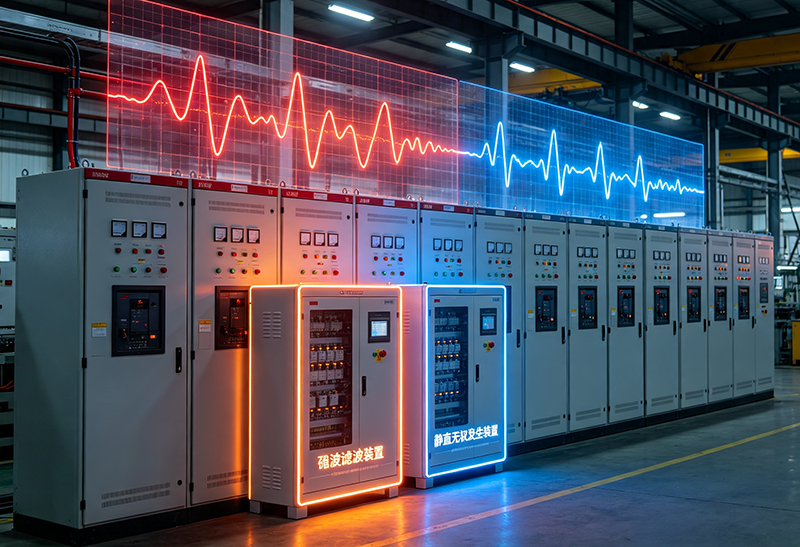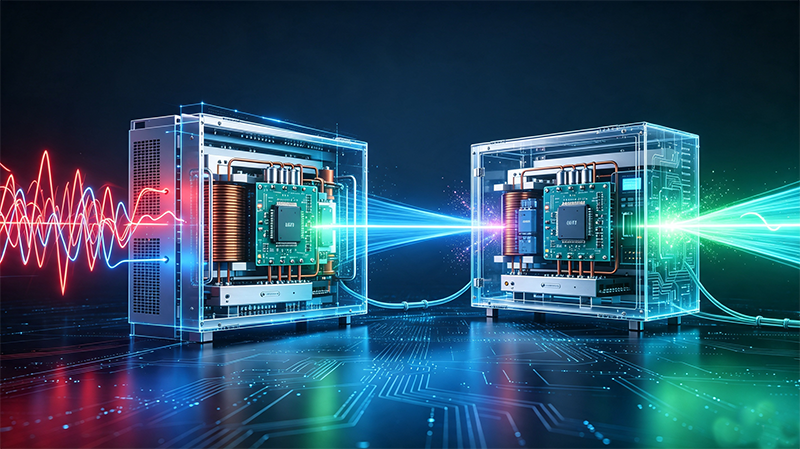
Nei moderni impianti industriali, soprattutto i settori manifatturieri ad alta intensità energetica come la produzione di silicio monocristallino, il mantenimento di un'elevata qualità dell'energia è fondamentale per l'affidabilità operativa, efficienza energetica, e longevità dell'attrezzatura. Poiché l’automazione della produzione e l’elettronica di potenza diventano sempre più diffuse, L’inquinamento armonico è emerso come uno dei problemi più impegnativi legati alla qualità dell’energia.
Al CoEpower, abbiamo recentemente completato con successo un progetto di mitigazione armonica per un produttore leader di silicio monocristallino con sede a Ningxia, Cina. Distribuendo il nostro CoEpo-APF-1200/0.4 Filtro di potenza attivo, abbiamo ridotto significativamente la distorsione armonica, ripristino del funzionamento stabile del sistema di compensazione, e miglioramento delle prestazioni elettriche complessive.
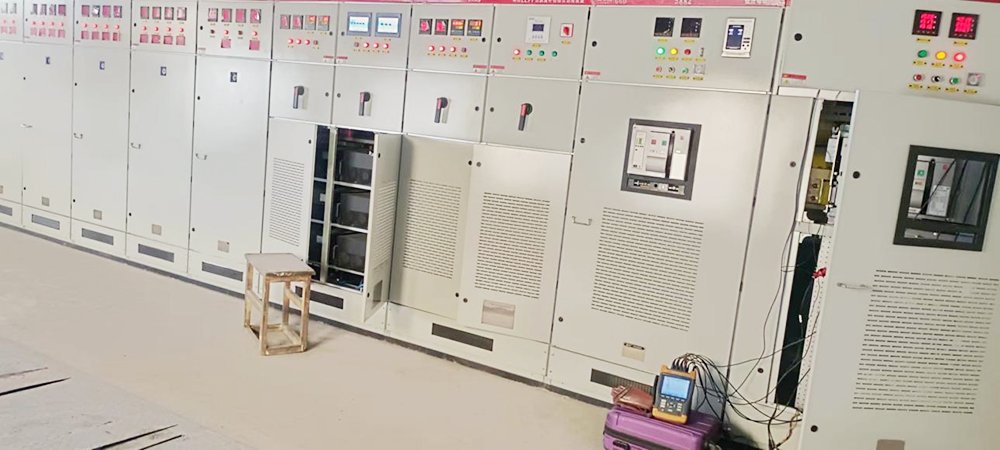
Questo articolo presenta il contesto del progetto, sfide, progettazione della soluzione, risultati della messa in servizio, e lezioni apprese sul campo.
Sfondo del progetto
Il cliente gestisce un impianto di produzione di silicio monocristallino su larga scala. Il processo di produzione fa molto affidamento su forni monocristallini, che sono carichi non lineari che generano correnti armoniche sostanziali.
Durante le ispezioni di routine sulla qualità dell'energia, il cliente ha scoperto una grave distorsione armonica in tutta la rete di distribuzione a bassa tensione. Il sistema di compensazione passiva esistente spesso funzionava male e non era in grado di fornire un’efficace compensazione della potenza reattiva a causa di problemi di risonanza armonica.
Secondo misurazioni sul posto, la principale apparecchiatura interessata era a:
- 3150 trasformatore kVA
- 10 kV / 0.4 sistema di distribuzione kV
- Forni multipli di silicio monocristallino
Il cliente richiedeva una soluzione immediata ed affidabile in grado di:
- Riduzione della distorsione armonica
- Protezione delle apparecchiature elettriche
- Ripristino del funzionamento del banco di condensatori
- Migliorare il fattore di potenza
- Garantire il rispetto degli standard di qualità dell'energia
Perché le armoniche sono un problema serio nella produzione di silicio
Gli impianti di produzione di silicio monocristallino ne utilizzano un gran numero:
- Drive di frequenza variabile (Vfds)
- Raddrizzatori
- Convertitori elettronici di potenza
- Apparecchiature di riscaldamento ad alta potenza
Questi dispositivi prelevano correnti non sinusoidali dalla rete, creando armoniche che possono portare a:
Surriscaldamento del trasformatore
Correnti armoniche eccessive aumentano le perdite nel rame e nel ferro, riducendo la durata prevista del trasformatore.
Guasti dei condensatori
I banchi di condensatori possono entrare in risonanza con l'induttanza del sistema, causando surriscaldamento e frequenti interventi.
Malfunzionamenti dell'attrezzatura
I sistemi di controllo sensibili possono subire falsi attivazioni, fallimenti di comunicazione, e arresti imprevisti.
Aumento delle perdite di energia
Un contenuto armonico più elevato comporta perdite aggiuntive del sistema e una riduzione dell’efficienza energetica.
Fattore di potenza scarso
Le armoniche distorcono le forme d'onda attuali, influenzando negativamente la potenza apparente e aumentando le penalità di utilità.
Per questo progetto Ningxia, i livelli armonici avevano già raggiunto un punto in cui il sistema di compensazione esistente non poteva più funzionare in modo affidabile.
Progettazione di soluzioni CoEpower
Dopo aver condotto un sondaggio completo del sito e un'analisi della qualità dell'energia, il nostro team di ingegneri ha consigliato l'installazione di un sistema di filtraggio armonico attivo ad alta capacità.
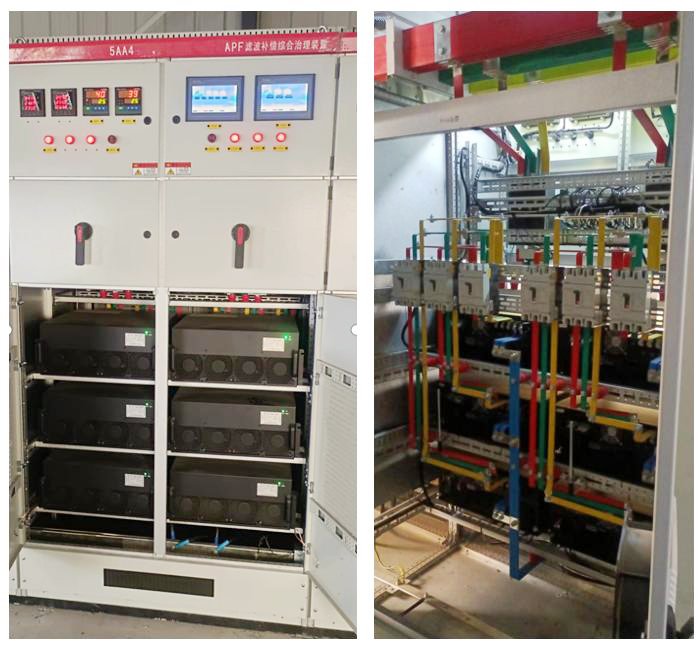
Attrezzatura installata
| Parametro | Specifica |
| Modello del prodotto | CoEpo-APF-1200/0.4 |
| Capacità di compensazione totale | 1200UN |
| Quantità di installazione | 1 Mobiletto |
| Capacità del trasformatore | 3150 kva |
| Tensione del sistema | 400V |
| Posizione di installazione | Dietro il Gabinetto dei Compensi |
Le dimensioni del mobile APF erano:
1200mm × 1000 mm × 2200 mm
La soluzione è stata progettata per rilevare e compensare dinamicamente le correnti armoniche in tempo reale, garantendo un miglioramento continuo della qualità dell'energia in condizioni di carico variabili.
Come funzionano i filtri di potenza attivi
A differenza dei tradizionali filtri passivi che mirano a frequenze armoniche specifiche, I filtri di potenza attivi monitorano continuamente il sistema elettrico e iniettano correnti armoniche uguali ma opposte.
Questo processo cancella efficacemente le armoniche indesiderate prima che si propaghino attraverso la rete.
I principali vantaggi includono:
- Compensazione armonica in tempo reale
- Adattamento al carico dinamico
- Nessun rischio di risonanza
- Compensazione simultanea della potenza reattiva
- Requisiti di manutenzione ridotti
- Affidabilità del sistema migliorata
Per strutture con carichi di produzione in rapida evoluzione, Gli APF sono spesso la soluzione preferita rispetto alle tecnologie di filtraggio passivo.
Installazione e messa in servizio
Il processo di messa in servizio è stato effettuato in normali condizioni di produzione per garantire un'accurata valutazione delle prestazioni.
Attrezzatura di prova
Le misurazioni sono state condotte utilizzando a:
Analizzatore della qualità dell'energia FLUKE 435-II
Specifiche chiave incluse:
- CEI 61000-4-30 Conformità di classe A
- Precisione della tensione: 0.1%
- Precisione attuale: 0.5%
- Capacità completa di analisi armonica
Il luogo del test era l'armadio di distribuzione in entrata, permettendoci di valutare le prestazioni complessive del sistema prima e dopo l'attivazione dell'APF.
Risultati della mitigazione armonica
I dati di messa in servizio hanno dimostrato miglioramenti sostanziali sia nella qualità della corrente che della tensione.
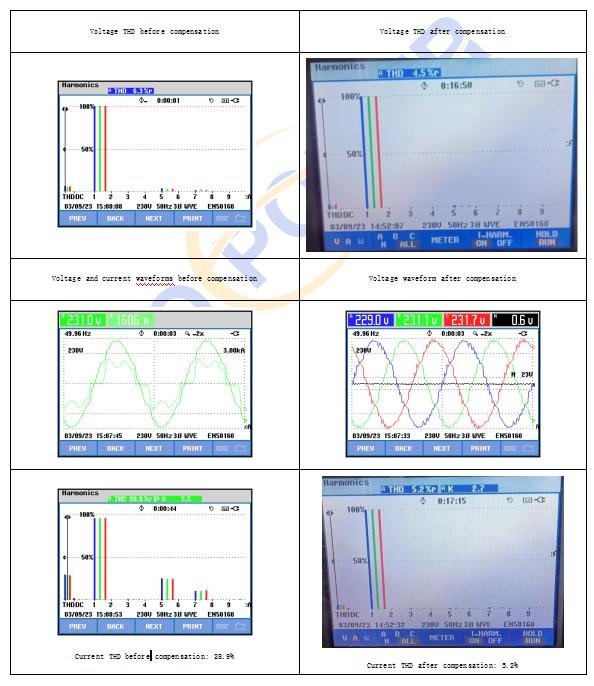
Riduzione THD corrente
Prima del risarcimento
Distorsione armonica totale attuale (Thd):
28.9%
Dopo il risarcimento
Distorsione armonica totale attuale (Thd):
5.2%
Ciò rappresenta un valore approssimativo:
82% riduzione della distorsione armonica della corrente.
Miglioramento della qualità della tensione
Prima dell'operazione APF
THD di tensione:
6.3%
Dopo l'operazione APF
THD di tensione:
5.2%
Sebbene la distorsione della tensione fosse meno grave della distorsione della corrente, l'APF ha comunque prodotto un miglioramento misurabile nella qualità della forma d'onda della tensione.
Analisi dell'ordine armonico
Le armoniche più dominanti osservate sul posto sono state le:
- 5th armonica
- 7th armonica
- 11th armonica
L'APF ha effettivamente soppresso questi componenti.
| Ordine armonico | Prima dell'APF | Dopo l'APF | Riduzione |
| 5th | 398.3 UN | 19.6 UN | 95% |
| 7th | 169 UN | 12.5 UN | 92.6% |
| 11th | 123.9 UN | 10.5 UN | 91.5% |
La riduzione di queste armoniche dominanti ha migliorato significativamente la stabilità complessiva del sistema e ridotto lo stress elettrico su trasformatori e banchi di condensatori.
Miglioramento della forma d'onda
Uno degli indicatori più visibili dell'efficacia dell'APF è stata la trasformazione delle forme d'onda del sistema.
Prima del risarcimento:
- Grave distorsione della forma d’onda
- Contenuto armonico significativo
- Aumento dello stress elettrico
Dopo il risarcimento:
- Le forme d'onda sono diventate quasi sinusoidali
- Livelli di distorsione più bassi
- Miglioramento dell'efficienza della trasmissione di potenza
Questo miglioramento contribuisce direttamente a prolungare la durata delle apparecchiature e a ridurre i costi di manutenzione.
Ottimizzazione del fattore di potenza
Oltre alla mitigazione armonica, il sistema APF è stato configurato per fornire la compensazione della potenza reattiva.
Dopo aver abilitato la modalità di compensazione:
Fattore di potenza raggiunto
PF = 1.0
Il raggiungimento del fattore di potenza unitario offre numerosi vantaggi:
- Sanzioni di utilità ridotte
- Migliore utilizzo del trasformatore
- Perdite di sistema inferiori
- Maggiore efficienza elettrica
- Migliore regolazione della tensione
Per utenze industriali con elevato consumo energetico mensile, anche piccoli miglioramenti nel fattore di potenza possono generare sostanziali risparmi sui costi nel tempo.
Vantaggi del cliente
Dopo la messa in servizio, il cliente ha riscontrato numerosi vantaggi immediati:
Maggiore affidabilità della produzione
La riduzione delle interferenze armoniche riduce al minimo i rischi di arresti imprevisti delle apparecchiature.
Protezione avanzata delle apparecchiature
Correnti armoniche inferiori riducono lo stress termico sui trasformatori, Cavi, e quadri.
Funzionamento stabile del condensatore
Il sistema di compensazione esistente ora potrebbe funzionare senza guasti dovuti alla risonanza.
Costi di manutenzione ridotti
Una qualità dell'energia più pulita si traduce in una maggiore durata delle apparecchiature e in un minor numero di riparazioni.
Prontezza per l'espansione futura
L’APF fornisce una compensazione dinamica in grado di adattarsi alla futura crescita della produzione.
Conclusione
Questo progetto dimostra come la tecnologia avanzata del filtro attivo di potenza possa risolvere efficacemente gravi problemi armonici in applicazioni industriali ad alta energia come la produzione di silicio monocristallino.
Installando il CoEpower CoEpo-APF-1200/0.4 Filtro di potenza attivo, raggiunto lo stabilimento di Ningxia:
✔ THD corrente ridotto da 28.9% A 5.2%
✔ THD di tensione ridotto da 6.3% A 5.2%
✔ 5a armonica ridotta di 95%
✔ Fattore di potenza migliorato a 1.0
✔ Forme d'onda di corrente e tensione quasi sinusoidali
✔ Funzionamento affidabile del sistema di compensazione
Poiché le industrie continuano ad adottare più apparecchiature elettroniche di potenza, la mitigazione delle armoniche diventerà sempre più importante per il mantenimento della qualità dell’energia e dell’efficienza operativa. CoEpower continua a impegnarsi nella fornitura di soluzioni APF innovative che aiutino i clienti industriali a ottenere risultati più sicuri, più pulito, e sistemi elettrici più affidabili.
A proposito di CoEpower
CoEpower è specializzata in soluzioni di qualità dell'energia, tra cui:
- Filtri di potenza attiva (APF)
- Generatori Var statici (Svg)
- Filtri armonici ibridi
- Sistemi di rifasamento
- Soluzioni per l'efficienza energetica
Se la tua struttura presenta una distorsione armonica, guasti ai condensatori, surriscaldamento del trasformatore, o scarso fattore di potenza, contatta il team di ingegneri di CoEpower per discutere una soluzione personalizzata per il miglioramento della qualità dell'energia.
Tag:
Filtro di potenza attivo, Soluzione APF, Mitigazione armonica, Filtro armonico, Miglioramento della qualità dell'energia, Produzione di silicio monocristallino, Armoniche industriali, Correzione del fattore di potenza, CoEpower APF, Riduzione della distorsione armonica, Efficienza energetica elettrica, Sistema di alimentazione industriale, CEI 61000-4-30, Compensazione armonica, Caso di studio sulla qualità dell'energia, Fornitori, produttori, fabbrica, azienda, Cina, all'ingrosso, acquistare, prezzo, preventivo, massa, in vendita, aziende, azione, costo.