Güç kalitesi raporu geldi, ve bir numara anında herkesin dikkatini çekiyor:
Thdi: 32%.
Sonraki sorular genellikle çabuk gelir:
öyle mi 32% THDi çok yüksek?
Aktif harmonik filtreye ihtiyacımız var mı??
Eğer yaparsak, hangi AHF boyutunu belirtmeliyiz?
Yüksek THDi değeri dikkati hak ediyor, ancak bu soruların hiçbirine tek başına cevap vermiyor.
Belirli bir ölçüm noktasında ve belirli bir çalışma koşulu altında mevcut dalga biçiminin önemli ölçüde bozulduğunu size bildirir.. Size ne kadar harmonik akımın telafi edilmesi gerektiğini söylemez, tüm tesisin aynı harmonik duruma sahip olup olmadığı, veya Aktif Harmonik Filtrenin mutlaka doğru çözüm olup olmadığı.
Bu ayrım önemlidir çünkü bir AHF sonuçta kompanzasyon akımının amper cinsinden boyutlandırılır., THDi'nin yüzde puanı cinsinden değil.
Önünüzde zaten bir güç kalitesi raporu varsa, filtre kataloğuyla başlamayın. Raporla başlayın.
Bu Kılavuzda
- THDi nerede ölçüldü??
- Çalışma yükü neydi?
- Gerçekte ne kadar harmonik akım mevcut??
- Hangi harmonik düzenlerin hakim olduğu?
- Bildirilen soruna gerçekten harmonikler mi neden oluyor??
- THDv'ye neler oluyor??
- Gerçek azaltma hedefi nedir?
Raporla Başlayın, AHF Derecelendirmesi değil
Analizör raporunuzun şunu gösterdiğini varsayalım::
| Parametre | Ölçülen Değer |
|---|---|
| Sistem voltajı | 400 V |
| RMS akımı | 180 A |
| Thdi | 32% |
| THDv | 3.1% |
| Güç faktörü | 0.95 |
| Baskın harmonikler | 5onuncu ve yedinci |
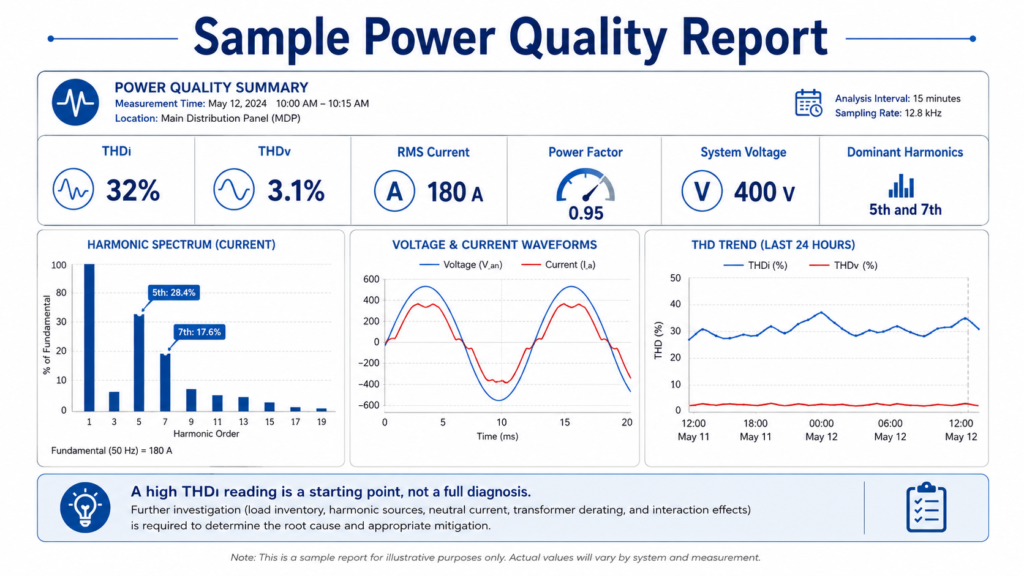
İlk bakışta, 32% THDi en önemli sayı gibi görünüyor.
Ancak burada bir AHF'yi belirtmek için yeterli bilgi yok.
Analizörün nereye bağlandığını hâlâ bilmiyoruz, o sırada hangi ekipman çalışıyordu, ikisinden biri 180 A hafif yükü veya normal üretimi temsil eder, veya projenin gerçekte hangi elektrik sorununu çözmeye çalıştığı.
Yani ilk iş AHF boyutunu hesaplamak değil. Ölçümün gerçekte neyi temsil ettiğini anlamaktır..
1. Yüksek THDi Nerede Ölçüldü??
Aynı THDi yüzdesi, analizörün nereye bağlı olduğuna bağlı olarak çok farklı anlamlara gelebilir.
- bireysel bir VFD girişi;
- motor kontrol merkezi;
- üretim hattı dağıtım panosu;
- bir transformatör ikincil;
- ana AG santrali;
- veya Ortak Bağlantı Noktası.
Örneğin:
THDi = 38% bir VFD girişinde
bu VFD hakkında faydalı bilgiler.
Ama bu şu anlama gelmiyor:
THDi = 38% PCC'deki tüm tesis için.
Dolayısıyla raporda yalnızca "THDi = 8" kaydedilmesi yerine bize şunu da söylemesi gerekir:: “THDi = 38%, VFD girişinde ölçülmüştür.” Bu ekstra cümle, sonucun nasıl yorumlanması gerektiğini tamamen değiştirebilir.
Devam etmeden önce, üç şeyi onayla: ölçümün yapıldığı yer, o noktanın aşağısında hangi yükler var, ve bir makineyi değerlendirip değerlendirmediğimizi, bir üretim hattı, veya tüm elektrik sistemi.
Rapor ölçüm noktasını açıkça belirtmiyorsa, ekipman boyutlandırması başlamadan önce bunun açıklığa kavuşturulması gerekir.
2. THDi Kaydedildiğinde Yük Neydi??
Yüksek bir THDi yüzdesi asla ölçüldüğü çalışma koşulundan ayrılmamalıdır.
Aynı üretim hattını iki farklı zamanda düşünün.
Düşük yükte çalışma: Yük akımı 90 A, Thdi 34%.
Normal üretim: Yük akımı 420 A, Thdi 18%.
Sadece yüzdeye bakarsak, ilk durum daha kötü görünüyor. Ancak bu otomatik olarak AHF'nin boyutlandırılması gerektiği anlamına gelmez. 34% okuma.
THDi, ölçüm sırasında mevcut olan temel akıma göre ifade edilir. Hafif yükte çalışma sırasında temel akım düştüğünde, Mutlak harmonik akım orantılı olarak artmasa bile THDi yüzdesi artabilir.
Daha yararlı olan soru "THDi ne zaman en yüksekti?" sorusu değildir.?“Bu: Sistem gerçekte kompanse edilmesi gereken harmonik akımı hangi çalışma koşulu altında üretir??
Tesis yükü başlatma arasında önemli ölçüde değişirse, normal üretim, en yüksek üretim, gece çalışması veya parti değişiklikleri, bir analizör ekran görüntüsü en önemli durumu temsil etmeyebilir.
3. Yalnızca Yüzdelere Bakmayı Bırakın; Amper Cinsinden Harmonik Akıma Bakın
Bu, bir AHF projesinde en yaygın kafa karışıklığı noktalarından biridir..
Bir müşteri gönderir: “THDi = 30%. Lütfen bir AHF teklifi verin.”
Ancak Aktif Harmonik Filtre, THDi'nin yüzde puanı olarak derecelendirilmez. AHF kapasitesi normalde aşağıdaki gibi dengeleme akımı derecelendirmelerinde tartışılır: 50 A, 100 A, 150 bir veya 200 A.
Yani proje sonunda yüzdeden amper cinsinden harmonik akıma geçmek zorunda.
Sistem A: Yük akımı 80 A, Thdi 30%.
Sistem B: Yük akımı 600 A, Thdi 30%.
THDi yüzdesi aynıdır. Tazminat gerekliliği açıkça.
Bu yüzden “THDi 30%, bu nedenle bir kullanın 100 AHF tam bir mühendislik boyutlandırma yöntemi değildir.
Daha iyi soru: İlgili çalışma koşulu sırasında ne kadar harmonik akım mevcut?, ve bunun ne kadarının tazmin edilmesi gerektiği?
AHF kapasite hesaplaması ancak ölçüm doğru şekilde anlaşıldıktan sonra faydalı olur.
4. THDi'de Durmayın—Harmonik Spektrumu Açın
THDi bir özet numarasıdır. Harmonik spektrum size o sayının içinde ne olduğunu söyler.
İki sistemin her ikisi de THDi = gösterebilir 25% çok farklı harmonik profillere sahipken.
- Bir sisteme 5. ve 7. harmonikler hakim olabilir.
- Bir diğeri önemli bir 3. içerebilir, 5th, 7th, 1113. ve 13. harmonikler.
Bireysel harmonik sıralarına bakmak, mühendislerin ne tür doğrusal olmayan yüklerin katkıda bulunduğunu ve kompanzasyon ekipmanının gerçekte neleri ele alması gerektiğini anlamalarına yardımcı olur..
Yalnızca "THDi = '" göndermek yerine daha kullanışlı bir rapor şöyle söylenebilir:: “THDi = 27%. 5. ve 7. harmonikler baskındır. Harmonik spektrum eklendi.”
Analizör bireysel harmonik akımları veya spektrum grafiğini aktarabiliyorsa, bu bilgilerin mühendislik incelemesine dahil edilmesi gerekir.
5. Harmonikler Aslında Sorunun Nedeni mi??
Yüksek THDi'yi bulmak ve bir tesis sorununun temel nedenini belirlemek birbiriyle ilişkili ancak ayrı görevlerdir.
Bakım ekibinin rapor verdiğini varsayalım: “Transformatörümüz aşırı ısınıyor.” Güç kalitesi analizörü ayrıca yüksek THDi rapor ediyor.
- aşırı yükleme;
- zayıf havalandırma;
- yüksek ortam sıcaklığı;
- faz dengesizliği;
- bağlantı sorunları;
- nötr akım;
- harmonik kayıplar;
- veya birlikte hareket eden birkaç faktör.
Sonuçlandırmak cazip gelebilir: Transformatör aşırı ısınıyor → Yüksek THDi → AHF'yi takın.
Ancak transformatör yukarıdaki faktörlerden de etkilenebilir..
Aynı uyarı kapasitör arızaları için de geçerlidir, rahatsız edici açma ve zayıf güç faktörü. Harmonikler söz konusu olabilir, ancak otomatik olarak temel neden olarak ele alınmamalıdırlar.
Yararlı bir güç kalitesi analizi iki ayrı soruya cevap vermelidir: Hangi anormal elektriksel durumu ölçebiliriz?? Ve bu durum aslında müşterinin çözmek istediği soruna mı neden oluyor??
Bazen cevap Aktif Harmonik Filtreye yol açar. Bazen başka bir çözüme yol açar. Bazen ekipmanın satın alınmasından önce daha fazla ölçüm yapılması gerektiğini gösteriyor.
6. THDi'nin yanında THDv'yi okuyun
Akım bozulması, güç kalitesi görüntüsünün yalnızca bir parçasıdır. Rapor THDi içeriyor ancak THDv içermiyorsa, voltaj bozulması da kontrol edilmelidir.
THDi mevcut dalga biçiminin bozulmasını açıklar. THDv, voltaj dalga biçiminin bozulmasını açıklar.
İki bitki düşünün: A Sitesi THDi'ye sahiptir 25% ve THDv 2.0%; B Sitesi THDi'ye sahiptir 25% ve THDv 7.0%.
Akım bozulma yüzdesi aynı. Daha geniş sistem durumu açıkça farklıdır.
Bu, THDv'nin tek başına bir AHF'nin gerekli olup olmadığını belirlediği anlamına gelmez. Bu, daha kullanışlı mühendislik resminin olduğu anlamına gelir: Thdi + THDv + harmonik spektrum + yük durumu + ölçüm noktası.
7. AHF Boyutunu Tanımlamadan Önce Hedefi Tanımlayın
Projenin bir desteğe ihtiyacı olup olmadığını tartışmadan önce 100 bir veya 150 Bir filtre, önce bir soruya cevap verilmeli: Harmonikleri neden azaltıyoruz??
- Uygunluk — Projenin bir IEEE'si var 519, fayda veya müşteri harmonik performans gereksinimi.
- Ekipman güvenilirliği — Hassas ekipmanlar güç kalitesi koşullarından etkilenebilir.
- Trafo veya kablo yükleme — Müşteri harmonik akıma bağlı elektriksel stresi azaltmak istiyor.
- Tesis genişletme — Ek VFD'ler, UPS Sistemleri, doğrultucular veya diğer doğrusal olmayan yükler eklenecektir.
- Süreç kararlılığı — Tesis, üretim kesintilerinden kaynaklanan elektrik kesintilerini araştırıyor.
- EPC veya son kullanıcı gereksinimi — Proje spesifikasyonu hedef güç kalitesi seviyesini tanımlar.
Bunlar aynı projeler değil. “Hangi AHF boyutuna ihtiyacımız var?” diye sormadan önce?” proje ilk önce tanımlamalı: Hangi elektriksel koşulu sağlamaya çalışıyoruz??
Hedef olmadan, Teknik olarak doğru bir boyutlandırma hesaplaması bile yanlış sorunu çözebilir.
Yüksek THDi'den Mühendislik Kararına
Pratik bir karar süreci şöyle görünmeli:
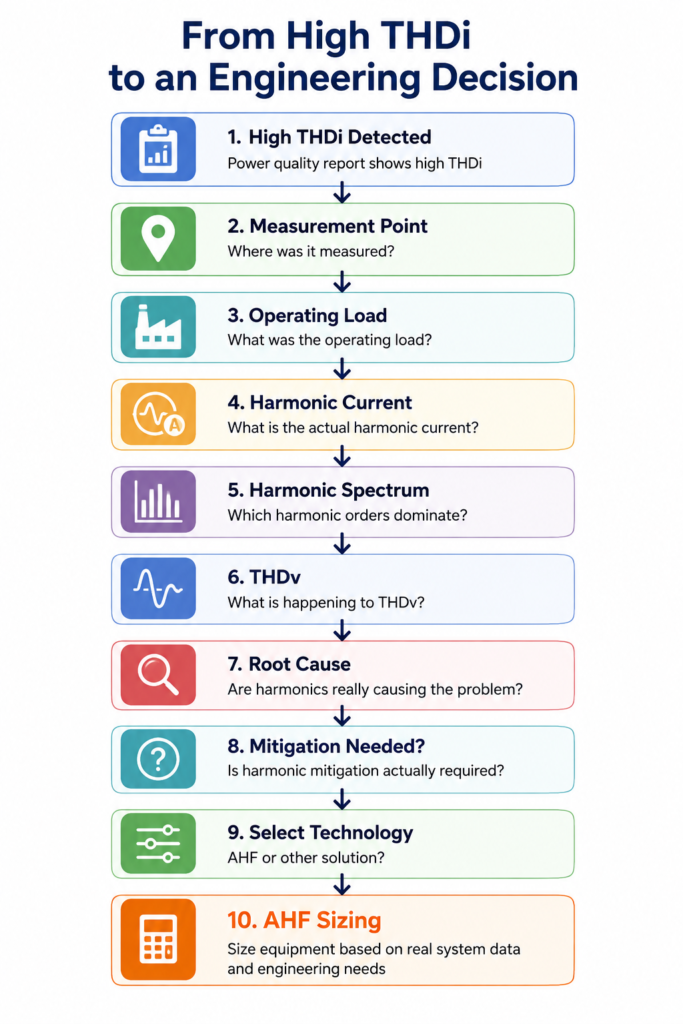
AHF boyutunun alt tarafa yakın bir yerde göründüğüne dikkat edin. Bu kasıtlı. Boyutlandırma tanının sonucu olmalıdır, ilk adım değil.
Yüksek THDi Otomatik Olarak Aktif Harmonik Filtreye İhtiyacınız Olduğu anlamına mı gelir??
HAYIR. Bir Aktif harmonik filtre harmonik azaltımı için bir seçenektir.
Elektrik sistemine bağlı olarak, mühendisler de değerlendirebilir:
- hat reaktörleri;
- DC bobinleri;
- pasif harmonik filtreler;
- aktif ön uç sürücüler;
- yükün yeniden dağıtımı;
- sistem yapılandırma değişiklikleri;
- veya bu önlemlerin kombinasyonları.
Kurulum değişen doğrusal olmayan yükler içerdiğinde ve dinamik harmonik kompanzasyon gerektirdiğinde AHF özellikle çekici hale gelir. Ama o zaman bile, soru “Hangi AHF modelini almalıyız?” diye başlamamalı?"Şununla başlamalı:: Sistem aslında neyi telafi etmemizi gerektiriyor??
AHF Teklifi İstemeden Önce Neleri Göndermelisiniz??
Yalnızca katalog teklifi yerine mühendislik önerisi istiyorsanız, Aşağıdaki bilgilerin mümkün olduğunca çoğunu sağlayın,Ayrıca bizim AHF boyutlandırma hizmeti mühendislik incelemesi için temel sistem verilerini sağlamak.
| Bilgi | Neden Önemlidir? |
|---|---|
| Sistem voltajı | Elektrik bağlantısı gereksinimlerini tanımlar |
| 3P3W / 3P4W | Sistem konfigürasyonunu tanımlar |
| Tek hat diyagramı | Yükleri ve ölçüm konumlarını gösterir |
| Ölçüm noktası | Harmonik verilerin neyi temsil ettiğini açıklar |
| RMS akımı | Gerçek yük seviyesini gösterir |
| Profili yükle | Sistemin zaman içinde nasıl değiştiğini gösterir |
| Thdi | Akım bozulması bağlamını verir |
| Harmonik spektrum | Bireysel harmonik sıraları gösterir |
| THDv | Gerilim bozulması bağlamını ekler |
| Güç faktörü | Eş zamanlı reaktif güç koşullarını gösterir |
| Pik ve normal yük | Olağandışı bir anlık görüntüden boyutlandırmayı önler |
| Gerekli hedef | Çözümün neyi başarması gerektiğini tanımlar |
| Gelecekteki genişleme | Gelecekteki yüklemelerin dikkate alınmasına izin verir |
Her öğeye sahip olmayabilirsiniz. bu iyi. Amaç, her ölçüm mükemmel olana kadar projeyi geciktirmemek. Yüzde bir oranında donanım kararı vermekten kaçınmaktır..
Ya Yalnızca Bir Analizör Ekran Görüntünüz Varsa?
Bu durum yaygındır. Öncelikle ekran görüntüsünün hangi bilgileri içerdiğini kontrol edin:
- Gerilim;
- akım;
- Thdi;
- THDv;
- güç faktörü;
- bireysel harmonikler;
- zaman damgası;
- ölçüm yeri.
neyin eksik olduğunu belirleyin. Örneğin, Thdi 31% ve mevcut 76 A endişe verici görünebilir. Ancak normal üretim akımı genellikle civarındaysa 350 A, ilk soru şu oluyor: neydi 31% Hafif yük koşulu sırasında ölçülen THDi?
Eğer kimse bilmiyorsa, temsili üretim sırasında ölçümün tekrarlanması, hemen birkaç AHF teklifi talep etmekten daha yararlı olabilir.
AHF RFQ'nuzu İyileştirebilecek Bir Soru
Bunu göndermek yerine:
Bizim THDi'miz 30%. Lütfen Aktif Harmonik Filtreyi teklif edin.
şöyle bir şey gönder:
Normal üretim sırasında ana LV veriyolunda yüksek THDi ölçtük. Yük akımı ektedir, Thdi, THDv, Harmonik spektrum ve ölçüm koşulları. Lütfen ne kadar harmonik akımın kompanzasyon gerektirdiğini ve gerekli hedef için AHF'nin uygun olup olmadığını gözden geçirin..
Fark önemlidir. İlk soru soruyor: Bize hangi ekipmanı satabilirsiniz??
İkincisi soruyor: Elektrik sistemimiz aslında neye ihtiyaç duyuyor??
Yararlı bir mühendislik teklifi hangi ölçümlerin kullanıldığını açıklamalıdır, hangi çalışma koşulunun seçildiği, ne kadar kompanzasyon akımı bekleniyor, sistemin hangi hedefe ulaşmak için tasarlandığı, hangi varsayımlar yapıldı, ve önerilen AHF kapasitesinin neden uygun olduğu.
Tek açıklama "THDi yüksek" ise, bu yüzden daha büyük bir filtre kullanın,” muhtemelen hala cevaplanmamış sorular var.
Aktif Harmonik Filtreyi Belirtmeden Önce
Yüksek THDi değeri araştırmaya değer. Ama bu analizin başlangıcıdır, son değil.
AHF boyutlandırmasından önce, yüksek THDi'nin nerede ölçüldüğünü anladığınızdan emin olun, bitkinin ne kadar ağır yüklendiği, gerçekte ne kadar harmonik akım mevcut, hangi harmonik düzenlerin hakim olduğu, voltaj bozulmasına ne oluyor, Harmoniklerin gerçekten bildirilen soruna neden olup olmadığı, ve projenin hangi performans hedefine ulaşması gerektiği.
Bu sorular yanıtlandıktan sonra, Aktif Harmonik Filtre boyutlandırması çok daha anlamlı hale geliyor.
Zaten bir güç kalitesi raporunuz varsa ancak bu ölçümleri AHF gereksinimine nasıl dönüştüreceğinizden emin değilseniz, Raporu sistem voltajıyla birlikte gönderin, yük akımı, Mühendislik incelemesi için çalışma koşulu ve tek hat şeması.
İlk soru olmamalı: “Ne kadar büyük bir AHF kurabiliriz??”
Olmalı: “Bu elektrik sisteminin aslında neye ihtiyacı var??”
SSS
öyle mi 30% THDi her zaman ciddi bir sorundur?
Ölçüldüğü noktadaki ve çalışma koşulundaki önemli akım dalga biçimi bozulmasını gösterir. Fakat, 30% THDi tek başına size tüm tesisin durumunu söylemez, gerekli kompanzasyon akımı, veya AHF'nin gerekli olup olmadığı.
AHF boyutunu yalnızca THDi'den hesaplayabilir miyim??
Güvenilir bir mühendislik seçimi için THDi tek başına yeterli değildir. Yük akımı önemlidir, ve daha iyi bir değerlendirme aynı zamanda çalışma koşullarını da dikkate alır, harmonik spektrum, ölçüm yeri, THDv ve azaltma hedefi.
Tesis yükü azaldığında THDi neden bazen artıyor??
THDi, ölçülen çalışma koşulu altında temel akıma göre ifade edilir. Temel akım düştüğünde, harmonik akım orantılı olarak artmasa bile THDi yüzdesi artabilir.
Harmonikleri VFD'de mi yoksa PCC'de mi ölçmeliyim??
Neyi belirlemeye çalıştığınıza bağlı. Bir VFD ölçümü, söz konusu bireysel yükün değerlendirilmesine yardımcı olur. Dağıtım panosu ölçümü kurulumun bir kısmının değerlendirilmesine yardımcı olur. Sistem düzeyinde harmonik değerlendirmesi için, İlgili PCC veya ana sistem ölçüm noktası özellikle önem kazanmaktadır.
AHF boyutlandırması için en yararlı bilgiler nelerdir??
Sistem voltajıyla başlayın, kablolama konfigürasyonu, RMS yük akımı, Thdi, harmonik spektrum, THDv, ölçüm yeri ve çalışma koşulu. Tek hat diyagramı, proje hedefi ve gelecekteki yüklere ilişkin bilgiler, değerlendirmeyi daha yararlı hale getirir.
Bir AHF hem harmonikleri hem de reaktif gücü telafi edebilir mi??
Bazı aktif güç kalitesi ekipmanları, konfigürasyonuna ve mevcut kapasitesine bağlı olarak harmonik azaltma ve reaktif güç kompanzasyonu gerçekleştirebilir.. Ekipmanın nasıl yapılandırılacağına karar verilmeden önce harmonik ve reaktif güç gereksinimlerinin ölçülmesi gerekmektedir..