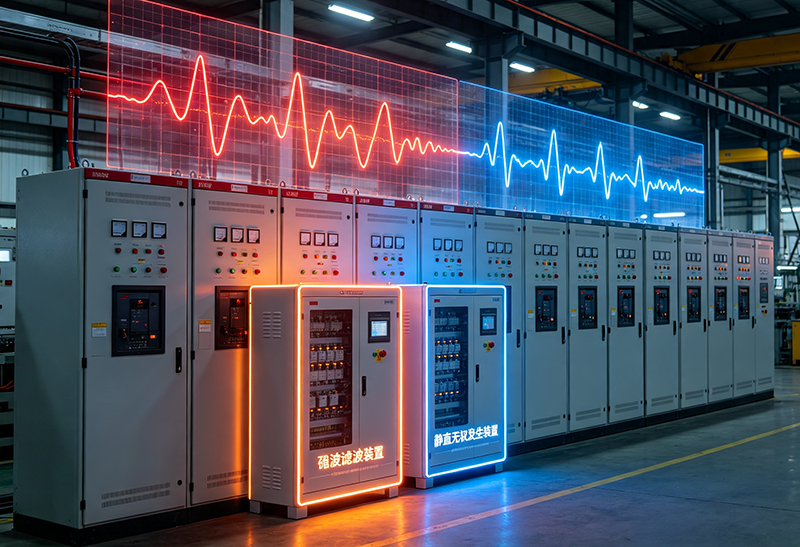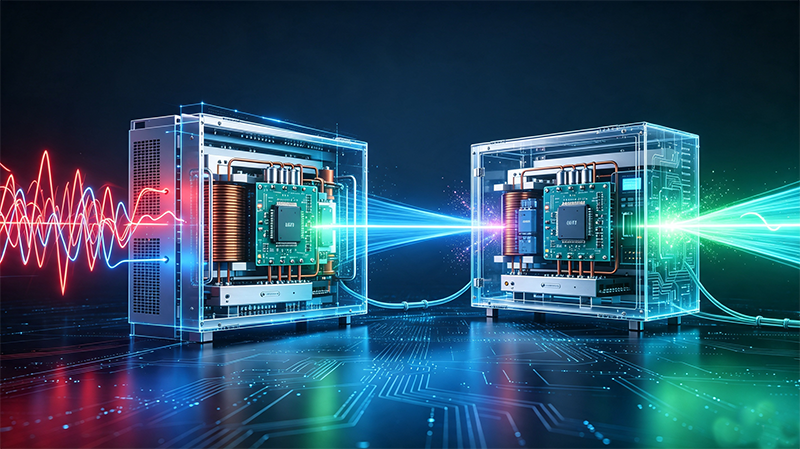
When engineers search for “STATCOM vs SVG,” they often encounter conflicting explanations. Some articles say they are identical. Others treat them as completely different technologies. In real-world power systems, the answer is more nuanced.
As a senior power quality engineer at CoEpower, I’ve worked on reactive power compensation projects across renewable energy plants, industrial factories, substations, steel mills, mining operations, and data centers. One of the most common questions from EPC contractors and electrical consultants is:
“Should we use STATCOM or SVG for this project?”
This article explains the practical engineering differences between STATCOM and SVG, including operating principles, response speed, voltage support capability, harmonic performance, cost considerations, and industrial applications.
What Is STATCOM?
A STATCOM (Static Synchronous Compensator) is a high-performance FACTS (Flexible AC Transmission System) device used to provide dynamic reactive power compensation and voltage regulation in electrical grids.
STATCOM systems typically use:
- Voltage Source Converter (VSC)
- IGBT power modules
- DC capacitor bank
- Advanced digital control algorithms
- Coupling transformer
The main purpose of a STATCOM is to:
- Stabilize grid voltage
- Improve power factor
- Mitigate voltage flicker
- Support renewable energy integration
- Enhance transient stability
- Provide fast reactive power compensation
The reactive power exchange principle can be simplified as:
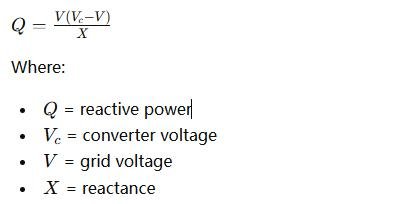
When converter voltage exceeds system voltage, capacitive reactive power is injected into the grid. When it is lower, inductive reactive power is absorbed.
What Is SVG?
SVG stands for Static Var Generator.
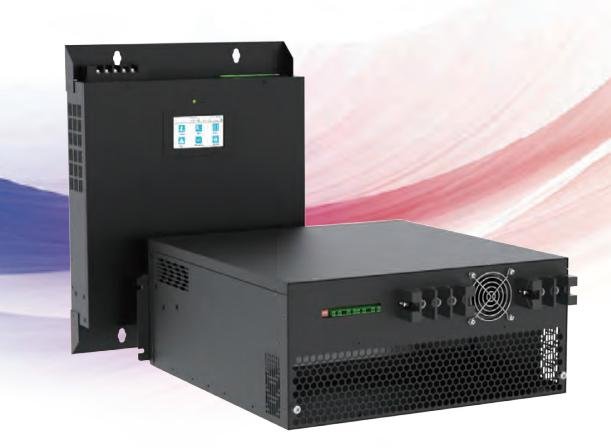
In many industrial markets, especially in Asia and low-voltage power quality applications, SVG refers to a dynamic reactive power compensation device based on the same VSC technology used in STATCOM systems.
SVG systems are widely used for:
- Power factor correction
- Reactive power compensation
- Harmonic suppression
- Three-phase imbalance correction
- Energy efficiency optimization
In practical industrial terminology:
- STATCOM is commonly associated with medium-voltage and transmission-level applications.
- SVG is commonly associated with low-voltage industrial compensation systems.
However, technically, both devices share extremely similar core principles.
STATCOM vs SVG: Core Difference
The biggest confusion online is that many websites oversimplify the relationship.
Here is the engineering reality:
| Feature | STATCOM | SVG |
|---|---|---|
| Full Name | Static Synchronous Compensator | Static Var Generator |
| Typical Voltage Level | Medium & High Voltage | Low & Medium Voltage |
| Main Application | Grid stability & voltage regulation | Industrial power factor correction |
| Technology | VSC-based | VSC-based |
| Response Speed | Extremely fast | Extremely fast |
| Dynamic Voltage Support | Strong | Moderate to strong |
| Harmonic Compensation | Advanced capability | Commonly integrated |
| Typical Installation | Utility substations, renewable plants | Factories, commercial buildings |
| System Complexity | Higher | Lower |
| Cost | Higher | More economical |
Many manufacturers use the terms interchangeably because both rely on power electronics and real-time reactive power injection.
From an engineering perspective:
- STATCOM focuses more on grid dynamic stability
- SVG focuses more on industrial reactive power compensation
Why Traditional Capacitor Banks Are No Longer Enough
Conventional capacitor banks still exist in many factories, but modern nonlinear loads create new power quality challenges:
- Variable Frequency Drives (VFDs)
- Electric arc furnaces
- Large motors
- CNC equipment
- Data centers
- EV charging stations
- Solar inverters
- Wind turbine converters
These loads produce:
- Harmonics
- Voltage fluctuations
- Rapid reactive power changes
- Flicker
- Three-phase imbalance
Traditional capacitor banks cannot respond quickly enough.
Typical capacitor switching response:
- 5–20 seconds
Typical SVG/STATCOM response:
- Less than 10 milliseconds
That speed difference is critical in modern smart grids and high-speed industrial processes.
STATCOM vs SVG in Renewable Energy Systems
Renewable energy is one of the fastest-growing applications for STATCOM technology.
Solar farms and wind farms create unstable reactive power conditions because generation changes continuously.
STATCOM helps by:
- Supporting weak grids
- Stabilizing PCC voltage
- Meeting utility grid codes
- Reducing voltage fluctuations
- Improving low-voltage ride-through (LVRT)
For large utility-scale renewable plants, STATCOM is often mandatory.
SVG systems are more common in:
- Commercial rooftop solar
- Industrial PV systems
- Distributed generation projects
Harmonic Mitigation Capability
Modern SVG systems often include harmonic compensation functions.
This allows them to simultaneously provide:
- Reactive power compensation
- Harmonic filtering
- Load balancing
In many low-voltage applications, SVG units are integrated with:
- Active Harmonic Filters (AHF)
- APF modules
- Hybrid compensation systems
STATCOM systems can also mitigate harmonics, especially in advanced utility-scale installations.
STATCOM vs SVG Response Time
One of the most important engineering advantages is dynamic response speed.
tresponse<10ms
This ultra-fast compensation enables:
- Stable motor starting
- Reduced voltage sag
- Flicker suppression
- Improved welding system stability
- Better crane operation
- Stable arc furnace performance
This is especially important in:
- Steel plants
- Mining facilities
- Port equipment
- Petrochemical industries
Which Is Better: STATCOM or SVG?
The correct question is not “Which is better?”
The real engineering question is:
“Which is better for your application?”
Choose STATCOM if you need:
- Utility-scale voltage regulation
- Transmission grid support
- Renewable energy integration
- Dynamic grid stabilization
- Medium/high-voltage compensation
- Weak grid support
Choose SVG if you need:
- Industrial power factor correction
- Fast reactive power compensation
- Factory energy efficiency improvement
- Harmonic mitigation
- Low-voltage reactive compensation
- Lower project cost
Typical Applications of SVG Systems
SVG is widely used in:
- Manufacturing plants
- Semiconductor factories
- Data centers
- Hospitals
- Commercial buildings
- Metro rail systems
- EV charging infrastructure
- Water treatment facilities
These applications require:
- Stable power factor
- Reduced utility penalties
- Lower transformer losses
- Improved system efficiency
Typical Applications of STATCOM Systems
STATCOM is more common in:
- Utility substations
- Wind farms
- Solar power plants
- HVDC systems
- Railway traction systems
- Mining grids
- Transmission networks
These applications prioritize:
- Voltage stability
- Grid resilience
- Dynamic reactive support
- Fault ride-through capability
STATCOM vs SVG Cost Comparison
Cost depends heavily on:
- Voltage level
- Compensation capacity
- Harmonic requirements
- Installation environment
- Cooling method
- Redundancy design
Generally:
- SVG systems are more economical for industrial low-voltage projects
- STATCOM systems are more expensive due to medium/high-voltage infrastructure
However, lifecycle savings from reduced energy losses and power factor penalties can provide rapid ROI.
Future Trend: SVG and STATCOM Convergence
The line between SVG and STATCOM is becoming increasingly blurred.
Modern systems now combine:
- Reactive compensation
- Harmonic filtering
- Energy storage integration
- AI-based power quality management
- Real-time grid analytics
Many manufacturers now market low-voltage STATCOM products as SVG systems and vice versa.
The underlying technology is converging toward intelligent, digital, high-speed power quality platforms.
Final Thoughts from a CoEpower Engineer
After years of field engineering experience, here’s the simplest explanation:
- STATCOM is typically the grid-level solution
- SVG is typically the industrial-level solution
Both use advanced power electronics to solve reactive power problems far more effectively than traditional capacitor banks.
If your project involves:
- Fast-changing loads
- Renewable energy
- Harmonics
- Voltage instability
- Poor power factor
Then SVG or STATCOM technology is likely the right direction.
At CoEpower, we help EPC contractors, utilities, and industrial facilities select the optimal reactive power compensation solution based on real operating conditions—not marketing terminology.
FAQ
Is SVG the same as STATCOM?
Technically, both use similar VSC-based reactive compensation technology. However, SVG is commonly used for industrial low-voltage applications, while STATCOM is more associated with utility and medium/high-voltage systems.
Which responds faster: capacitor bank or SVG?
SVG systems respond in milliseconds, while capacitor banks may require several seconds.
Can SVG reduce harmonics?
Yes. Many modern SVG systems include harmonic compensation capability.
Why is STATCOM used in solar plants?
STATCOM provides dynamic voltage support and helps renewable plants comply with grid code requirements.
Does SVG improve power factor?
Yes. SVG systems dynamically compensate reactive power to maintain near-unity power factor.
Tags: statcom vs svg, statcom meaning, svg electrical, static var generator, static synchronous compensator, reactive power compensation, power factor correction, statcom working principle, svg vs capacitor bank, dynamic reactive compensation, industrial svg solution, medium voltage statcom, power quality solution, harmonic mitigation, voltage stabilization, suppliers, manufacturers, factory, company, China, wholesale, buy, price, quotation, bulk, for sale, companies, stock, cost.