Einführung: Ingenieursperspektive auf industrielle Stromqualität
Als leitender Elektroingenieur bei CoEpower Electric, Ich habe an zahlreichen industriellen Stromqualitätsprojekten in verschiedenen Sektoren wie dem verarbeitenden Gewerbe gearbeitet, Metallurgie, und Infrastruktur. Eine wiederkehrende Herausforderung sticht heraus: dynamisch, Nichtlineare Lasten beeinträchtigen die Systemleistung.
Diese Fallstudie aus Xinjiang ist ein Paradebeispiel. Eine Anlage, die Hochfrequenz-Fachwerkschweißmaschinen betreibt, war mit einem anhaltend niedrigen Leistungsfaktor konfrontiert, Instabilität des Transformators, und steigende Stromstrafen. Herkömmliche Lösungen waren bereits im Einsatz – aber sie scheiterten.
So haben wir das Problem diagnostiziert und eine Lösung entwickelt, die messbare technische und finanzielle Ergebnisse lieferte.
Projekthintergrund: Was wir vor Ort gefunden haben
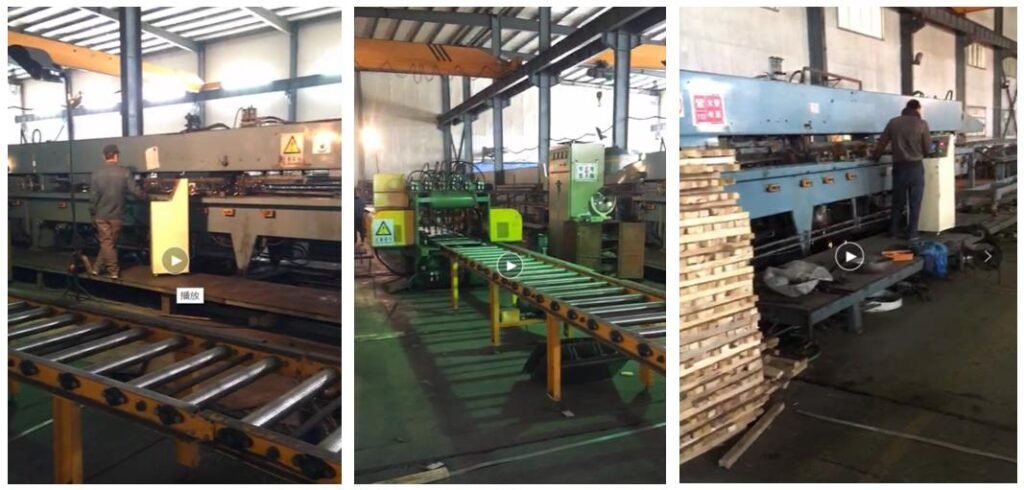
Übersicht über die Einrichtung
- Anwendung: Fachwerkschweißen für die Metallrahmenproduktion
- Transformator: 630 KVA, 0.4 kV-Niederspannungsanlage
- Lasttyp: Hochdynamische Schweißmaschinen
- Gemessener Strombereich: 200A – 900A
- Ladezyklus: ~20 Zyklen, schnelle Fluktuation
Kernproblem
Der Kunde hat berichtet:
- Häufige Transformatorauslösungen
- Strafen für den Leistungsfaktor
- Instabiles Systemverhalten
Als wir vor Ort Messungen mit einem Netzqualitätsanalysator FLUKE 430-II durchführten, Die Grundursachen wurden klar.
Technische Diagnose: Warum das System versagte
1. Extrem niedriger Leistungsfaktor
Gemessener durchschnittlicher Leistungsfaktor: 0.6–0,7
Dies liegt weit unter den Versorgungsanforderungen und führt direkt zu Strafgebühren.
2. Die Blindleistung war sehr volatil
Wir haben beobachtet:
- Blindleistungsspitzen dauern weniger als 0.5 Sekunden
- Hochfrequente Schwankungen im Zusammenhang mit Schweißzyklen
- Die Kondensatorbank kann nicht in Echtzeit reagieren
3. Einschränkungen der Kondensatorbank
Im System war bereits eine Kondensatorbank installiert. Jedoch, aus technischer Sicht, Diese Lösung war grundsätzlich nicht auf das Lastprofil abgestimmt.
Warum es fehlgeschlagen ist:
- Mechanische Schaltverzögerung (Sekunden vs. Millisekunden erforderlich)
- Stufenbasierte Vergütung – nicht kontinuierlich
- Keine Möglichkeit, schnelle Lastschwankungen zu verfolgen
- Gefahr von Resonanz und Überkompensation
4. Transformator-Stress- und Schutzauslösungen
Die Kombination aus:
- Hoher Blindstrom
- Schnelle Lastwechsel
führte zu häufigem Auslösen von Transformatorschutzsystemen, die Produktionskontinuität beeinträchtigen.
Lösungsdesign: Warum wir uns für SVG entschieden haben
Basierend auf den Lasteigenschaften, Ich habe die Bereitstellung von a empfohlen Statischer VAR -Generator (Svg) System.
Technische Begründung
Ein SVG ist ideal, wenn:
- Lastwechsel erfolgen schnell und unvorhersehbar
- Der Blindleistungsbedarf ist sehr dynamisch
- Eine präzise Kompensation ist erforderlich
Im Gegensatz zu Kondensatorbänken, SVG arbeitet mit IGBT-basierter Leistungselektronik, erlauben:
- Kompensation in Echtzeit (<10 MS-Antwort)
- Kontinuierliche Anpassung (nicht stufenbasiert)
- Stabile und präzise Leistungsfaktorregelung
Durchführung: Was wir vor Ort gemacht haben
Installationsdetails
- Modell: SVG-400/4L-400
- Kapazität: 400 links
- Installationspunkt: Ausgangsterminal des Eingangsschranks (Niederspannungsseite)
Inbetriebnahmeprozess
Aus Sicht des Engineering-Workflows:
1, Messung vor der Installation
- Erfasste Basisdaten zur Stromqualität
2, Systemintegration
- Installierte Stromwandler zur Stromabtastung in Echtzeit
- SVG an das Verteilungssystem angeschlossen
3, Parameterkonfiguration
- Zielleistungsfaktor festlegen
- Abgestimmte Vergütungsstrategie
4, Schritt-für-Schritt-Aktivierung
- Aktivierte SVG-Module nacheinander
- Überwachte Systemreaktion
5, Validierung
- Verglichene Vor-/Nach-Wellenformen und Trends
Ergebnisse: Gemessene Leistungsverbesserungen
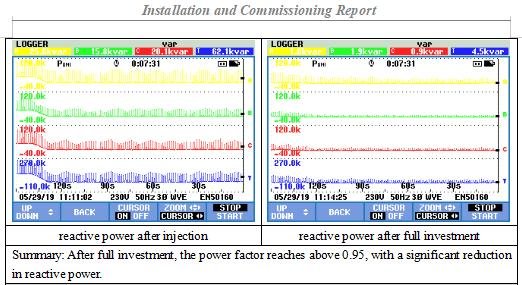
1. Leistungsfaktorkorrektur
- Vor: ~0,65
- Nach: ≥0,95 (stabil, nahezu Einheit)
Aus ingenieurwissenschaftlicher Sicht, Dies deutet auf eine optimale Blindleistungskompensation ohne Schwingungen hin.
2. Blindleistungsstabilisierung
Es wurden Daten nach der Installation angezeigt:
- Deutliche Reduzierung der Grundblindleistung
- Starker Rückgang der vorübergehenden Spitzen
- Reibungsloseres Systemverhalten
3. Dynamisches Lasthandling
Die SVG reagierte effektiv darauf:
- Lastwechsel im Sekundenbruchteil
- Schwankungen im Schweißzyklus
Das ist etwas, was Kondensatorbatterien einfach nicht leisten können.
4. Stabilität des Transformatorschutzes
Nach der Bereitstellung:
- Kein lästiges Stolpern mehr
- Reduzierte thermische Belastung
- Verbesserte Betriebssicherheit
Finanzielle Auswirkungen: Technik, die sich auszahlt
Aus den Rechnungsdaten des Kunden:
- Vor SVG: Blindleistungsnachteil = 9,972.94 RMB
- Nach SVG: Leistungsfaktorbelohnung = 91.55 RMB
Technische Einblicke
Dies ist ein klassischer Fall, bei dem eine Verbesserung der Stromqualität direkt zu einem finanziellen Gewinn führt.
Der ROI wird bestimmt durch:
- Strafen beseitigen
- Reduzierung von Systemverlusten
- Verbesserung der Gesamteffizienz
Technische Erkenntnisse: Lehren aus der Praxis
- Passen Sie die Technologie an das Lastprofil an
Geeignet sind Kondensatorbänke:
- Stabil, Vorhersehbare Lasten
SVG ist erforderlich für:
- Schnell im Wandel, Nichtlineare Lasten
2. Die Reaktionszeit ist entscheidend
In diesem Projekt:
- Reaktive Ereignisse traten auf <0.5 Sekunden
- Nur SVG konnte schnell genug reagieren
3. Netzqualität ist Engineering auf Systemebene
Verbesserung des Leistungsfaktors:
- Reduziert den Effektivstrom
- Reduziert Verluste in Transformatoren und Kabeln
- Verlängert die Lebensdauer der Ausrüstung
4. Datengesteuerte technische Arbeiten
Mit echten Messwerkzeugen (wie FLUKE-Analysatoren) hat es uns erlaubt:
- Identifizieren Sie das wahre Problem
- Validieren Sie die Lösung quantitativ
Wo diese Lösung anwendbar ist
Aus meiner Erfahrung, Diese Art der SVG-Bereitstellung ist äußerst effektiv:
- Schweiß- und Fertigungsanlagen
- Stahl- und Schwerindustrie
- Automobilbau
- Bergbaubetriebe
- Jede Einrichtung mit schwankender induktiver Last
Abschluss: Gelieferter technischer Mehrwert
Dieses Xinjiang-Projekt ist ein starkes Beispiel dafür, wie richtige technische Entscheidungen – nicht nur Geräte-Upgrades – zu Ergebnissen führen.
Durch die Implementierung einer SVG-Lösung, erreicht:
- Verbesserung des Leistungsfaktors von 0.65 Zu 0.95+
- Abschaffung der Blindleistungsstrafen
- Stabiler und zuverlässiger Systembetrieb
- Unmittelbare und messbare wirtschaftliche Vorteile
Abschließende Gedanken des Ingenieurs
Wenn Sie damit zu tun haben:
- Instabile Lasten
- Niedriger Leistungsfaktor
- Unerwartete Strafen
Fügen Sie nicht einfach weitere Kondensatoren hinzu.
Analysieren Sie zunächst die Systemdynamik. In vielen modernen Industrieumgebungen, Nur eine dynamische Kompensationslösung wie SVG wird das Problem wirklich lösen.
Tags: Statischer VAR -Generator, SVG-Projektfall, Blindleistungskompensation, Leistungsfaktorkorrektur, Stromqualität des Schweißgeräts, Industrielle Energieeinsparung, Harmonische Minderung, CoEpower SVG-Lösung, Verbesserung der Stromqualität, Kondensatorbank vs. SVG, Lieferanten, Hersteller, Fabrik, Unternehmen, China, Großhandel, kaufen, Preis, Zitat, Schüttgut, zu verkaufen, Unternehmen, Aktie, kosten.