


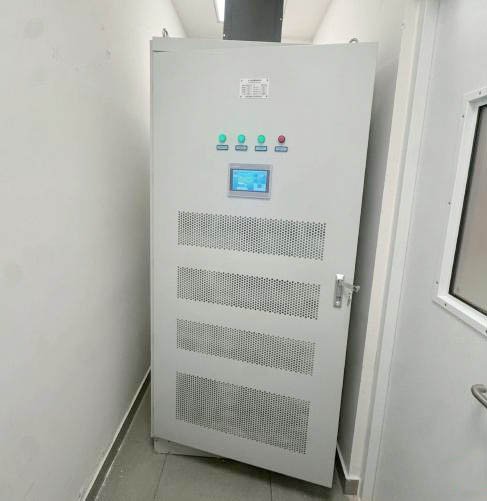
Voltage sag is a typical power quality problem that troublesindustrial enterprises. It may cause the malfunction of the deviceor tripping. For a voltage sag event, depth and duration are usedto describe it.
AVC is a solution designed by CoEpower for voltage sags and swells of up to 30% The AVC isconnected in series between the load and the power grid, and is responsible for stabilizing thevoltage downstream.
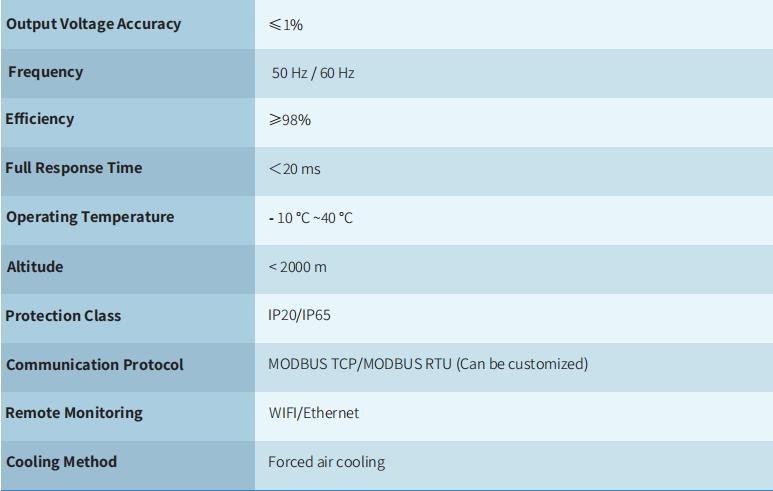
The CoEpower AVC Active Voltage Conditioner is an inverter-based system that protects sensitive industrial and commercial loads from voltage disturbances. It provides fast, accurate voltage sag and surge correction, as well as continuous voltage regulation and load voltage compensation.
Hospital Power Distribution
Medical imaging equipment in hospitals requires a continuous and stable power supply to ensure accurate and reliable operation. CoEpower AVC effectively stabilizes input voltage, protecting sensitive equipment and preventing interruptions that could impact diagnosis and patient care.

Production Line Power Distribution
Production lines rely on uninterrupted operation to maintain efficiency and product quality. CoEpower AVC ensures stable voltage supply, preventing equipment shutdowns, malfunctions, or collisions caused by voltage fluctuations, thereby improving overall productivity and safety.
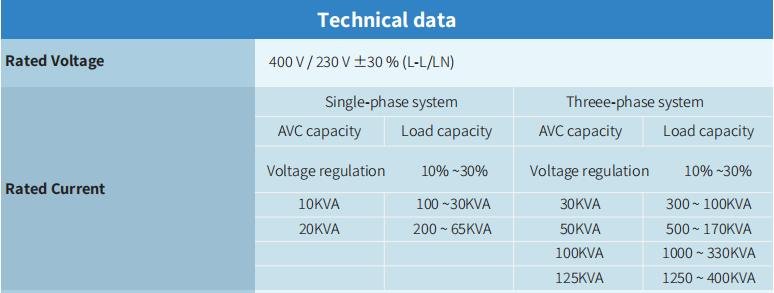
The system provides continuous voltage regulation with a compensation range of up to ±30%, effectively mitigating voltage sags and swells in real time. This ensures a stable power supply for sensitive equipment such as PLCs, drives, and precision instruments, reducing the risk of unexpected shutdowns, data loss, or equipment damage. It is especially valuable in environments with unstable grid conditions or frequent load fluctuations.
Equipped with intelligent communication capabilities, the conditioner supports remote monitoring and control via SCADA systems or cloud-based platforms. Users can access real-time data, alarms, historical records, and system diagnostics from anywhere. This feature significantly improves operational visibility, enables faster troubleshooting, and reduces the need for on-site maintenance.
The device actively detects and suppresses harmonic distortions generated by non-linear loads such as inverters, UPS systems, and variable frequency drives (VFDs). By reducing total harmonic distortion (THD), it improves overall power quality, prevents overheating of equipment, and extends the lifespan of transformers, cables, and capacitors.
Designed with robust enclosure options, the system is suitable for both indoor and outdoor installations. Outdoor models are built to withstand harsh environmental conditions such as dust, humidity, and temperature variations, ensuring reliable performance in industrial plants, substations, and remote locations.
The conditioner dynamically compensates reactive power, improving the overall power factor of the system. This reduces energy losses, enhances electrical efficiency, and helps users avoid utility penalties associated with low power factor. It also contributes to better voltage stability across the network.
The system continuously monitors three-phase current conditions and automatically corrects unbalanced loads. By redistributing current evenly across phases, it minimizes neutral current, reduces equipment stress, and improves the overall reliability and efficiency of the power distribution system.
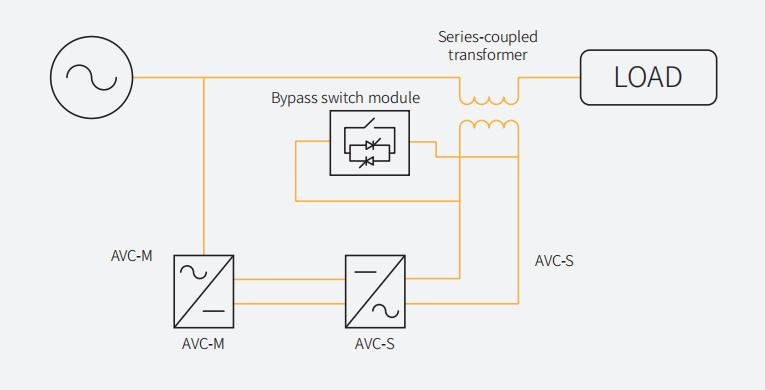
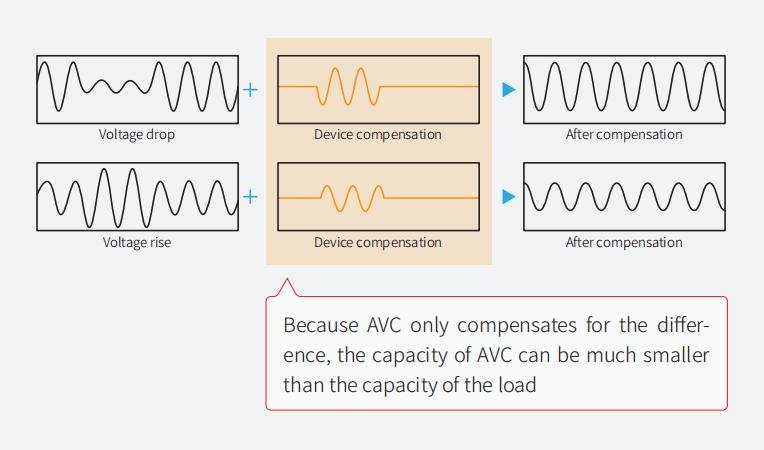
The working principle of an AVC Active Voltage Conditioner is based on real-time voltage compensation using advanced power electronics.
The AVC continuously monitors the incoming supply voltage using high-speed sensors. It detects any deviation from the preset nominal voltage.
A digital controller (typically DSP-based) analyzes the voltage deviation in milliseconds and determines the required correction.
The AVC uses a series injection transformer to add or subtract voltage from the supply line. This allows it to compensate for voltage sags or swells.
A high-speed inverter or converter generates the compensating voltage, which is then injected into the system.
The system responds within milliseconds, ensuring that the output voltage remains stable and within acceptable limits.
Precision machinery such as CNC machines and robotic systems require stable voltage for accurate operation.
Servers and networking equipment are highly sensitive to voltage variations. AVC ensures uninterrupted performance.
Medical equipment like MRI and CT scanners demand stable and reliable power.
Voltage instability can cause defects in chip production, making AVC systems essential.
Solar and wind power integration often introduces fluctuations, which AVC can effectively stabilize.
Elevators, HVAC systems, and lighting systems benefit from improved power quality.
| AVC: 160~6400 KVA | static state UPS | |
| Online voltage regulation | Yes | Yes |
| Spare part | Modular design means high versatility of parts | More spare parts need to be purchased |
| Voltage suitability for supply voltages beyond 380 to 480V | Suitable for 200V to 35kV | Full power input-output transformers are required.
Taking up additional space and making the efficiency lower |
| Power-off protection | No, but power outages are very rare, so there is no need to add a lot of cost and complexity | The batteries should be
checked for proper functioning, especially considering their age. |
| Energy backfilling | Yes, AVC can support energy backfilling loads
|
The load energy backfill will trip the UPS and fail to support the load |
| Harmonic wave | The AVC absorbs pure sine waves and does not pollute the power supply system | A typical UPS uses a 6-pulse rectifier to draw harmonic-rich current, which can cause problems in the power supply system, such as overheating the transformer |
| Downstream fault clearing capability | Superior downstream fault-clearing capability | Poor tolerance to downstream faults |
| Environmental impact (green level) | Very slight environmental impact due to
high efficiency, long life, and little maintenance
|
Heavier environmental impact due to low efficiency and toxic substances such as lead, acid, and plastic in batteries. Plus, battery disposal and recycling issues. |

Tags: Active Voltage Conditioner, active voltage conditioner price, active voltage correction, avc manufacturers, avc power correction, avc supplies, voltage fluctuation solution, voltage stabilizer, industrial voltage protection, AVC system, AVC Active Voltage Conditioner suppliers, AVC Active Voltage Conditioner manufacturers, AVC Active Voltage Conditioner, AVC power quality, voltage stabilizer industrial, voltage sag correction, AVC working principle, CoEpower AVC solution, Active Voltage Conditioner suppliers, Active Voltage Conditioner manufacturers, suppliers, manufacturers, factory, company, China, wholesale, buy, price, quotation, bulk, for sale, companies, stock, cost.