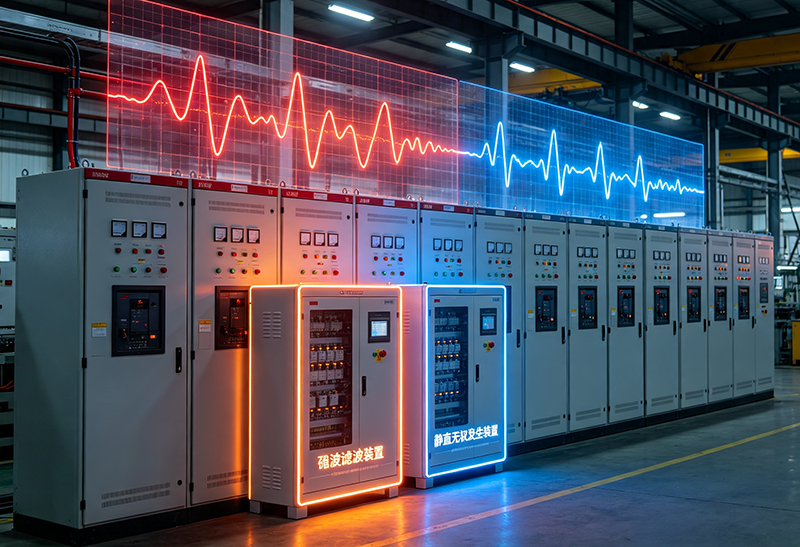
Introdução: Perspectiva de Engenharia sobre Qualidade de Energia Industrial
Como engenheiro elétrico sênior na CoEpower Electric, Trabalhei em vários projetos de qualidade de energia industrial em setores como manufatura, metalurgia, e infraestrutura. Um desafio recorrente se destaca: dinâmico, cargas não lineares degradando o desempenho do sistema.
Este estudo de caso de Xinjiang é um exemplo clássico. Uma instalação que operava máquinas de soldagem de treliças de alta frequência enfrentou um fator de potência baixo e persistente, instabilidade do transformador, e aumento das penalidades de eletricidade. Soluções tradicionais já haviam sido implantadas, mas falharam.
Veja como diagnosticamos o problema e projetamos uma solução que gerou resultados técnicos e financeiros mensuráveis.
Antecedentes do projeto: O que encontramos no local
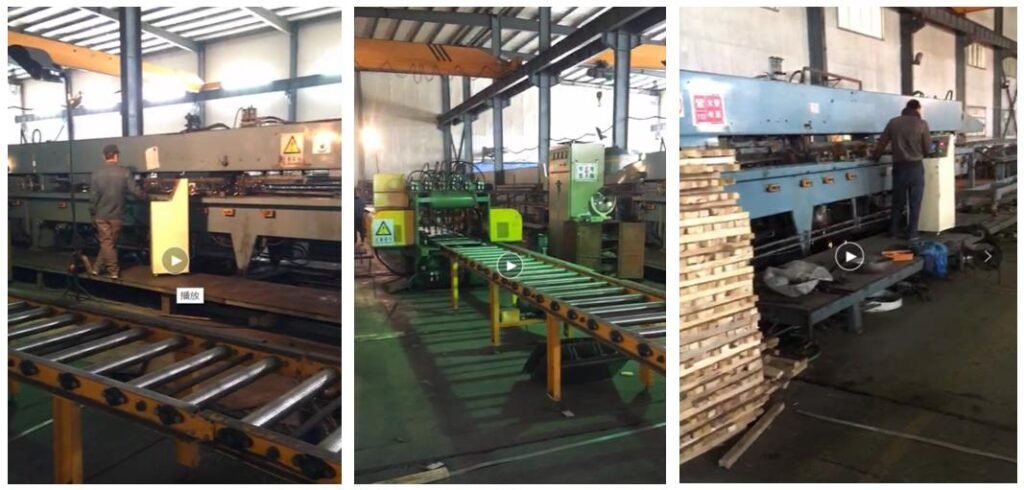
Visão geral da instalação
- Aplicativo: Soldagem de treliça para produção de estruturas metálicas
- Transformador: 630 KVA, 0.4 Sistema de baixa tensão kV
- Tipo de carga: Máquinas de solda altamente dinâmicas
- Faixa de corrente medida: 200UM-900A
- Ciclo de Carga: ~20 ciclos, flutuação rápida
Questão Central
O cliente relatou:
- Desarmes frequentes do transformador
- Penalidades de fator de potência
- Comportamento instável do sistema
Quando realizamos medições no local usando um analisador de qualidade de energia FLUKE 430-II, as causas raízes ficaram claras.
Diagnóstico de Engenharia: Por que o sistema estava falhando
1. Fator de potência severamente baixo
Fator de potência médio medido: 0.6–0,7
Isso está muito abaixo dos requisitos de serviços públicos e resulta diretamente em multas.
2. A energia reativa era altamente volátil
Nós observamos:
- Picos de potência reativa com duração inferior a 0.5 segundos
- Flutuações de alta frequência ligadas aos ciclos de soldagem
- Banco de capacitores incapaz de responder em tempo real
3. Limitações do banco de capacitores
O sistema já contava com banco de capacitores instalado. No entanto, do ponto de vista da engenharia, esta solução era fundamentalmente incompatível com o perfil de carga.
Por que falhou:
- Atraso de comutação mecânica (segundos versus milissegundos necessários)
- Compensação baseada em etapas – não contínua
- Sem capacidade de rastrear variações rápidas de carga
- Risco de ressonância e sobrecompensação
4. Estresse do transformador e desarmes de proteção
A combinação de:
- Alta corrente reativa
- Balanços rápidos de carga
levou ao acionamento frequente de sistemas de proteção de transformadores, afetando a continuidade da produção.
Projeto de solução: Por que selecionamos SVG
Com base nas características de carga, Eu recomendei implantar um Gerador Var estático (Svg) sistema.
Justificativa de Engenharia
Um SVG é ideal quando:
- As mudanças de carga são rápidas e imprevisíveis
- A demanda de energia reativa é altamente dinâmica
- É necessária compensação de precisão
Ao contrário dos bancos de capacitores, SVG opera usando eletrônica de potência baseada em IGBT, permitindo:
- Compensação em tempo real (<10 resposta da senhora)
- Ajuste contínuo (não baseado em etapas)
- Controle de fator de potência estável e preciso
Implementação: O que fizemos no local
Detalhes de instalação
- Modelo: SVG-400/4L-400
- Capacidade: 400 esquerda
- Ponto de instalação: Terminal de saída do gabinete de entrada (lado de baixa tensão)
Processo de Comissionamento
Do ponto de vista do fluxo de trabalho de engenharia:
1, Medição Pré-instalação
- Dados de qualidade de energia de linha de base capturados
2, Integração de Sistemas
- CTs instalados para amostragem de corrente em tempo real
- SVG conectado ao sistema de distribuição
3, Configuração de parâmetros
- Definir fator de potência alvo
- Estratégia de remuneração ajustada
4, Ativação passo a passo
- Módulos SVG ativados sequencialmente
- Resposta monitorada do sistema
5, Validação
- Formas de onda e tendências pré/pós comparadas
Resultados: Melhorias de desempenho medidas
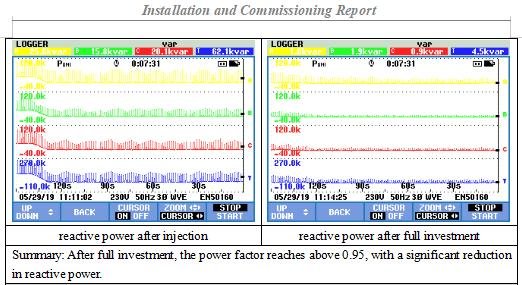
1. Correção do fator de potência
- Antes: ~0,65
- Depois: ≥0,95 (estável, perto da unidade)
Do ponto de vista da engenharia, isso indica compensação ideal de potência reativa sem oscilação.
2. Estabilização de energia reativa
Dados pós-instalação mostraram:
- Redução significativa na potência reativa básica
- Diminuição acentuada nos picos transitórios
- Comportamento mais suave do sistema
3. Tratamento dinâmico de carga
O SVG respondeu eficazmente:
- Mudanças de carga em menos de um segundo
- Flutuações do ciclo de soldagem
Isso é algo que os bancos de capacitores simplesmente não conseguem alcançar.
4. Estabilidade da proteção do transformador
Após a implantação:
- Chega de tropeços incômodos
- Estresse térmico reduzido
- Maior confiabilidade operacional
Impacto Financeiro: Engenharia que compensa
Dos dados de cobrança do cliente:
- Antes do SVG: Penalidade de potência reativa = 9,972.94 RMB
- Depois do SVG: Recompensa do fator de potência = 91.55 RMB
Visão de engenharia
Este é um caso clássico em que a melhoria da qualidade da energia se traduz diretamente em ganhos financeiros.
O ROI é impulsionado por:
- Eliminando penalidades
- Reduzindo perdas do sistema
- Melhorando a eficiência geral
Conclusões técnicas: Lições do campo
- Combine a tecnologia com o perfil de carregamento
Os bancos de capacitores são adequados para:
- Estável, Cargas previsíveis
SVG é necessário para:
- Mudança rápida, Cargas não lineares
2. O tempo de resposta é crítico
Neste projeto:
- Eventos reativos ocorreram em <0.5 segundos
- Somente SVG poderia responder rápido o suficiente
3. Qualidade de energia é engenharia em nível de sistema
Melhorando o fator de potência também:
- Reduz a corrente RMS
- Reduz perdas em transformadores e cabos
- Aumenta a vida útil do equipamento
4. Obras de engenharia baseadas em dados
Usando ferramentas de medição reais (como analisadores FLUKE) nos permitiu:
- Identifique o verdadeiro problema
- Valide a solução quantitativamente
Onde esta solução se aplica
Da minha experiência, este tipo de implantação SVG é altamente eficaz em:
- Plantas de soldagem e fabricação
- Indústria siderúrgica e pesada
- Fabricação automotiva
- Operações de mineração
- Qualquer instalação com cargas indutivas flutuantes
Conclusão: Valor de engenharia entregue
Este projeto de Xinjiang é um forte exemplo de como decisões corretas de engenharia – e não apenas atualizações de equipamentos – geram resultados.
Ao implementar uma solução SVG, alcançou:
- Melhoria do fator de potência a partir de 0.65 para 0.95+
- Eliminação de penalidades de potência reativa
- Operação estável e confiável do sistema
- Benefícios económicos imediatos e mensuráveis
Considerações finais do engenheiro
Se você está lidando com:
- Cargas instáveis
- Baixo fator de potência
- Penalidades inesperadas
Não basta adicionar mais capacitores.
Analise primeiro a dinâmica do sistema. Em muitos ambientes industriais modernos, somente uma solução de compensação dinâmica como SVG resolverá verdadeiramente o problema.
Tags: Gerador Var estático, Caso de projeto SVG, compensação de energia reativa, Correção do fator de potência, qualidade de energia da máquina de solda, economia de energia industrial, Mitigação harmônica, Solução CoEpower SVG, melhoria da qualidade da energia, banco de capacitores vs SVG, fornecedores, Fabricantes, fábrica, empresa, China, atacado, comprar, preço, cotação, volume, à venda, empresas, estoque, custo.