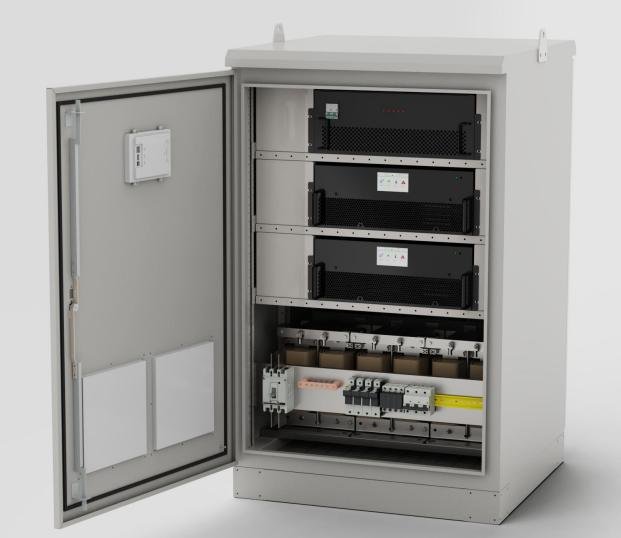
In today’s power-sensitive industrial and commercial environments, maintaining stable voltage is critical for ensuring equipment reliability, process continuity, and energy efficiency. One of the most effective solutions for voltage stabilization is the AVC Active Voltage Conditioner. This advanced power quality device is designed to protect sensitive loads from voltage disturbances such as sags, swells, and fluctuations.

In this blog, we’ll explore what an AVC Active Voltage Conditioner is, how it works, its key benefits, applications, and why it is becoming an essential component in modern electrical systems.
What Is an AVC Active Voltage Conditioner?
An AVC Active Voltage Conditioner is a solid-state power electronic device designed to regulate and stabilize voltage supplied to electrical loads. Unlike traditional voltage stabilizers, AVC systems actively inject or absorb voltage in real time to maintain a constant output voltage, even when the input voltage fluctuates.
It is particularly effective in addressing:
- Voltage sags (short-term drops)
- Voltage swells (temporary increases)
- Flicker and rapid fluctuations
- Unbalanced voltage conditions
The AVC Active Voltage Conditioner ensures that critical equipment receives a clean and stable voltage supply, minimizing downtime and preventing damage.
Why Voltage Stability Matters?
Voltage instability can have serious consequences across industries:
- Equipment damage: Sensitive electronics may fail under unstable voltage
- Production losses: Unexpected shutdowns can disrupt operations
- Reduced lifespan: Electrical components degrade faster
- Data loss: In IT environments, voltage dips can cause system crashes
This is where the AVC Active Voltage Conditioner becomes indispensable—it provides instantaneous voltage correction without interrupting the load.
How Does an AVC Active Voltage Conditioner Work?
The working principle of an AVC Active Voltage Conditioner is based on real-time voltage compensation using advanced power electronics.
1. Continuous Voltage Monitoring
The AVC continuously monitors the incoming supply voltage using high-speed sensors. It detects any deviation from the preset nominal voltage.
2. Control System Analysis
A digital controller (typically DSP-based) analyzes the voltage deviation in milliseconds and determines the required correction.
3. Series Injection Transformer
The AVC uses a series injection transformer to add or subtract voltage from the supply line. This allows it to compensate for voltage sags or swells.
4. Power Electronics Converter
A high-speed inverter or converter generates the compensating voltage, which is then injected into the system.
5. Real-Time Compensation
The system responds within milliseconds, ensuring that the output voltage remains stable and within acceptable limits.
Key Features of AVC Active Voltage Conditioner
- Fast Response Time
AVC systems typically respond within 1–2 milliseconds, making them ideal for sensitive loads.
- Wide Voltage Correction Range
They can correct voltage variations typically within ±30% or more, depending on the design.
- High Efficiency
Modern AVC systems offer efficiency levels above 95%, minimizing energy losses.
- Maintenance-Free Operation
With no moving parts, AVC devices require minimal maintenance compared to traditional stabilizers.
- Compact Design
AVC units are generally smaller and more space-efficient than conventional voltage regulation systems.
Benefits of Using an AVC Active Voltage Conditioner
1. Protects Sensitive Equipment
AVC systems ensure stable voltage supply to critical equipment such as:
- CNC machines
- Medical devices
- Data centers
- Semiconductor manufacturing equipment
2. Reduces Downtime
By preventing voltage-related disruptions, AVC minimizes production stoppages and operational losses.
3. Improves Power Quality
It eliminates voltage disturbances, improving overall system performance.
4. Extends Equipment Lifespan
Stable voltage reduces stress on electrical components, extending their service life.
5. Cost Savings
Lower maintenance costs and reduced equipment failure translate into long-term savings.
AVC vs Traditional Voltage Stabilizers
| Feature | AVC Active Voltage Conditioner | Traditional Stabilizer |
|---|---|---|
| Response Time | Milliseconds | Seconds |
| Technology | Solid-state electronics | Mechanical (relay/servo) |
| Accuracy | High (±1%) | Moderate |
| Maintenance | Low | High |
| Lifespan | Long | Shorter |
The AVC Active Voltage Conditioner clearly outperforms traditional solutions in speed, reliability, and efficiency.
Applications of AVC Active Voltage Conditioner
- Industrial Manufacturing
Factories with sensitive machinery rely on AVC systems to prevent voltage-related disruptions.
- Data Centers
Stable voltage is critical for servers and IT infrastructure to avoid downtime and data loss.
- Healthcare Facilities
Hospitals use AVC systems to protect life-saving medical equipment.
- Oil & Gas Industry
Ensures stable operation in harsh environments where voltage fluctuations are common.
- Renewable Energy Systems
AVC helps stabilize voltage in solar and wind power installations.
Why Choose CoEpower AVC Active Voltage Conditioner?
As a leading provider of power quality solutions, CoEpower offers advanced AVC Active Voltage Conditioner systems tailored to industrial needs.
Key Advantages:
- Advanced DSP control technology
- High reliability and performance
- Customizable solutions for various industries
- Proven track record in global installations
CoEpower’s AVC solutions are designed to meet international standards and provide long-term voltage stability for critical operations.
Installation and Integration
Installing an AVC Active Voltage Conditioner is relatively straightforward:
- Site Assessment: Analyze voltage fluctuation patterns
- System Selection: Choose appropriate AVC capacity
- Integration: Connect in series with the load
- Commissioning: Test and calibrate system performance
Professional installation ensures optimal performance and reliability.
Future Trends in AVC Technology
As industries become more digitized and automated, the demand for high-quality power continues to grow. Future developments in AVC Active Voltage Conditioner technology include:
- AI-based predictive voltage correction
- Integration with smart grid systems
- Enhanced energy efficiency
- Remote monitoring and IoT connectivity
These innovations will further enhance the role of AVC systems in modern power infrastructure.
In Conclusion, the AVC Active Voltage Conditioner is a critical solution for maintaining voltage stability in today’s power-sensitive environments. With its fast response time, high efficiency, and advanced technology, it provides superior protection against voltage disturbances compared to traditional stabilizers.
Whether in manufacturing, healthcare, data centers, or energy sectors, investing in an AVC system ensures operational continuity, protects valuable equipment, and reduces long-term costs.
If your facility experiences frequent voltage fluctuations, implementing an AVC Active Voltage Conditioner is not just an option—it’s a necessity for reliable and efficient power management.
Keywords Tags: AVC Active Voltage Conditioner, Active Voltage Conditioner, AVC power quality, voltage stabilizer industrial, voltage sag correction, power conditioning equipment, AVC working principle, CoEpower AVC solution, Active Voltage Conditioner suppliers, Active Voltage Conditioner manufacturers, factory, company, China, wholesale, buy, price, quotation, bulk, for sale, companies, stock, cost.