Introduction: Engineering Perspective on Industrial Power Quality
As a senior electrical engineer at CoEpower Electric, I’ve worked on numerous industrial power quality projects across sectors like manufacturing, metallurgy, and infrastructure. One recurring challenge stands out: dynamic, nonlinear loads degrading system performance.
This case study from Xinjiang is a textbook example. A facility operating high-frequency truss welding machines faced persistent low power factor, transformer instability, and rising electricity penalties. Traditional solutions had already been deployed—but they failed.
Here’s how we diagnosed the problem and engineered a solution that delivered measurable technical and financial results.
Project Background: What We Found On-Site
Facility Overview
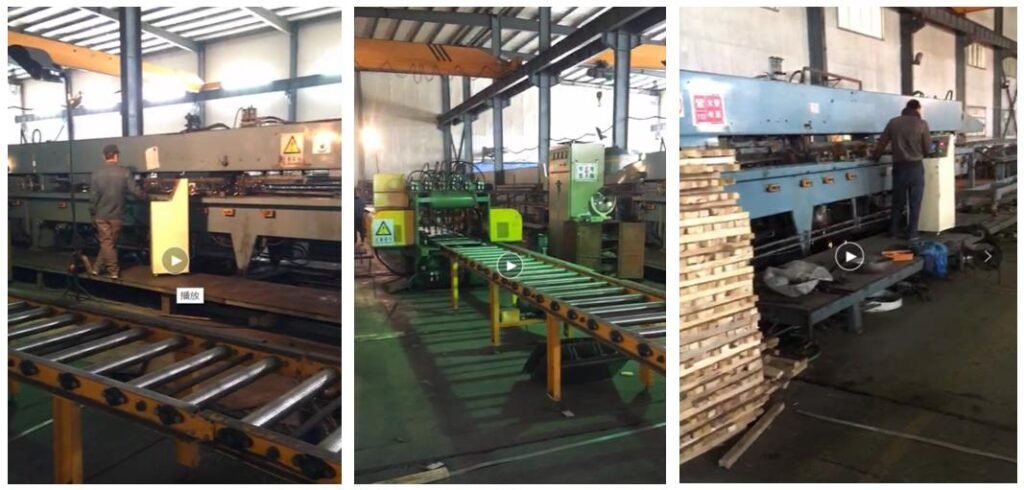
- Application: Truss welding for metal frame production
- Transformer: 630 kVA, 0.4 kV low-voltage system
- Load Type: Highly dynamic welding machines
- Measured Current Range: 200A – 900A
- Load Cycle: ~20 cycles, rapid fluctuation
Core Issue
The client reported:
- Frequent transformer trips
- Power factor penalties
- Unstable system behavior
When we conducted on-site measurements using a FLUKE 430-II power quality analyzer, the root causes became clear.
Engineering Diagnosis: Why the System Was Failing
1. Severely Low Power Factor
Measured average power factor: 0.6–0.7
This is far below utility requirements and directly results in penalty charges.
2. Reactive Power Was Highly Volatile
We observed:
- Reactive power spikes lasting less than 0.5 seconds
- High-frequency fluctuations tied to welding cycles
- Capacitor bank unable to respond in real time
3. Capacitor Bank Limitations
The system already had a capacitor bank installed. However, from an engineering standpoint, this solution was fundamentally mismatched to the load profile.
Why it failed:
- Mechanical switching delay (seconds vs milliseconds required)
- Step-based compensation—not continuous
- No ability to track rapid load variation
- Risk of resonance and overcompensation
4. Transformer Stress and Protection Trips
The combination of:
- High reactive current
- Rapid load swings
led to frequent triggering of transformer protection systems, affecting production continuity.
Solution Design: Why We Selected SVG
Based on the load characteristics, I recommended deploying a Static Var Generator (SVG) system.
Engineering Rationale
An SVG is ideal when:
- Load changes are fast and unpredictable
- Reactive power demand is highly dynamic
- Precision compensation is required
Unlike capacitor banks, SVG operates using IGBT-based power electronics, allowing:
- Real-time compensation (<10 ms response)
- Continuous adjustment (not step-based)
- Stable and precise power factor control
Implementation: What We Did On-Site
Installation Details
- Model: SVG-400/4L-400
- Capacity: 400 kvar
- Installation Point: Outgoing terminal of incoming cabinet (low-voltage side)
Commissioning Process
From an engineering workflow perspective:
1, Pre-installation Measurement
- Captured baseline power quality data
2, System Integration
- Installed CTs for real-time current sampling
- Connected SVG to distribution system
3, Parameter Configuration
- Set target power factor
- Tuned compensation strategy
4, Step-by-Step Activation
- Activated SVG modules sequentially
- Monitored system response
5, Validation
- Compared pre/post waveforms and trends
Results: Measured Performance Improvements
1. Power Factor Correction
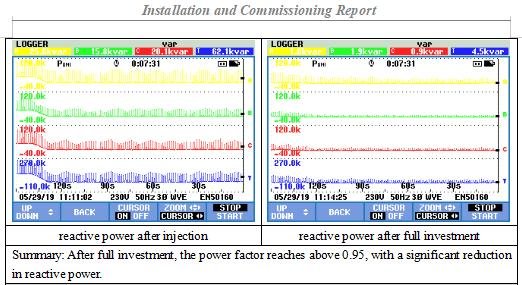
- Before: ~0.65
- After: ≥0.95 (stable, near unity)
From an engineering perspective, this indicates optimal reactive power compensation without oscillation.
2. Reactive Power Stabilization
Post-installation data showed:
- Significant reduction in base reactive power
- Sharp decrease in transient spikes
- Smoother system behavior
3. Dynamic Load Handling
The SVG responded effectively to:
- Sub-second load changes
- Welding cycle fluctuations
This is something capacitor banks simply cannot achieve.
4. Transformer Protection Stability
After deployment:
- No more nuisance tripping
- Reduced thermal stress
- Improved operational reliability
Financial Impact: Engineering That Pays Back
From the client’s billing data:
- Before SVG: Reactive power penalty = 9,972.94 RMB
- After SVG: Power factor reward = 91.55 RMB
Engineering Insight
This is a classic case where power quality improvement directly translates into financial gain.
The ROI is driven by:
- Eliminating penalties
- Reducing system losses
- Improving overall efficiency
Technical Takeaways: Lessons from the Field
- Match Technology to Load Profile
Capacitor banks are suitable for:
- Stable, predictable loads
SVG is required for:
- Fast-changing, nonlinear loads
2. Response Time Is Critical
In this project:
- Reactive events occurred in <0.5 seconds
- Only SVG could respond fast enough
3. Power Quality Is System-Level Engineering
Improving power factor also:
- Reduces RMS current
- Lowers losses in transformers and cables
- Enhances equipment lifespan
4. Data-Driven Engineering Works
Using real measurement tools (like FLUKE analyzers) allowed us to:
- Identify the true problem
- Validate the solution quantitatively
Where This Solution Applies
From my experience, this type of SVG deployment is highly effective in:
- Welding and fabrication plants
- Steel and heavy industry
- Automotive manufacturing
- Mining operations
- Any facility with fluctuating inductive loads
Conclusion: Engineering Value Delivered
This Xinjiang project is a strong example of how correct engineering decisions—not just equipment upgrades—drive results.
By implementing an SVG solution, achieved:
- Power factor improvement from 0.65 to 0.95+
- Elimination of reactive power penalties
- Stable and reliable system operation
- Immediate and measurable economic benefits
Final Thoughts from the Engineer
If you’re dealing with:
- Unstable loads
- Low power factor
- Unexpected penalties
Don’t just add more capacitors.
Analyze the system dynamics first. In many modern industrial environments, only a dynamic compensation solution like SVG will truly solve the problem.
Tags: Static Var Generator, SVG project case, reactive power compensation, power factor correction, welding machine power quality, industrial energy saving, harmonic mitigation, CoEpower SVG solution, power quality improvement, capacitor bank vs SVG, suppliers, manufacturers, factory, company, China, wholesale, buy, price, quotation, bulk, for sale, companies, stock, cost.