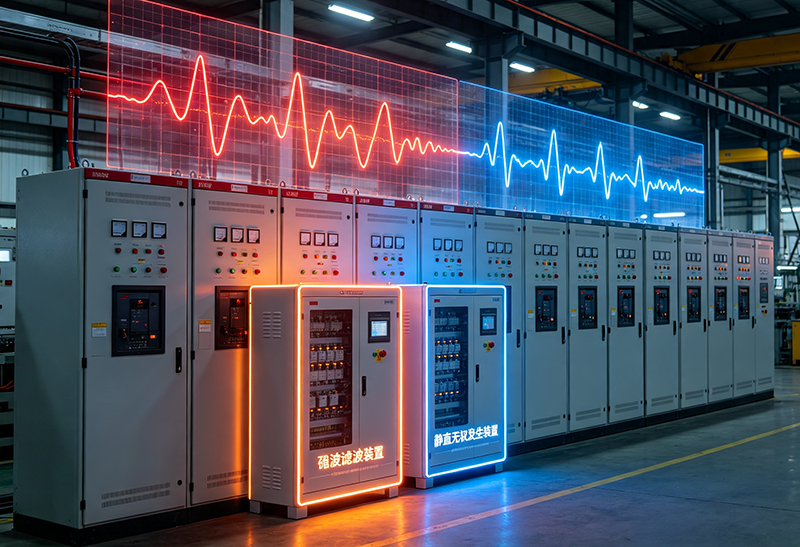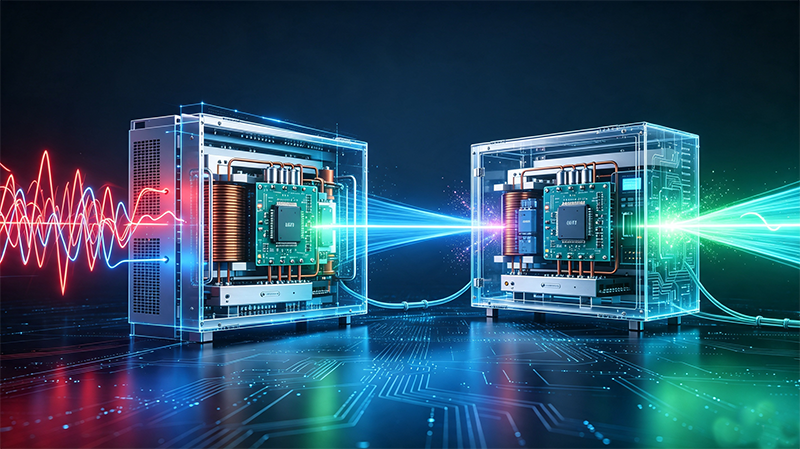
Les installations industrielles modernes dépendent fortement de l’électronique de puissance, Drives de fréquence variable (VFDS), systèmes d'asservissement, Unités UPS, Chargeurs de VE, lignes de production robotisées, et systèmes d'énergie renouvelable. Bien que ces technologies améliorent l'efficacité et la productivité, ils introduisent également de nouveaux défis en matière de qualité d'énergie que les batteries de condensateurs traditionnelles ne peuvent plus résoudre efficacement..
En tant qu'ingénieur électricien senior chez Coopération, Je reçois fréquemment la même question de la part des clients:
“Faut-il installer un Filtre harmonique actif (Ahf), un Générateur VAR statique (SVG), ou les deux?”
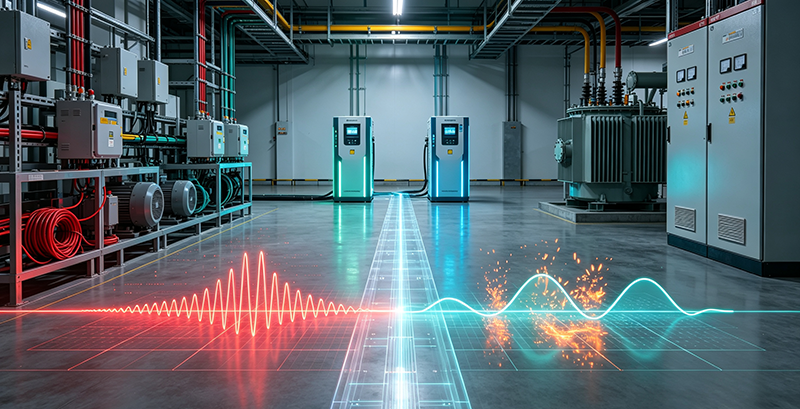
La réponse dépend entièrement des problèmes de qualité de l’énergie présents dans votre système électrique.. Installer la mauvaise solution peut gaspiller de l’argent sans résoudre le problème réel.
Dans ce guide, Je vais vous expliquer les différences entre les filtres harmoniques actifs et les générateurs de var statiques, comment ils fonctionnent, leurs applications idéales, et comment déterminer si votre installation en nécessite un ou les deux.
Comprendre les problèmes actuels de qualité de l’énergie
La qualité de l’énergie implique généralement quatre problèmes majeurs:
- Distorsion harmonique
- Faible facteur de puissance
- Fluctuations de tension
- Déséquilibre triphasé
Dans les usines modernes, ces problèmes surviennent souvent simultanément.
Les sources courantes incluent:
- Drives de fréquence variable (VFDS)
- Servomoteurs
- Systèmes UPS
- Machines CNC
- Équipement de soudage
- Centres de données
- Onduleurs d'énergie renouvelable
- Bornes de recharge EV
- Matériel d'imagerie médicale
Ces charges non linéaires génèrent des courants harmoniques tout en consommant de la puissance réactive, ce qui entraîne des coûts d'électricité plus élevés, surchauffe de l'équipement, surcharge du transformateur, et temps d'arrêt inattendus.
Qu'est-ce qu'un filtre harmonique actif (Ahf)?
Un Filtre harmonique actif (Ahf) est un appareil électronique de puissance intelligent conçu pour éliminer les courants harmoniques en temps réel.
Au lieu d'utiliser des inductances et des condensateurs passifs réglés sur des fréquences spécifiques, un AHF surveille en permanence le courant de charge et injecte des courants harmoniques égaux mais opposés dans le réseau électrique.
Les harmoniques indésirables sont efficacement annulées avant de pouvoir se propager dans tout le système électrique..
Principales fonctions d'un filtre d'harmoniques actif
- Élimine les harmoniques du 2e au 50e ordre
- Réduire la distorsion harmonique totale (THD)
- Empêcher la surchauffe du transformateur
- Protéger les équipements sensibles
- Réduire le courant du conducteur neutre
- Améliorer la fiabilité du système électrique
- Prolonger la durée de vie des équipements
Les AHF modernes peuvent atteindre des efficacités de compensation harmonique dépassant 95%, ce qui les rend idéaux pour les installations dont les charges évoluent rapidement.
Applications typiques des filtres d'harmoniques actifs
Les AHF sont couramment installés dans:
- Usines de fabrication
- Centres de données
- Usines de semi-conducteurs
- Hôpitaux
- Bâtiments commerciaux
- Installations de traitement de l'eau
- Huile & installations de gaz
- Plants d'acier
- Opérations minières
- Bornes de recharge EV
Ces environnements contiennent des charges non linéaires importantes qui génèrent en permanence des harmoniques.
Qu'est-ce qu'un générateur de variables statiques (SVG)?
UN Générateur VAR statique (SVG) est un dispositif avancé de compensation de puissance réactive conçu pour améliorer le facteur de puissance de manière dynamique.
Contrairement aux batteries de condensateurs classiques, un SVG utilise la technologie IGBT à grande vitesse pour générer instantanément un courant réactif en avance ou en retard en fonction de la demande de charge.
Au lieu d'attendre que les contacteurs commutent les étages de condensateur, un SVG répond en quelques millisecondes.
Cela permet une, correction précise du facteur de puissance sans surcompensation.
Principales fonctions d'un SVG
Un SVG offre plusieurs avantages importants:
- Compensation dynamique de la puissance réactive
- Correction du facteur de puissance jusqu'à 0.99
- Stabilisation de tension
- Réduction des pertes en ligne
- Utilisation accrue de la capacité du transformateur
- Efficacité énergétique améliorée
- Compensation des charges inductives et capacitives
Contrairement aux batteries de condensateurs, Les SVG ne sont pas affectés par la résonance harmonique et restent stables sous des charges fluctuant rapidement.
Applications typiques des générateurs de variables statiques
Les SVG fonctionnent exceptionnellement bien dans:
- Fabrication automobile
- Aciéries
- Cimenteries
- Usines textiles
- Ports
- Aéroports
- Parcs éoliens
- Centrales solaires
- Complexes commerciaux
- Grands systèmes CVC
Toute installation avec des charges inductives fluctuantes peut bénéficier considérablement de la technologie SVG.
Filtre harmonique actif vs générateur de var statique
| Fonctionnalité | Filtre harmonique actif (Ahf) | Générateur VAR statique (SVG) |
| Fonction primaire | Atténuation harmonique | Compensation de puissance réactive |
| Résout les harmoniques | ✔Excellent | ✘ Non |
| Améliore le facteur de puissance | Limité | ✔Excellent |
| Stabilité de tension | Modéré | Excellent |
| Réponse dynamique | <1 MS | <10 MS |
| Élimine la résonance | ✔ Oui | ✔ Mieux que les batteries de condensateurs |
| Idéal pour | Charges non linéaires | Faible facteur de puissance |
| Principal avantage | THD inférieur | Charges de puissance réactive inférieures |
Une idée fausse courante est qu'un SVG peut éliminer les harmoniques.
Cela ne peut pas.
De la même manière, tandis que certains AHF peuvent fournir une compensation de puissance réactive limitée, leur objectif principal est la suppression des harmoniques plutôt que la correction complète du facteur de puissance.
Quand devriez-vous installer un filtre d’harmoniques actif?
Un AHF est le bon choix si votre établissement connaît:
Distorsion harmonique élevée
Les indicateurs typiques comprennent:
- THDi > 20%
- THDv dépassant IEEE 519 recommandations
- Déclenchements fréquents du disjoncteur
- Surchauffe du transformateur
- Surchauffe du moteur
- Dysfonctionnement d’un équipement sensible
Un grand nombre de VFD
Les installations équipées de nombreux variateurs de vitesse sont souvent confrontées à une grave pollution harmonique.
Systèmes UPS
Les grandes installations UPS produisent des courants harmoniques importants.
Centres de données
Serveurs, alimentations à découpage, et les systèmes UPS génèrent des harmoniques en continu.
Lignes de production avec électronique de puissance
La fabrication automatisée moderne repose largement sur des onduleurs et des servomoteurs.
Quand devriez-vous installer un générateur de variables statiques?
Un SVG est recommandé lorsque:
Un faible facteur de puissance augmente les factures d'électricité
Les services publics imposent souvent des pénalités lorsque le facteur de puissance tombe en dessous des niveaux requis.
Un SVG peut améliorer le facteur de puissance proche de l'unité.
Charges changeantes rapidement
Les exemples incluent:
- Grues
- Ascenseurs
- Soudage par points
- Compresseurs
- Presses à injecter
Les batteries de condensateurs traditionnelles ne peuvent pas réagir assez rapidement.
Fluctuations de tension
Les SVG fournissent un support réactif dynamique pour stabiliser la tension.
Pannes de batterie de condensateurs
De nombreuses installations remplacent les batteries de condensateurs vieillissantes par des SVG, car les SVG:
- nécessitent moins d'entretien,
- éliminer les transitoires de commutation, et
- éviter la dégradation des condensateurs.
Quand devriez-vous installer à la fois un AHF et un SVG?
Dans de nombreuses installations industrielles, les problèmes de distorsion harmonique et de puissance réactive existent simultanément.
Les exemples typiques incluent:
- Fabrication automobile
- Production d'acier
- Fabrication de semi-conducteurs
- Centres de données
- Usines pétrochimiques
- Usines intelligentes
- Bornes de recharge EV
Dans ces cas, l'installation des deux technologies donne les meilleurs résultats à long terme.
Avantages d’une AHF combinée + Solution SVG
En intégrant un filtre harmonique actif avec un générateur de var statique, les installations peuvent atteindre:
- Suppression des harmoniques
- Correction dynamique du facteur de puissance
- Pénalités réduites pour l’électricité
- Stabilité de tension améliorée
- Température inférieure du transformateur
- Efficacité accrue du système
- Durée de vie de l'équipement plus longue
- Une plus grande fiabilité de production
- Conformité à l'IEEE 519 et autres normes de qualité de l'énergie
De nombreuses armoires modernes de qualité d'énergie intègrent les modules AHF et SVG dans une solution compacte, réduisant l'espace d'installation tout en simplifiant la maintenance.
Pourquoi les banques de condensateurs traditionnelles ne suffisent plus
Depuis des décennies, les batteries de condensateurs étaient la solution standard pour la correction du facteur de puissance.
Cependant, les systèmes électriques d’aujourd’hui sont radicalement différents.
Les banques de condensateurs ont plusieurs limitations:
- Vitesse de réponse lente
- Usure des contacts mécaniques
- Risque de résonance harmonique
- Échelons de rémunération fixes
- Mauvaises performances sous des charges fluctuantes
Alors que les installations adoptent l’automatisation, énergie renouvelable, et fabrication numérique, les dispositifs de compensation intelligents sont devenus la solution privilégiée.
Les SVG et AHF fournissent une compensation en temps réel sans les inconvénients associés aux batteries de condensateurs conventionnelles.
Comment CoEpower contribue à améliorer la qualité de l’énergie
À Coopération, nous comprenons que chaque système électrique est unique. La sélection de la bonne solution de qualité d'énergie nécessite plus que le simple choix d'un produit : elle nécessite une analyse approfondie de votre réseau électrique..
Notre équipe d'ingénierie commence par évaluer les paramètres clés tels que:
- Distorsion harmonique totale (THD)
- Facteur de puissance
- Profil de charge
- Chargement du transformateur
- Fluctuations de tension
- Demande de puissance réactive
- Expansion future de la capacité
Sur la base de cette évaluation, nous recommandons la solution la plus rentable:
- Filtre harmonique actif pour l'atténuation des harmoniques,
- Générateur VAR statique pour compensation dynamique de puissance réactive, ou
- Une AHF combinée + Solution SVG pour une amélioration globale de la qualité de l’énergie.
Nos systèmes disposent d'un contrôle DSP avancé, réponse dynamique rapide, conception modulaire pour une extension flexible de la capacité, et des performances fiables dans des environnements industriels exigeants. Que votre installation modernise un système électrique existant ou conçoive une nouvelle installation, Les solutions CoEpower contribuent à réduire les pertes d'énergie, améliorer la fiabilité des équipements, et garantir la conformité à long terme aux normes internationales de qualité de l’énergie.
Pensées finales
Il n’existe pas de solution universelle aux problèmes de qualité de l’énergie.
Si votre installation est principalement aux prises avec une distorsion harmonique, un Filtre harmonique actif est l'investissement approprié.
Si un faible facteur de puissance et une puissance réactive fluctuante augmentent les coûts d'exploitation, un Générateur VAR statique offre une solution plus efficace que les batteries de condensateurs conventionnelles.
Cependant, de nombreuses installations industrielles modernes sont confrontées simultanément aux deux problèmes. Dans ces cas, la combinaison d'un AHF avec un SVG offre le plus haut niveau de qualité d'alimentation, fiabilité améliorée du système, coûts énergétiques réduits, et une meilleure protection des équipements électriques critiques.
Alors que les systèmes électriques industriels deviennent de plus en plus complexes, la gestion proactive de la qualité de l’énergie n’est plus une option : elle est essentielle pour maximiser l’efficacité, minimiser les temps d'arrêt, et soutenir des opérations durables.
Foire aux questions (FAQ)
Un filtre harmonique actif peut-il remplacer un générateur de var statique?
Pas complètement. Bien que certains AHF puissent fournir une compensation de puissance réactive limitée, ils sont principalement conçus pour éliminer les harmoniques. Pour une correction significative du facteur de puissance, un SVG est la meilleure solution.
Un SVG élimine-t-il les harmoniques?
Non. Un SVG est conçu pour compenser la puissance réactive et stabiliser la tension. Il ne supprime pas activement les courants harmoniques.
Puis-je utiliser à la fois un AHF et un SVG dans le même système électrique?
Oui. En fait, de nombreuses installations industrielles bénéficient de l'installation des deux dispositifs pour traiter simultanément la distorsion harmonique et la compensation de la puissance réactive.
Les AHF et les SVG sont-ils meilleurs que les batteries de condensateurs?
Pour les systèmes électriques modernes avec des charges non linéaires et évoluant rapidement, Les AHF et SVG offrent une réponse plus rapide, une plus grande précision, et une fiabilité améliorée par rapport aux batteries de condensateurs conventionnelles.
Balises de mots clés
Filtre harmonique actif, Ahf, Générateur VAR statique, SVG, Amélioration de la qualité de l'énergie, Correction du facteur de puissance, Filtre harmonique, Compensation de puissance réactive, Atténuation harmonique, Distorsion harmonique totale, Réduction du THD, Compensation de puissance réactive dynamique, Remplacement de la batterie de condensateurs, Qualité de l’énergie industrielle, Solutions de qualité de l’énergie électrique, IEEE 519 Conformité, Équipement de qualité de l'énergie, Coopération, Qualité de l’énergie en usine intelligente, Efficacité énergétique, Stabilisation de tension, fournisseurs, fabricants, usine, entreprise, Chine, de gros, acheter, prix, citation, en gros, à vendre, entreprise, action, coût.
Produits connexes
Blogs connexes
Obtenez un devis aujourd'hui