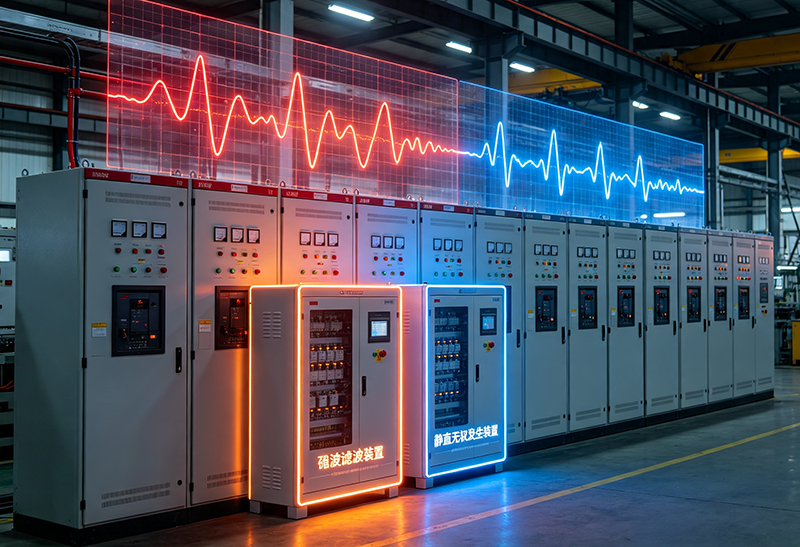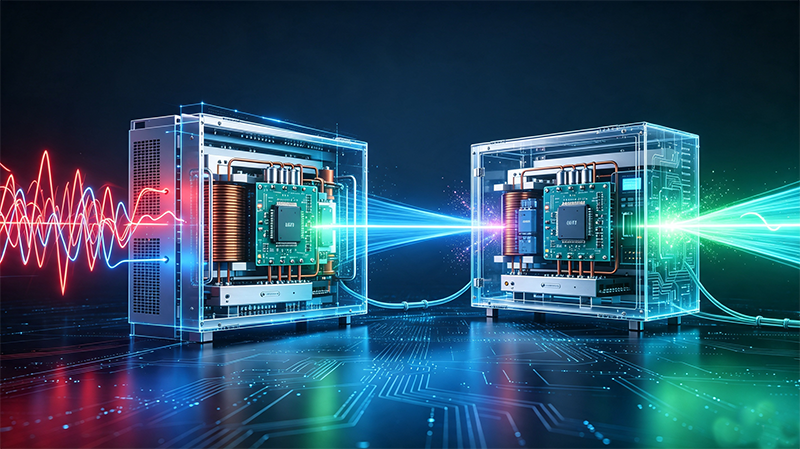
Alors que les systèmes électriques industriels deviennent de plus en plus complexes, maintenir la qualité de l’énergie n’a jamais été aussi difficile. Les installations modernes dépendent fortement des entraînements à fréquence variable (VFDS), Systèmes UPS, servomoteurs, machines de soudage, Chargeurs de VE, onduleurs d'énergie renouvelable, et équipements de centres de données. Même si ces technologies améliorent la productivité et l'efficacité énergétique, ils introduisent également des harmoniques, fluctuations de tension, et des demandes de puissance réactive en évolution rapide.
Depuis des décennies, les batteries de condensateurs sont la solution standard pour la correction du facteur de puissance. Cependant, de nombreux ingénieurs découvrent que les batteries de condensateurs ne suffisent plus pour les environnements électriques non linéaires d'aujourd'hui.
Si votre installation connaît des pannes de condensateurs, transformateurs de surchauffe, déclenchements intempestifs, ou des pénalités élevées pour les services publics malgré l'installation de batteries de condensateurs, tu n'es pas seul.
Dans cet article, J'expliquerai pourquoi les batteries de condensateurs traditionnelles ont du mal dans les systèmes électriques modernes et comment Générateurs de variables statiques (SVG) et Filtres harmoniques actifs (Ahfs) fournir un système beaucoup plus fiable, intelligent, et une solution évolutive.
Pourquoi les banques de condensateurs ne suffisent plus
Une batterie de condensateurs est conçue pour fournir une puissance réactive fixe ou échelonnée afin d'améliorer le facteur de puissance.. Bien que cette approche ait bien fonctionné dans les installations industrielles traditionnelles avec des charges inductives relativement stables, les systèmes électriques d’aujourd’hui se comportent très différemment.
Les charges modernes changent continuellement.
Par exemple:
- Drives de fréquence variable (VFDS)
- Machines CNC
- Lignes de production robotisées
- Centres de données
- Systèmes solaires photovoltaïques
- Systèmes de stockage d'énergie par batterie
- Bornes de recharge pour véhicules électriques
Ces charges produisent des courants harmoniques importants et des demandes de puissance réactive en évolution rapide auxquelles les batteries de condensateurs conventionnelles ne peuvent tout simplement pas répondre efficacement..
Problèmes courants de banque de condensateurs
1. Résonance Harmonique
L'un des plus grands problèmes liés aux batteries de condensateurs est la résonance..
Les condensateurs interagissent naturellement avec l'inductance des transformateurs et des systèmes de distribution. Lorsque les fréquences harmoniques coïncident avec la fréquence de résonance du système, une amplification harmonique dangereuse peut se produire.
Les conséquences incluent:
- Surchauffe du condensateur
- Fusibles de condensateur grillés
- Remplacement fréquent du condensateur
- Surchauffe du transformateur
- Distorsion de tension accrue
- Pannes d’équipement inattendues
Au lieu d'améliorer la qualité de l'énergie, les batteries de condensateurs peuvent en fait aggraver les problèmes d'harmoniques.
2. La rémunération fixe ne peut pas suivre les charges dynamiques
La plupart des batteries de condensateurs modifient la compensation par étapes.
Par exemple:
- 25 gauche
- 50 gauche
- 75 gauche
- 100 gauche
Cependant, la demande réelle de puissance réactive change chaque seconde.
Cette inadéquation conduit souvent à:
- Surcompensation
- Sous-compensation
- Mauvais facteur de puissance
- Frais de pénalité pour les services publics
- Tension instable
Les usines de fabrication dont les charges changent fréquemment sont particulièrement touchées.
3. Vieillissement des condensateurs et durée de vie courte
Les condensateurs sont des composants consommables.
Les facteurs qui accélèrent le vieillissement comprennent:
- Température ambiante élevée
- Courants harmoniques
- Commutation fréquente
- Surtensions
- Surtension
De nombreuses installations se retrouvent à remplacer les batteries de condensateurs toutes les quelques années, augmentation des coûts de maintenance et des arrêts de production.
4. Aucune capacité de filtrage des harmoniques
La plus grande limitation est peut-être que les batteries de condensateurs n'éliminent pas les harmoniques..
En fait, ils peuvent en fait attirer des courants harmoniques.
Si votre distorsion harmonique totale (THD) dépasse IEEE 519 recommandations, les batteries de condensateurs ne peuvent à elles seules résoudre le problème.
Les symptômes typiques comprennent:
- Surchauffe du moteur
- Le transformateur bourdonne
- Erreurs de communication automate
- Dysfonctionnement d’un équipement sensible
- Durée de vie réduite des équipements
5. Temps de réponse lent
Les contacteurs mécaniques nécessitent des centaines de millisecondes, voire des secondes, pour commuter les étages de condensateur.
Entre-temps, les charges industrielles peuvent changer en quelques millisecondes.
Le résultat est une compensation retardée et un facteur de puissance instable.
Qu'est-ce qu'un générateur de variables statiques (SVG)?
UN Générateur VAR statique (SVG) est un dispositif électronique de puissance avancé qui fournit une compensation de puissance réactive en temps réel en utilisant la technologie IGBT à grande vitesse au lieu de la commutation de condensateurs.
Plutôt que d'ajouter des étapes de condensateur fixes, un SVG génère en continu un courant réactif capacitif ou inductif selon les besoins.
Pensez-y comme “compensation intelligente de la puissance réactive.”
Contrairement aux batteries de condensateurs, Les SVG ajustent automatiquement la sortie toutes les quelques millisecondes.
Avantages du SVG par rapport aux banques de condensateurs
1. Compensation dynamique en temps réel
Le temps de réponse SVG est généralement inférieur à 10 millisecondes.
Il suit en permanence les changements de charge et maintient un facteur de puissance proche de l'unité..
Les avantages incluent:
- Tension stable
- Facteur de puissance amélioré
- Pénalités réduites pour les services publics
- Meilleure fiabilité de production
2. Aucun transitoire de commutation
Puisque SVG utilise de l'électronique de puissance au lieu de contacteurs mécaniques, il y a:
- Pas de surtensions de commutation
- Pas d'usure des contacts
- Pas d'arc
- Pas de bruit de commutation de condensateur
Cela améliore considérablement la fiabilité du système.
3. Sortie de puissance réactive continue
Contrairement aux batteries de condensateurs étagées, SVG fournit une sortie continue et fluide, de la capacité nominale négative à positive.
Cela signifie:
- Pas de surcompensation
- Pas de sous-compensation
- Une plus grande précision
4. Durée de vie plus longue
Sans composants de commutation mécaniques, Les systèmes SVG nécessitent beaucoup moins de maintenance.
Il y a:
- Pas de contacteurs à condensateur
- Entretien réduit
- Fiabilité supérieure
- Durée de vie opérationnelle plus longue
Qu'est-ce qu'un filtre harmonique actif (Ahf)?
Un Filtre harmonique actif (Ahf) est un dispositif moderne de qualité d'énergie qui surveille en permanence les courants harmoniques et injecte des courants de compensation égaux mais opposés.
Cela annule efficacement les harmoniques en temps réel.
Contrairement aux filtres d'harmoniques passifs, Les AHF s'adaptent automatiquement aux conditions de charge changeantes sans créer de résonance.
Pourquoi les filtres d'harmoniques actifs surpassent les solutions passives
1. Atténuation harmonique dynamique
Les AHF détectent instantanément les harmoniques.
Si la source harmonique change toutes les secondes ou toutes les millisecondes, le filtre ajuste en permanence la compensation.
Cela les rend idéaux pour:
- Variateurs de fréquence
- Centres de données
- Hôpitaux
- Fabrication de semi-conducteurs
- Bâtiments commerciaux
2. Ordres harmoniques multiples
Les AHF peuvent compenser:
- 3ème harmonique
- 5ème harmonique
- 7ème harmonique
- 11ème harmonique
- 13ème harmonique
- Harmoniques d'ordre supérieur
Une seule unité peut traiter plusieurs fréquences harmoniques simultanément.
3. Aucun risque de résonance
Contrairement aux batteries de condensateurs et aux filtres passifs, Les AHF n'introduisent pas de résonance dans le réseau électrique.
Cela améliore considérablement la stabilité du système.
4. Durée de vie améliorée de l'équipement
La réduction de la distorsion harmonique aide:
- Prolonger la durée de vie du transformateur
- Température du moteur inférieure
- Protéger les générateurs
- Améliorer la fiabilité de l'onduleur
- Augmente la durée de vie du condensateur
- Réduire l'échauffement des câbles
Pourquoi SVG et AHF fonctionnent mieux ensemble
Les systèmes électriques modernes souffrent rarement d’un seul problème.
La plupart des installations font face aux deux:
- Problèmes de puissance réactive
- Distorsion harmonique
L'installation uniquement de batteries de condensateurs ne résout efficacement aucun de ces problèmes.
La combinaison du SVG et de l'AHF permet une amélioration complète de la qualité de l'énergie.
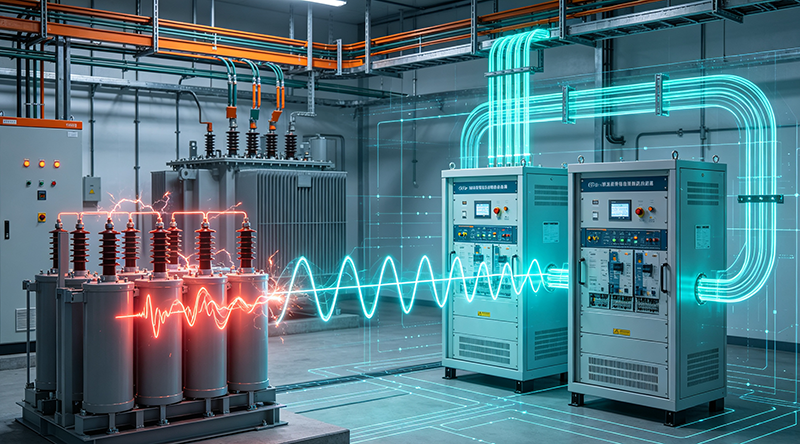
Ensemble, ils peuvent:
- Corriger le facteur de puissance à un niveau proche de l'unité
- Élimine les courants harmoniques
- Stabiliser la tension
- Réduire les pertes du transformateur
- Consommation d’énergie réduite
- Prévenir la surchauffe des équipements
- Augmenter l’efficacité du système
- Prolonger la durée de vie des équipements
Cette solution intégrée est particulièrement utile dans les installations où les charges non linéaires évoluent rapidement..
Applications typiques
Les solutions CoEpower SVG et AHF sont largement utilisées dans:
- Usines de fabrication
- Aciéries
- Cimenteries
- Installations pétrochimiques
- Opérations minières
- Usines de traitement de l'eau
- Centres de données
- Hôpitaux
- Bâtiments commerciaux
- Aéroports
- Systèmes de transport ferroviaire
- Installations d'énergies renouvelables
- Bornes de recharge EV
Ces industries nécessitent une stabilité, fiable, et des systèmes électriques économes en énergie.
Pourquoi de plus en plus d'ingénieurs remplacent les banques de condensateurs
Dans de nombreux secteurs, les ingénieurs remplacent les systèmes vieillissants de batteries de condensateurs par des équipements intelligents de qualité de l'énergie, car ils ont besoin:
- Coûts de maintenance réduits
- Meilleure suppression des harmoniques
- Compensation dynamique plus rapide
- Facteur de puissance plus élevé
- Efficacité énergétique améliorée
- Temps d'arrêt réduits
- Conformité à l'IEEE 519 normes harmoniques
- Meilleure compatibilité avec les charges non linéaires modernes
Ce changement ne consiste pas simplement à adopter des technologies plus récentes : il s’agit également de remédier aux limites des solutions traditionnelles dans les environnements électriques exigeants d’aujourd’hui..
Pourquoi choisir CoEpower?
Chez CoEpower, nous sommes spécialisés dans les solutions avancées de qualité d'énergie conçues pour les systèmes électriques industriels et commerciaux modernes.
Notre Générateurs de variables statiques (SVG) livrer ultra-rapidement, compensation précise de la puissance réactive, tandis que notre Filtres harmoniques actifs (Ahfs) supprime efficacement la distorsion harmonique causée par les charges non linéaires. Ensemble, ils aident à améliorer le facteur de puissance, réduire les pertes d'énergie, protéger les équipements critiques, et améliorer la fiabilité globale du système.
Les principaux avantages des solutions CoEpower incluent:
- Technologie DSP et IGBT haute vitesse
- Compensation dynamique en temps réel
- Conception modulaire et évolutive
- Encombrement d'installation compact
- Surveillance et communication intelligentes
- Intégration facile avec les systèmes électriques existants
- Fonctionnement fiable dans des environnements industriels exigeants
- Faibles besoins d’entretien
Que vous souhaitiez mettre à niveau un système de batterie de condensateurs vieillissant ou concevoir un nouveau réseau de distribution d'énergie., CoEpower propose des solutions personnalisées adaptées à votre application.
Pensées finales
Les batteries de condensateurs servent bien l’industrie électrique depuis des décennies, mais l'adoption rapide de charges non linéaires a fondamentalement modifié les exigences en matière de correction du facteur de puissance et de gestion de la qualité de l'énergie..
Si votre installation est confrontée à des pannes récurrentes de condensateurs, distorsion harmonique, facteur de puissance instable, ou augmentation des coûts de maintenance, il est peut-être temps d'envisager une approche plus intelligente.
Générateurs de variables statiques (SVG) fournir rapidement, précis, et compensation de puissance réactive facile à entretenir, alors que Filtres harmoniques actifs (Ahfs) éliminez les harmoniques nocives avant qu’elles ne puissent endommager votre équipement. Ensemble, ils créent une solution complète de qualité de l'énergie qui améliore l'efficacité, protège les actifs précieux, et prend en charge un fonctionnement fiable dans les systèmes électriques industriels modernes.
Chez CoEpower, nous nous engageons à aider nos clients à construire des bâtiments plus propres, plus sûr, et des réseaux électriques plus efficaces grâce à des technologies innovantes de qualité d’énergie conçues pour l’avenir.
Balises: problèmes de batterie de condensateurs, panne de batterie de condensateurs, filtre harmonique actif, Ahf, Générateur VAR statique, SVG, compensation de puissance réactive, filtre harmonique, Correction du facteur de puissance, atténuation harmonique, remplacement de la batterie de condensateurs, Qualité de l'énergie industrielle, distorsion harmonique, solutions intelligentes de qualité de l'énergie, fournisseurs, fabricants, usine, entreprise, Chine, de gros, acheter, prix, citation, en gros, à vendre, entreprise, action, coût.
Produits connexes
Blogs connexes
Obtenez un devis aujourd'hui