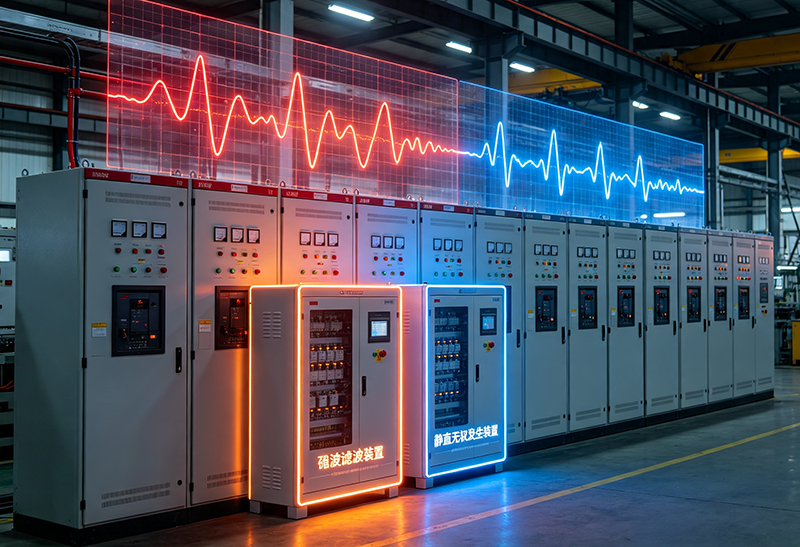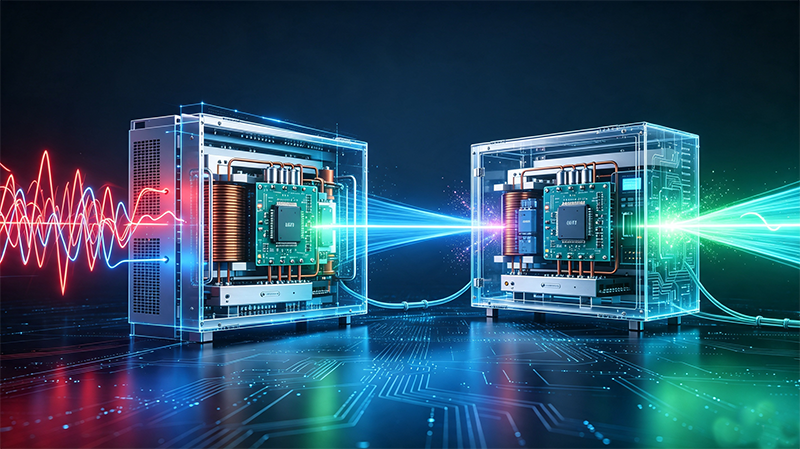
Introdução: Por que a correção do fator de potência é importante em data centers
Como engenheiro elétrico sênior na CoEpower, Passei anos projetando e otimizando sistemas de qualidade de energia para instalações industriais e data centers. Um desafio recorrente na infraestrutura moderna é manter uma rede estável e eficiente fator de potência (Pf) sob cargas altamente dinâmicas.
Data centers, em particular, são ambientes extremamente sensíveis. Com a rápida comutação de sistemas UPS, cargas do servidor, sistemas de refrigeração, e eletrônica de potência, a demanda de energia reativa flutua constantemente. Fator de potência baixo leva a:
- Aumento das contas de eletricidade devido a penalidades de serviços públicos
- Maiores perdas em transformadores e cabos
- Capacidade reduzida do sistema
- Instabilidade de tensão sob condições de carga dinâmica
Tradicionalmente, bancos de capacitores foram usados para correção do fator de potência. No entanto, com a crescente complexidade das cargas modernas, SVG (Gerador de Var estático) a tecnologia está se tornando a solução preferida em data centers avançados.
Este artigo fornece uma comparação técnica e prática profunda de SVG vs bancos de capacitores, ajudando engenheiros e gerentes de instalações a tomar decisões informadas.
Compreendendo a correção do fator de potência (PFC)
O fator de potência é a razão entre a potência real (kW) e poder aparente (KVA). Idealmente, esse valor deve ser o mais próximo 1.0 possível.
A maioria dos data centers opera com cargas indutivas e não lineares, que introduz:
- Potência reativa atrasada (cargas indutivas como transformadores, motores, refrigeradores)
- Distorção harmônica (de sistemas UPS, retificadores, servidores)
A correção do fator de potência visa compensar a potência reativa (esquerda) localmente para:
- Melhore a eficiência do sistema
- Reduza as perdas de transmissão
- Libere capacidade elétrica
- Evite penalidades de utilidade
Existem duas tecnologias dominantes usadas hoje:
- Bancos de capacitores
- SVG (Gerador de Var estático)
O que é um banco de capacitores?
Um banco de capacitores é um sistema tradicional de correção passiva do fator de potência composto por vários capacitores conectados em estágios..
Como funciona
Os bancos de capacitores fornecem compensação de potência reativa fixa ou escalonada, gerando potência reativa líder que compensa cargas indutivas.
Tipos de bancos de capacitores
- Bancos de capacitores fixos
- Bancos de capacitores comutados automaticamente
- Bancos de capacitores comutados por tiristores
Vantagens
- Baixo custo inicial
- Tecnologia simples
- Instalação fácil
- Adequado para condições de carga estáveis
Limitações em data centers
No entanto, bancos de capacitores têm limitações significativas em ambientes modernos:
- Compensação baseada em etapas (não contínuo)
- Resposta lenta às flutuações de carga
- Risco de sobrecompensação
- Mau desempenho sob distorção harmônica
- Requer manutenção frequente (contatores, fusíveis, envelhecimento dos capacitores)
Resumidamente, bancos de capacitores são mais adequados para cargas industriais estáveis, infraestrutura digital não dinâmica.
O que é um SVG (Gerador de Var estático)?
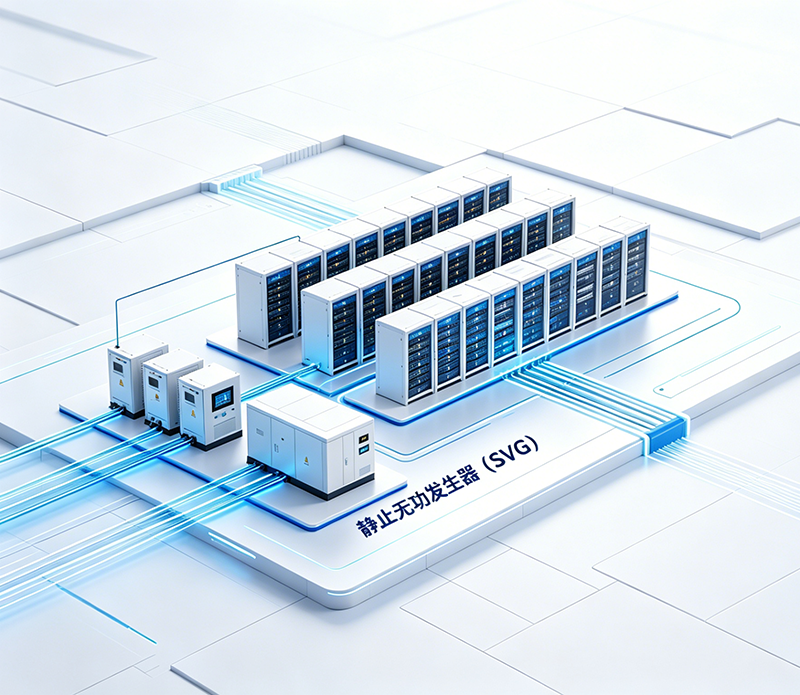
Um SVG, ou gerador de var estático, é um dispositivo moderno baseado em eletrônica de potência que fornece compensação dinâmica de potência reativa em tempo real.
Ao contrário dos bancos de capacitores, SVGs usam tecnologia de inversor baseada em IGBT para gerar ou absorver energia reativa instantaneamente.
Como funciona
- Monitora continuamente a corrente de carga
- Calcula a demanda de energia reativa em tempo real
- Injeta corrente de compensação em milissegundos
Características principais
- Compensação totalmente dinâmica (indutivo e capacitivo)
- Ajuste contínuo (não baseado em etapas)
- Resposta rápida (tipicamente <10 Ms)
- Funciona bem com distorção harmônica
- Design compacto e modular
SVG vs Banco de Capacitores: Comparação Técnica
Do ponto de vista da engenharia, as diferenças são significativas.
1. Velocidade de resposta
- Capacitor Bank: Lento (comutação de nível de segundos)
- SVG: Ultra-rápido (resposta em nível de milissegundos)
Para data centers com cargas de servidor flutuantes, SVG claramente supera.
2. Precisão de compensação
- Capacitor Bank: Passo a passo, precisão limitada
- SVG: Compensação contínua e precisa
SVG mantém PF próximo de 0.99 consistentemente.
3. Desempenho Harmônico
- Capacitor Bank: Pode amplificar harmônicos (risco de ressonância)
- SVG: Atenua ativamente a distorção harmônica
Isto é crítico em ambientes com uso intensivo de UPS.
4. Requisitos de manutenção
- Capacitor Bank: Requer substituição do capacitor, manutenção de contatores
- SVG: Manutenção mínima, projeto de estado sólido
5. Espaço e escalabilidade
- Capacitor Bank: Volumoso, expansão baseada em painel
- SVG: Compactar, expansão modular possível
6. Custo do ciclo de vida
Embora os bancos de capacitores tenham custo inicial mais baixo, O SVG oferece:
- Menor taxa de falhas
- Risco reduzido de tempo de inatividade
- Maior eficiência energética
- Melhor ROI a longo prazo
Por que os data centers precisam mais de SVG do que bancos de capacitores
Os data centers modernos são fundamentalmente diferentes das cargas industriais tradicionais.
1. Perfis de carga altamente dinâmicos
As cargas de trabalho do servidor flutuam em milissegundos devido à virtualização e à computação em nuvem.
Os bancos de capacitores não conseguem reagir rápido o suficiente, levando a:
- Oscilação do fator de potência
- Sobre/subcompensação
SVG resolve isso com ajuste em tempo real.
2. Ambiente rico em harmônicos
Os data centers contêm:
- Retificadores UPS
- Fontes de alimentação comutadas
- Sistemas de resfriamento acionados por VFD
Isso cria distorção harmônica (3terceiro, 5o, 7os harmônicos).
Os bancos de capacitores podem ressoar sob tais condições, enquanto o SVG suprime ativamente as correntes harmônicas.
3. Requisitos de alta confiabilidade
O tempo de inatividade em data centers é extremamente caro. Qualquer instabilidade na qualidade da energia pode resultar em:
- Falhas no servidor
- Perda de dados
- Desequilíbrio do sistema de refrigeração
SVG fornece estável, compensação contínua sem falhas de comutação mecânica.
4. Otimização da Eficiência Energética
Mesmo pequenas melhorias no FP (Por exemplo, de 0.92 para 0.99) pode reduzir significativamente:
- Perdas do transformador
- Aquecimento de cabo
- Penalidades de utilidade
SVG garante PF consistentemente alto em todas as condições de carga.
Insights de engenharia do mundo real de projetos CoEpower
Em vários projetos de data center CoEpower, observamos um padrão consistente:
- Os bancos de capacitores funcionaram bem durante testes de carga constante
- Mas não conseguiu manter a estabilidade durante as mudanças de pico no tráfego na nuvem
Depois de substituir ou complementar sistemas SVG:
- Estabilidade do fator de potência melhorada em 8–15%
- Distorção harmônica reduzida significativamente
- As intervenções de manutenção caíram mais 60%
- A eficiência energética geral melhorou de forma mensurável
Isso demonstra que o SVG não é apenas uma atualização – é uma melhoria em nível de sistema na arquitetura de qualidade de energia.
Solução Híbrida: SVG + Capacitor Bank
Como engenheiro, Reconheço também que os bancos de capacitores não são obsoletos.
Em muitas instalações grandes, um configuração híbrida é ideal:
- Manipulação de bancos de capacitores carga reativa básica
- Alças SVG carga dinâmica e em rápida mudança
Benefícios dos Sistemas Híbridos
- Custo reduzido em comparação com a implantação completa de SVG
- Melhor capacidade de resposta do sistema
- Menor estresse em unidades SVG
- Custo de ciclo de vida equilibrado
Esta abordagem é especialmente útil em:
- Nível II / Data centers de nível III
- Grandes campi industriais
- Instalações de carga mista
Como escolher entre SVG e banco de capacitores
Ao projetar um sistema de correção do fator de potência, considere o seguinte:
Escolha Banco de Capacitores se:
- A carga é estável e previsível
- O orçamento é altamente restrito
- A distorção harmônica é mínima
- Motores industriais dominam a carga
Escolha SVG se:
- A carga é altamente dinâmica (data centers, computação em nuvem)
- Harmônicos são significativos
- É necessária alta qualidade de energia
- O tempo de inatividade é extremamente caro
Escolha Híbrido se:
- Instalação de grande escala com comportamento de carga mista
- Precisa de equilíbrio entre CAPEX e desempenho
Futuro da correção do fator de potência em data centers
A indústria está claramente caminhando para:
- Digitalização total de sistemas de energia
- Otimização de energia em tempo real
- Integração de rede inteligente
- Previsão de carga orientada por IA
Nesse contexto, A tecnologia SVG alinha-se perfeitamente com o futuro da infraestrutura de energia inteligente.
Bancos de capacitores ainda existirão, mas principalmente em funções de apoio, em vez de ser a solução principal.
Conclusão
Da perspectiva da engenharia sênior na CoEpower, a comparação entre SVG vs banco de capacitores não se trata apenas de custo – trata-se do comportamento do sistema em condições do mundo real.
Os bancos de capacitores continuam sendo confiáveis, solução econômica para cargas estáveis. No entanto, para moderno data centers com dinâmica, ambientes ricos em harmônicos, SVG (Gerador de Var estático) fornece superior:
- Velocidade de resposta
- Precisão
- Desempenho harmônico
- Confiabilidade
- Valor do ciclo de vida
Na maioria das aplicações modernas de data center, SVG não é mais um luxo – está se tornando um requisito padrão para sistemas de qualidade de energia de alto desempenho.
Se você estiver projetando ou atualizando um sistema de energia de data center, avaliar a compensação de potência reativa baseada em SVG é um passo crítico para alcançar maior eficiência, estabilidade, e confiabilidade operacional de longo prazo.
Tags de palavras-chave
Correção do fator de potência, SVG vs banco de capacitores, Gerador de Var estático, sistema de banco de capacitores, qualidade de energia do data center, compensação de energia reativa, mitigação de harmônicos, correção do fator de potência industrial, compensação VAR dinâmica, Soluções de engenharia CoEpower, fornecedores, Fabricantes, fábrica, empresa, China, atacado, comprar, preço, cotação, granel, comprável, Empresas, estoque, custar.