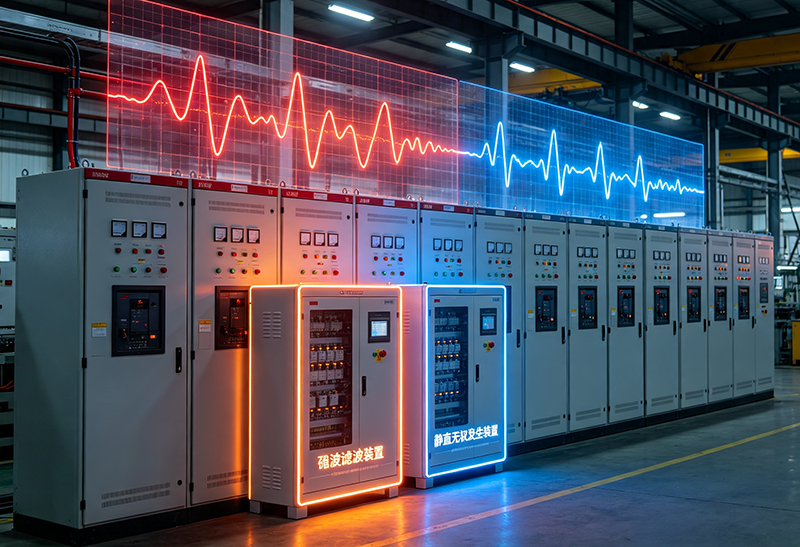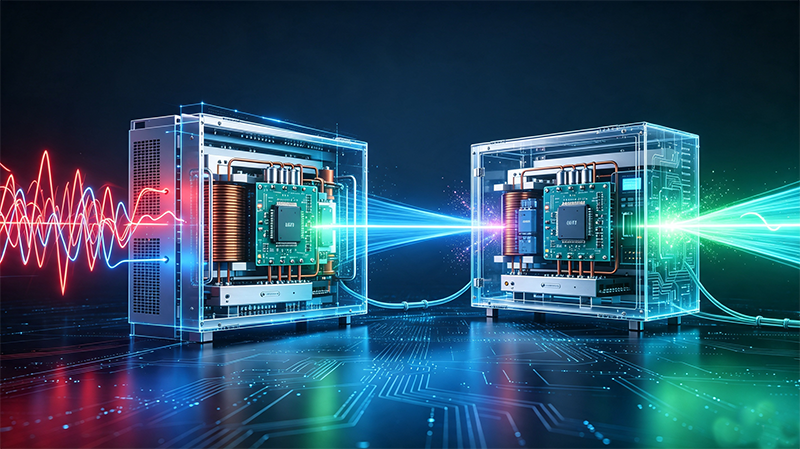
Em instalações industriais modernas, especialmente setores industriais com uso intensivo de energia, como a produção de silício monocristalino, manter alta qualidade de energia é fundamental para a confiabilidade operacional, eficiência energética, e longevidade do equipamento. À medida que a automação da produção e a eletrônica de potência se tornam cada vez mais predominantes, a poluição harmônica emergiu como um dos problemas de qualidade de energia mais desafiadores.
Na CoEpower, recentemente concluímos um projeto bem-sucedido de mitigação de harmônicas para um fabricante líder de silício monocristalino localizado em Ningxia, China. Ao implantar nosso CoEpo-APF-1200/0.4 Filtro de energia ativo, reduzimos significativamente a distorção harmônica, restaurou a operação estável do sistema de compensação, e melhor desempenho elétrico geral.
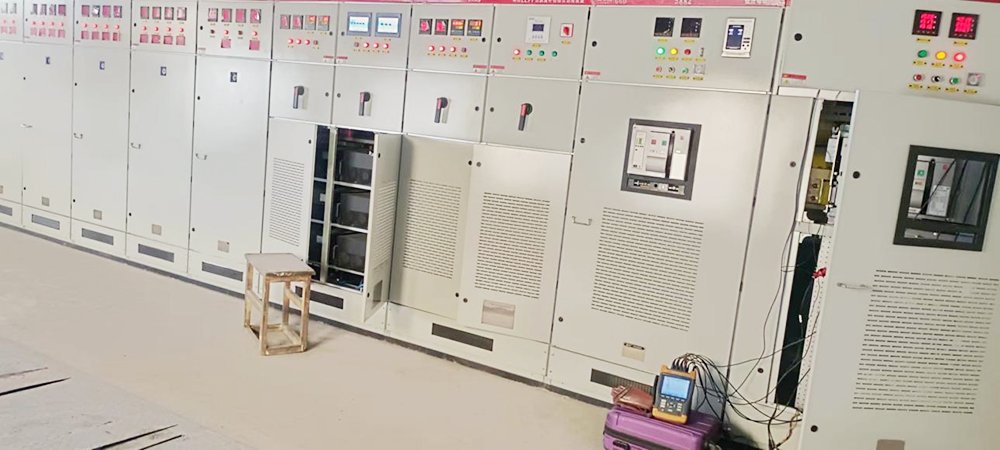
Este artigo apresenta o histórico do projeto, desafios, projeto de solução, resultados de comissionamento, e lições aprendidas no campo.
Antecedentes do projeto
O cliente opera uma instalação de fabricação de silício monocristalino em grande escala. O processo de produção depende fortemente de fornos monocristalinos, que são cargas não lineares que geram correntes harmônicas substanciais.
Durante inspeções rotineiras de qualidade de energia, o cliente descobriu distorções harmônicas graves em toda a rede de distribuição de baixa tensão. O sistema de compensação passiva existente frequentemente apresentava mau funcionamento e era incapaz de fornecer compensação eficaz de potência reativa devido a problemas de ressonância harmônica.
De acordo com medições no local, o principal equipamento afetado foi um:
- 3150 transformador kVA
- 10 kV / 0.4 sistema de distribuição kV
- Vários fornos de silício monocristalino
O cliente precisava de uma solução imediata e confiável, capaz de:
- Reduzindo a distorção harmônica
- Protegendo equipamentos elétricos
- Restaurando a operação do banco de capacitores
- Melhorando o fator de poder
- Garantir a conformidade com os padrões de qualidade de energia
Por que os harmônicos são um problema sério na fabricação de silício
As instalações de produção de silício monocristalino utilizam um grande número de:
- Unidades de frequência variáveis (Vfds)
- Retificadores
- Conversores eletrônicos de potência
- Equipamento de aquecimento de alta potência
Esses dispositivos extraem correntes não senoidais da rede, criando harmônicos que podem levar a:
Superaquecimento do transformador
Correntes harmônicas excessivas aumentam as perdas de cobre e ferro, reduzindo a expectativa de vida do transformador.
Falhas no capacitor
Bancos de capacitores podem ressoar com a indutância do sistema, causando superaquecimento e tropeços frequentes.
Mau funcionamento do equipamento
Sistemas de controle sensíveis podem sofrer falsos disparos, falhas de comunicação, e desligamentos inesperados.
Aumento das perdas de energia
Maior conteúdo harmônico resulta em perdas adicionais do sistema e redução da eficiência energética.
Fraco fator de potência
Harmônicos distorcem as formas de onda atuais, afetando negativamente a potência aparente e aumentando as penalidades de serviços públicos.
Para este projeto Ningxia, os níveis harmônicos já haviam atingido um ponto em que o sistema de compensação existente não poderia mais operar de forma confiável.
Design da solução CoEpower
Depois de realizar uma pesquisa abrangente no local e uma análise da qualidade da energia, nossa equipe de engenharia recomendou a instalação de um sistema de filtragem ativa de harmônicas de alta capacidade.
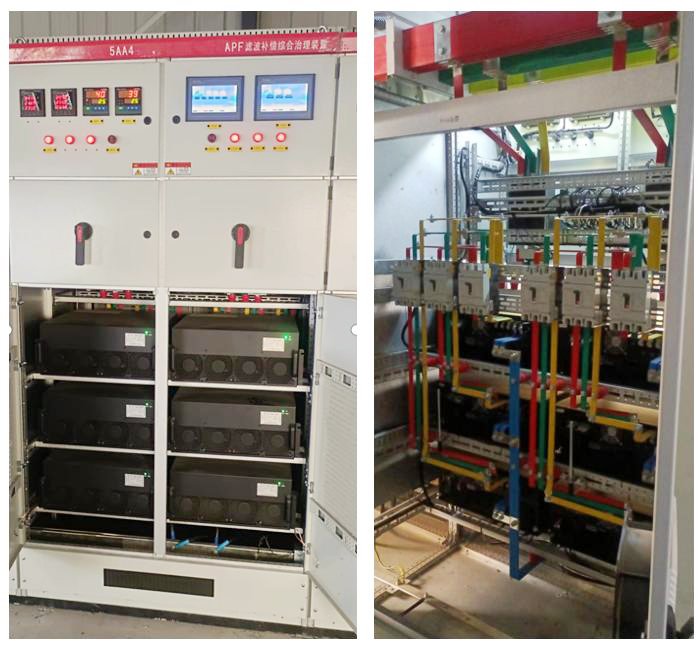
Equipamento Instalado
| Parâmetro | Especificação |
| Modelo de produto | CoEpo-APF-1200/0.4 |
| Capacidade total de remuneração | 1200UM |
| Quantidade de instalação | 1 Gabinete |
| Capacidade do transformador | 3150 KVA |
| Tensão do sistema | 400V |
| Local de instalação | Atrás do Gabinete de Compensação |
As dimensões do gabinete APF foram:
1200mm × 1000 mm × 2200 mm
A solução foi projetada para detectar e compensar dinamicamente correntes harmônicas em tempo real, garantindo melhoria contínua da qualidade da energia sob condições de carga variadas.
Como funcionam os filtros de energia ativos
Ao contrário dos filtros passivos tradicionais que visam frequências harmônicas específicas, Os Filtros Ativos de Potência monitoram continuamente o sistema elétrico e injetam correntes harmônicas iguais, mas opostas.
Este processo cancela efetivamente harmônicos indesejados antes que eles se propaguem pela rede.
As principais vantagens incluem:
- Compensação harmônica em tempo real
- Adaptação dinâmica de carga
- Sem risco de ressonância
- Compensação simultânea de potência reativa
- Requisitos de manutenção reduzidos
- Maior confiabilidade do sistema
Para instalações com cargas de produção em rápida mudança, Os APFs são frequentemente a solução preferida em comparação com tecnologias de filtragem passiva.
Instalação e Comissionamento
O processo de comissionamento foi realizado em condições normais de produção para garantir uma avaliação precisa do desempenho.
Equipamento de teste
As medições foram realizadas usando um:
Analisador de qualidade de energia FLUKE 435-II
Especificações principais incluídas:
- IEC 61000-4-30 Conformidade Classe A
- Precisão da tensão: 0.1%
- Precisão atual: 0.5%
- Capacidade abrangente de análise harmônica
O local de teste foi o gabinete de distribuição de entrada, permitindo-nos avaliar o desempenho geral do sistema antes e depois da ativação do APF.
Resultados de mitigação harmônica
Os dados de comissionamento demonstraram melhorias substanciais na qualidade da corrente e da tensão.
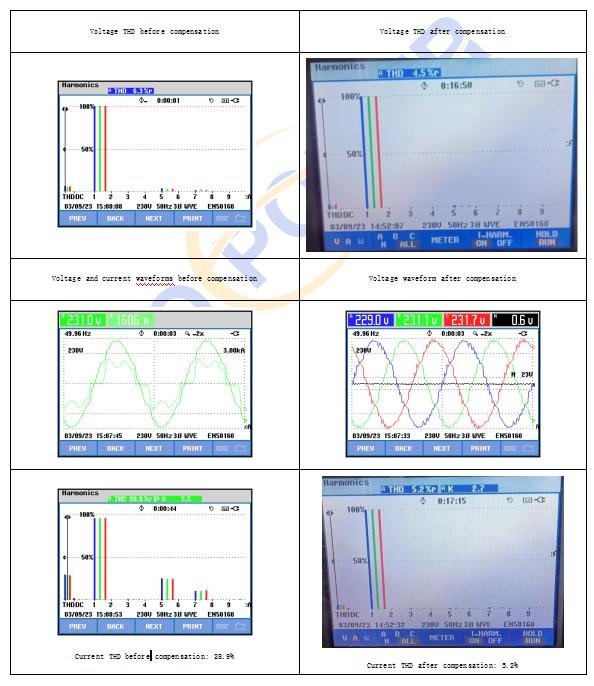
Redução atual de THD
Antes da compensação
Distorção Harmônica Total Atual (Thd):
28.9%
Após compensação
Distorção Harmônica Total Atual (Thd):
5.2%
Isto representa uma aproximação:
82% redução na distorção harmônica atual.
Melhoria da qualidade da tensão
Antes da operação APF
Tensão THD:
6.3%
Após a operação APF
Tensão THD:
5.2%
Embora a distorção de tensão tenha sido menos severa que a distorção de corrente, o APF ainda produziu uma melhoria mensurável na qualidade da forma de onda de tensão.
Análise de ordem harmônica
Os harmônicos mais dominantes observados no local foram os:
- 5o harmônico
- 7o harmônico
- 11o harmônico
O APF suprimiu efetivamente esses componentes.
| Ordem Harmônica | Antes da APF | Depois da APF | Redução |
| 5th | 398.3 UM | 19.6 UM | 95% |
| 7th | 169 UM | 12.5 UM | 92.6% |
| 11th | 123.9 UM | 10.5 UM | 91.5% |
A redução desses harmônicos dominantes melhorou significativamente a estabilidade geral do sistema e reduziu o estresse elétrico em transformadores e bancos de capacitores.
Melhoria da forma de onda
Um dos indicadores mais visíveis da eficácia do APF foi a transformação das formas de onda do sistema.
Antes da compensação:
- Distorção severa da forma de onda
- Conteúdo harmônico significativo
- Aumento do estresse elétrico
Após compensação:
- As formas de onda tornaram-se quase sinusoidais
- Níveis mais baixos de distorção
- Melhor eficiência de transmissão de energia
Essa melhoria contribui diretamente para maior vida útil do equipamento e redução de custos de manutenção.
Otimização do Fator de Potência
Além da mitigação harmônica, o sistema APF foi configurado para fornecer compensação de potência reativa.
Depois de ativar o modo de compensação:
Fator de potência alcançado
PF = 1.0
Alcançar o fator de potência unitário oferece vários benefícios:
- Penalidades de serviços públicos reduzidas
- Melhor utilização do transformador
- Menores perdas do sistema
- Maior eficiência elétrica
- Melhor regulação de tensão
Para usuários industriais com alto consumo mensal de energia, mesmo pequenas melhorias no fator de potência podem gerar economias substanciais de custos ao longo do tempo.
Benefícios do cliente
Após o comissionamento, o cliente experimentou diversas vantagens imediatas:
Maior confiabilidade de produção
A interferência harmônica reduzida minimizou os riscos de desligamentos inesperados do equipamento.
Proteção aprimorada de equipamentos
Correntes harmônicas mais baixas reduziram o estresse térmico nos transformadores, cabos, e switchgue.
Operação estável do capacitor
O sistema de compensação existente poderia agora operar sem falhas relacionadas à ressonância.
Custos de manutenção reduzidos
Qualidade de energia mais limpa se traduz em maior vida útil do equipamento e menos reparos.
Preparação para Expansão Futura
O APF fornece compensação dinâmica capaz de se adaptar ao crescimento futuro da produção.
Conclusão
Este projeto demonstra como a avançada tecnologia Active Power Filter pode resolver com eficácia graves problemas harmônicos em aplicações industriais de alta energia, como a fabricação de silício monocristalino.
Ao instalar o Filtro de energia ativo CoEpower CoEpo-APF-1200/0.4, a instalação de Ningxia alcançou:
✔ THD atual reduzido de 28.9% para 5.2%
✔ Tensão THD reduzida de 6.3% para 5.2%
✔ 5º harmônico reduzido em 95%
✔ Fator de potência melhorado para 1.0
✔ Formas de onda de corrente e tensão quase senoidais
✔ Operação confiável do sistema de compensação
À medida que as indústrias continuam a adotar mais equipamentos eletrônicos de potência, a mitigação de harmônicas se tornará cada vez mais importante para manter a qualidade da energia e a eficiência operacional. A CoEpower continua comprometida em fornecer soluções APF inovadoras que ajudem os clientes industriais a obter resultados mais seguros, limpador, e sistemas elétricos mais confiáveis.
Sobre CoEpower
A CoEpower é especializada em soluções de qualidade de energia, incluindo:
- Filtros de energia ativos (APF)
- Geradores Var estáticos (Svg)
- Filtros Harmônicos Híbridos
- Sistemas de correção de fator de potência
- Soluções de Eficiência Energética
Se sua instalação estiver enfrentando distorção harmônica, falhas de capacitor, superaquecimento do transformador, ou fator de potência ruim, entre em contato com a equipe de engenharia da CoEpower para discutir uma solução personalizada de melhoria da qualidade de energia.
Tags:
Filtro de energia ativo, Solução APF, Mitigação harmônica, Filtragem harmônica, Melhoria da qualidade de energia, Fabricação de silício monocristalino, Harmônicos Industriais, Correção do fator de potência, CoEpower APF, Redução de Distorção Harmônica, Eficiência Energética Elétrica, Sistema de energia industrial, IEC 61000-4-30, Compensação Harmônica, Estudo de caso de qualidade de energia, fornecedores, Fabricantes, fábrica, empresa, China, atacado, comprar, preço, cotação, volume, à venda, empresas, estoque, custo.