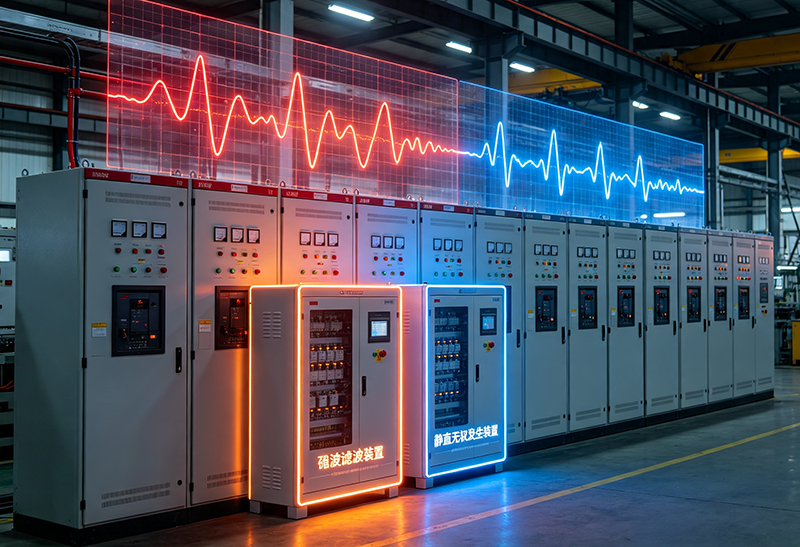
Nos sistemas de energia industriais e comerciais atuais, a distorção harmônica tornou-se um desafio crescente. À medida que mais instalações dependem de cargas elétricas não lineares, como unidades de frequência variável (Vfds), Sistemas UPS, Iluminação LED, Chargers de EV, máquinas de soldagem, e equipamentos de data center, a questão dos harmônicos não pode mais ser ignorada.
No Coepower, frequentemente ajudamos engenheiros, Empreiteiros EPC, e gerentes de instalações resolvem problemas de qualidade de energia causados por harmônicos. Duas das soluções mais comumente discutidas são filtros harmônicos monofásicos e filtros harmônicos ativos (AHFS).
Embora ambas as tecnologias sejam projetadas para reduzir a distorção harmônica, eles diferem significativamente nos princípios de design, cenários de aplicação, desempenho, e custo. Neste artigo, explicaremos as principais diferenças entre filtros harmônicos monofásicos e filtros harmônicos ativos da perspectiva de um engenheiro elétrico sênior.
O que são harmônicos em sistemas elétricos?
Harmônicos são formas de onda de tensão ou corrente que operam em frequências múltiplas da frequência fundamental. (50Hz ou 60Hz). Eles são gerados principalmente por cargas não lineares que consomem corrente em pulsos abruptos em vez de ondas senoidais suaves..
Fontes comuns de harmônicos incluem:
- Inversores de frequência variável (Vfds)
- Trocando fontes de alimentação
- Data centers
- Inversores solares
- Estações de carregamento de EV
- Sistemas UPS
- Sistemas de iluminação LED
- Fornos de arco
Distorção harmônica excessiva pode causar:
- Superaquecimento do transformador
- Falhas no banco de capacitores
- Tropeço incômodo
- Eficiência motora reduzida
- Aumento das perdas de energia
- Superaquecimento do cabo
- Mau funcionamento do equipamento
- Fator de potência reduzido
- Custos de manutenção mais elevados
Para mitigar esses problemas, tecnologias de filtragem harmônica são implantadas.
O que é um filtro harmônico monofásico?
UM filtro harmônico monofásico é um dispositivo de filtragem projetado especificamente para sistemas elétricos monofásicos. É comumente usado para suprimir correntes harmônicas geradas por cargas monofásicas.
Esses filtros são normalmente filtros passivos compostos de:
- Capacitores
- Indutores
- Resistores
O filtro é sintonizado em frequências harmônicas específicas, como o 3º, 5th, ou 7º harmônicos.
Como funcionam os filtros harmônicos monofásicos
Os filtros harmônicos monofásicos funcionam criando um caminho de baixa impedância para correntes harmônicas. Em vez de fluir de volta para o sistema de energia, as correntes harmônicas são desviadas para o circuito do filtro.
A maioria dos filtros monofásicos são passivos, o que significa que eles não injetam ativamente correntes de compensação. Em vez de, eles contam com circuitos LC sintonizados para absorver harmônicos direcionados.
Os locais de instalação típicos incluem:
- Sistemas residenciais
- Pequenos edifícios comerciais
- Equipamento de escritório
- Instrumentos de laboratório
- Equipamento de telecomunicações
- Sistemas UPS monofásicos
- Pequenos dispositivos médicos
O que é um filtro harmônico ativo (Ahf)?
Um Filtro harmônico ativo (Ahf) é um dispositivo eletrônico avançado de qualidade de energia que detecta e compensa dinamicamente correntes harmônicas em tempo real.

Ao contrário dos filtros passivos, AHFs usam eletrônica de potência e tecnologia de processamento de sinal digital para injetar correntes harmônicas inversas no sistema.
Isso efetivamente cancela harmônicos indesejados em uma ampla faixa de frequência.
Como funcionam os filtros harmônicos ativos
Filtros harmônicos ativos monitoram continuamente as correntes de carga usando transformadores de corrente (TCs). O controlador analisa o espectro harmônico e gera correntes de compensação que são iguais em magnitude, mas opostas em fase.
O resultado é o cancelamento de harmônicos e melhor qualidade da forma de onda.
AHFs normalmente podem:
- Reduza o THDi abaixo 5%
- Compensar múltiplas ordens harmônicas simultaneamente
- Melhorar o fator de potência
- Equilibre cargas trifásicas
- Reduza as correntes neutras
- Adapte-se dinamicamente às mudanças de carga
Filtros harmônicos ativos são amplamente utilizados em:
- Plantas industriais
- Data centers
- Hospitais
- Fabricação de semicondutores
- Edifícios comerciais
- Sistemas de energia renovável
- Infraestrutura de carregamento de veículos elétricos
- Fábricas inteligentes
Principais diferenças entre filtros harmônicos monofásicos e filtros harmônicos ativos
1. Princípio Operacional
Filtro Harmônico Monofásico
Filtros harmônicos monofásicos são geralmente dispositivos passivos. Eles absorvem frequências harmônicas específicas usando circuitos LC sintonizados.
Seu desempenho depende muito:
- Impedância do sistema
- Condições de carga
- Estabilidade de frequência harmônica
Filtro harmônico ativo
Os AHFs geram ativamente correntes de compensação em tempo real usando eletrônica de potência e algoritmos DSP.
Eles podem responder instantaneamente às mudanças nas condições harmônicas e compensar dinamicamente.
2. Faixa de compensação harmônica
Filtro Harmônico Monofásico
Filtros passivos geralmente são ajustados para uma ou mais ordens harmônicas.
Por exemplo:
- 3filtro de terceira harmônica
- 5o filtro harmônico
- 7o filtro harmônico
Eles são menos eficazes para mitigação harmônica de amplo espectro.
Filtro harmônico ativo
AHFs podem compensar:
- 22º ao 50º harmônicos
- Vários harmônicos simultaneamente
- Cargas harmônicas dinâmicas e flutuantes
Isso fornece proteção significativamente mais ampla.
3. Flexibilidade do Sistema
Filtro Harmônico Monofásico
Os filtros passivos são relativamente fixos depois de instalados.
Se a carga mudar significativamente, o desempenho do filtro pode diminuir.
Filtro harmônico ativo
Os AHFs são altamente adaptáveis e respondem automaticamente às variações de carga em tempo real.
Isto os torna ideais para sistemas elétricos modernos com cargas dinâmicas.
4. Complexidade de instalação
Filtro Harmônico Monofásico
A instalação geralmente é simples e econômica.
Eles são adequados para:
- Sistemas pequenos
- Problemas harmônicos simples
- Orçamentos limitados
Filtro harmônico ativo
Os AHFs exigem:
- Transformadores de corrente
- Configuração do controlador
- Análise harmônica adequada
- Comissionamento mais sofisticado
No entanto, eles fornecem desempenho muito superior.
5. Risco de ressonância
Filtro Harmônico Monofásico
Filtros harmônicos passivos podem criar problemas de ressonância no sistema de potência.
Isso pode potencialmente amplificar os harmônicos em vez de reduzi-los.
Frequentemente são necessários estudos do sistema antes da instalação.
Filtro harmônico ativo
Os AHFs não dependem de sintonia de ressonância e, portanto, evitam riscos de ressonância.
Isso melhora significativamente a confiabilidade do sistema.
6. Correção do fator de potência
Filtro Harmônico Monofásico
Alguns filtros passivos também podem melhorar o fator de potência.
No entanto, a capacidade de correção é limitada.
Filtro harmônico ativo
Muitos AHFs modernos integram:
- Mitigação harmônica
- Compensação de energia reativa
- Correção do fator de potência
- Balanceamento de carga
Isso os torna uma solução multifuncional de qualidade de energia.
7. Requisitos de manutenção
Filtro Harmônico Monofásico
Filtros passivos geralmente requerem manutenção mínima.
No entanto, o envelhecimento do capacitor e o estresse térmico podem eventualmente reduzir o desempenho.
Filtro harmônico ativo
AHFs contêm eletrônicos avançados e sistemas de resfriamento.
Recomenda-se inspeção regular, mas os AHFs modernos são altamente confiáveis e inteligentes.
8. Comparação de custos
Filtro Harmônico Monofásico
Vantagens:
- Menor investimento inicial
- Design simples
- Econômico para pequenas aplicações
Desvantagens:
- Capacidade de compensação limitada
- Menos flexível
- Potenciais problemas de ressonância
Filtro harmônico ativo
Vantagens:
- Supressão harmônica superior
- Desempenho dinâmico
- Capacidade multifuncional
Desvantagens:
- Custo inicial mais alto
- Instalação mais complexa
No entanto, Os AHFs geralmente proporcionam custos operacionais mais baixos a longo prazo devido à melhoria da eficiência energética e à redução de falhas de equipamentos.
Tabela de comparação: Filtro Harmônico Monofásico vs Filtro Harmônico Ativo
| Recurso | Filtro Harmônico Monofásico | Filtro harmônico ativo |
|---|---|---|
| Tecnologia | Circuito LC passivo | Compensação eletrônica de potência |
| Tipo de compensação | Fixo | Dinâmico |
| Faixa Harmônica | Harmônicos específicos | Harmônicos de amplo espectro |
| Adaptabilidade | Limitado | Excelente |
| Risco de ressonância | Possível | Nenhum |
| Correção do fator de potência | Parcial | Avançado |
| Instalação | Simples | Moderado |
| Custo | Mais baixo | Mais alto |
| Melhor para | Sistemas pequenos | Sistemas industriais complexos |
| Manutenção | Baixo | Moderado |
Quando você deve escolher um filtro harmônico monofásico?
Filtros harmônicos monofásicos são ideais quando:
- Problemas harmônicos são relativamente simples
- A carga é estável
- O orçamento é limitado
- A aplicação é de pequena escala
- Apenas frequências harmônicas específicas precisam de supressão
As aplicações típicas incluem:
- Instalações residenciais
- Pequenos escritórios
- Equipamento de laboratório
- Sistemas de telecomunicações
- Pequenos sistemas UPS
Quando você deve escolher um filtro harmônico ativo?
Filtros harmônicos ativos são a escolha preferida quando:
- Os níveis harmônicos flutuam com frequência
- Existem múltiplas ordens harmônicas
- Os requisitos de qualidade de energia são rigorosos
- A confiabilidade do equipamento é crítica
- A instalação contém componentes eletrônicos sensíveis
- A expansão futura da carga é esperada
As aplicações ideais incluem:
- Automação industrial
- Data centers
- Fábricas de semicondutores
- Hospitais
- Edifícios inteligentes
- Usinas de energia renovável
- Estações de carregamento de EV
Por que a mitigação harmônica é mais importante do que nunca
Com a rápida adoção da automação, energia renovável, e eletrônica de potência, a poluição harmônica está aumentando globalmente.
As instalações modernas estão se tornando mais vulneráveis a:
- Tempo de inatividade inesperado
- Desperdício de energia
- Danos ao equipamento
- Problemas de conformidade
Padrões internacionais como IEEE 519 agora coloque limites mais rígidos na distorção harmônica.
A filtragem harmônica adequada não é mais opcional – é uma parte essencial do projeto moderno do sistema de energia.
Soluções de filtro harmônico CoEpower
No Coepower, fornecemos soluções avançadas de qualidade de energia adaptadas para aplicações industriais e comerciais.
Nossas ofertas incluem:
- Filtros harmônicos ativos (Ahf)
- Geradores VAR estáticos (Svg)
- Bancos de capacitores
- Filtros Harmônicos Passivos
- Sistemas de correção de fator de potência
- Soluções personalizadas de mitigação de harmônicas
Nossa equipe de engenharia realiza análises harmônicas detalhadas para ajudar os clientes a selecionar a solução mais eficaz e econômica para suas instalações.
Se você precisa de um filtro harmônico monofásico compacto ou de um filtro harmônico ativo de alta capacidade para um sistema industrial complexo, CoEpower pode fornecer soluções de qualidade de energia confiáveis e eficientes.
Considerações Finais
Tanto os filtros harmônicos monofásicos quanto os filtros harmônicos ativos desempenham papéis importantes no gerenciamento da qualidade da energia..
Um filtro harmônico monofásico oferece uma solução econômica para estabilidade, questões harmônicas de pequena escala. Em contraste, um filtro harmônico ativo fornece inteligência, dinâmico, e compensação harmônica abrangente para ambientes industriais modernos.
A escolha da solução certa depende:
- Gravidade harmônica
- Características de carga
- Complexidade do sistema
- Orçamento
- Planos de expansão futuros
À medida que os sistemas elétricos continuam evoluindo, A tecnologia de filtragem ativa de harmônicas está se tornando cada vez mais importante para manter a confiabilidade, eficiente, e operações em conformidade com os padrões.
Se sua instalação estiver enfrentando problemas relacionados a harmônicas, consultar engenheiros experientes em qualidade de energia é o melhor primeiro passo para encontrar a solução ideal.
Tags: Filtro harmônico monofásico, Filtro harmônico ativo, Qualidade de energia AHF, Filtro harmônico vs filtro harmônico ativo, Soluções de mitigação harmônica, Filtro harmônico industrial, Melhoria da qualidade da energia, Supressão de harmônicos elétricos, Filtro harmônico passivo, Compensação harmônica dinâmica, IEEE 519 conformidade harmônica, Soluções de distorção harmônica, Filtro harmônico CoEpower, Sistema de filtragem harmônica, Filtro harmônico ativo trifásico, fornecedores, Fabricantes, fábrica, empresa, China, atacado, comprar, preço, cotação, volume, à venda, empresas, estoque, custo.