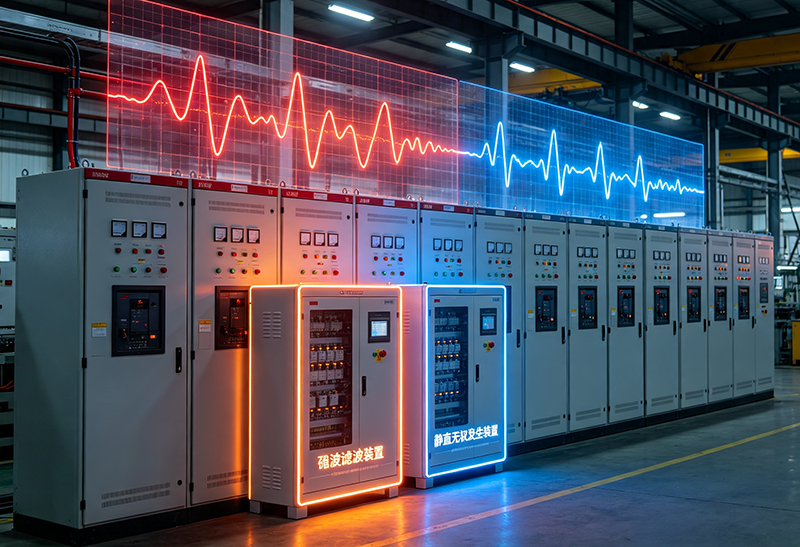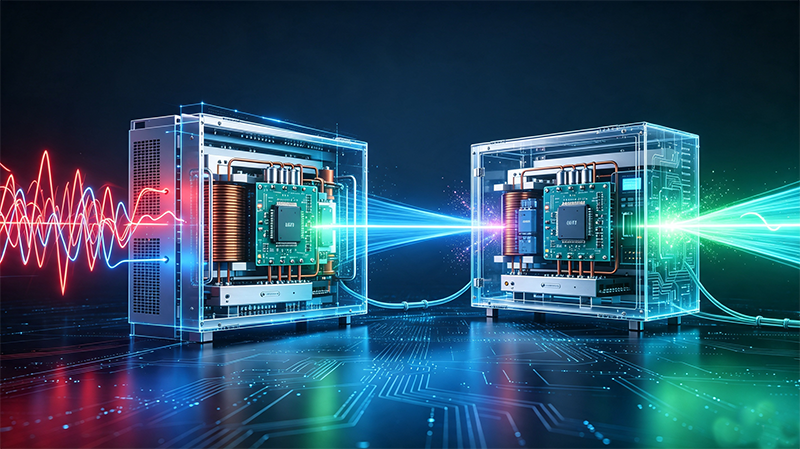
In today’s power-intensive industries, ensuring stable and efficient electrical systems is critical. From manufacturing plants to data centers, poor power quality—caused by harmonics and low power factor—can lead to equipment failures, energy losses, and costly downtime.
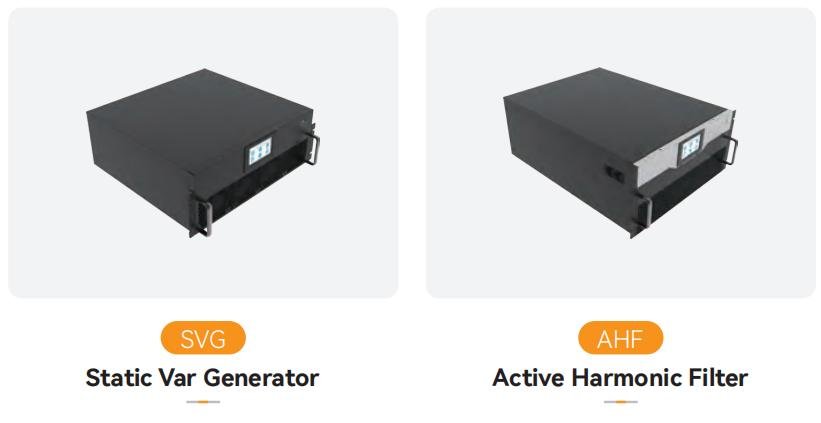
At CoEpower, we specialize in delivering advanced power quality solutions, including Active Harmonic Filters (AHF) and Static Var Generators (SVG). One of the most common questions our clients ask is:
“How do we correctly size AHF and SVG for our system?”
This guide provides a practical, engineer-backed approach—combined with real-world experience from CoEpower projects—to help you make the right decision.
Why Accurate Capacity Sizing Is Critical
Improper sizing is one of the most common mistakes in power quality projects.
Undersized System
- Incomplete harmonic filtering
- Power factor remains low
- Equipment overheating risks
Oversized System
- Higher upfront investment
- Lower ROI
- Inefficient system utilization
At CoEpower, we always emphasize precision + flexibility, ensuring each solution is both technically effective and cost-efficient.
AHF Capacity Calculation (Harmonic Filtering)
What Does AHF Do?
An Active Harmonic Filter (AHF) dynamically eliminates harmonic currents generated by nonlinear loads such as:
- VFDs
- UPS systems
- Rectifiers
Step-by-Step Calculation Method
1. Measure Load Current (I)
Use a power quality analyzer to obtain accurate real-time data.
2. Measure THDi (Total Harmonic Distortion)
This indicates how severe the harmonic pollution is.
3. Calculate Harmonic Current
Ih = I × THDi
Example:
- Load current = 100 A
- THDi = 30%
Harmonic current = 30 A
4. Define Compensation Target
Industry standard:
80%–95% harmonic mitigation
Required AHF = 30 A × 90% = 27 A
5. Add Engineering Margin
At CoEpower, we recommend:
+10% to 20% margin
Final selection:
30–35 A AHF
CoEpower Insight
Our modular AHF solutions allow:
- Parallel expansion
- Dynamic response < 5 ms
- Compliance with IEEE 519
This ensures long-term scalability without oversizing at the initial stage.
SVG Capacity Calculation (Reactive Power Compensation)
What Does SVG Do?
A Static Var Generator (SVG) improves power factor by dynamically compensating reactive power.
Step-by-Step Calculation
1. Determine Active Power (P)
Example:
P = 100 kW
2. Identify Current Power Factor
Example:
PF = 0.75
3. Set Target Power Factor
Typical goal:
PF ≥ 0.95
4. Apply Formula
Q = P × (tanφ₁ − tanφ₂)
Example Result
From PF 0.75 → 0.95
Required SVG ≈ 50–60 kVar
5. Add Margin
Final SVG:
60–70 kVar
CoEpower Engineering Advantage
CoEpower SVG systems offer:
- Fast response (<10 ms)
- Continuous reactive compensation
- Stable performance under fluctuating loads
AHF vs SVG: Which One Do You Need?
| Feature | AHF | SVG |
|---|---|---|
| Function | Harmonic mitigation | Power factor correction |
| Unit | A | kVar |
| Solves | Harmonics (THDi) | Reactive power |
| Best For | Nonlinear loads | Inductive loads |
In many real-world projects, both issues coexist.
✔ CoEpower Recommendation:
Use a hybrid AHF + SVG solution for complete power quality management.
Real-World Application Scenarios
Based on CoEpower project experience:
Manufacturing Plants
- Heavy VFD usage
- High harmonics + low PF
Data Centers
- Sensitive equipment
- Strict power quality requirements
Water Treatment Plants
- Pump systems
- Continuous operation
Renewable Energy Systems
- Solar inverters
- Grid compliance challenges
CoEpower Turnkey Solution Approach
At CoEpower, we don’t just supply products—we deliver complete solutions:
✔ On-Site Power Quality Analysis
Accurate data collection using advanced analyzers
✔ Customized System Design
Tailored AHF/SVG configuration
✔ Modular Product Architecture
Scalable and future-proof
✔ Global Project Experience
Proven success across industries
Best Practices for Optimal Results
To maximize system performance:
- Always perform on-site measurement
- Include 10–20% design margin
- Plan for future load expansion
- Ensure compliance with IEEE 519 / IEC standards
- Consider integrated solutions (AHF + SVG)
Conclusion
Correct capacity sizing is the foundation of any successful power quality solution.
- AHF = harmonic current (A)
- SVG = reactive power (kVar)
- Precision + margin = optimal performance
With the right approach—and the right partner like CoEpower—you can achieve:
✅ Improved energy efficiency
✅ Reduced operational costs
✅ Enhanced system reliability
Tags: CoEpower AHF solution, Active Harmonic Filter sizing, SVG capacity calculation, power quality solution provider, harmonic mitigation system, reactive power compensation kVar, industrial power quality optimization, suppliers, manufacturers, factory, company, China, wholesale, buy, price, quotation, bulk, for sale, companies, stock, cost.