1. Introduction: Why Reactive Power Matters in Steel Plants
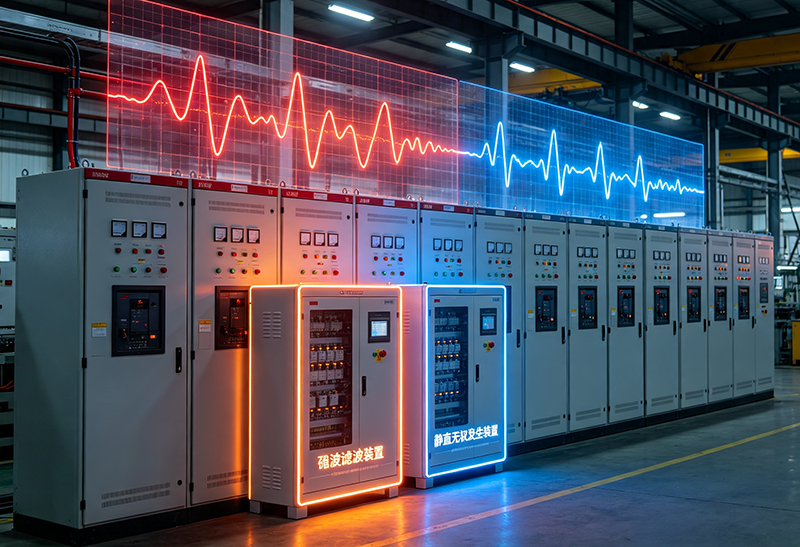
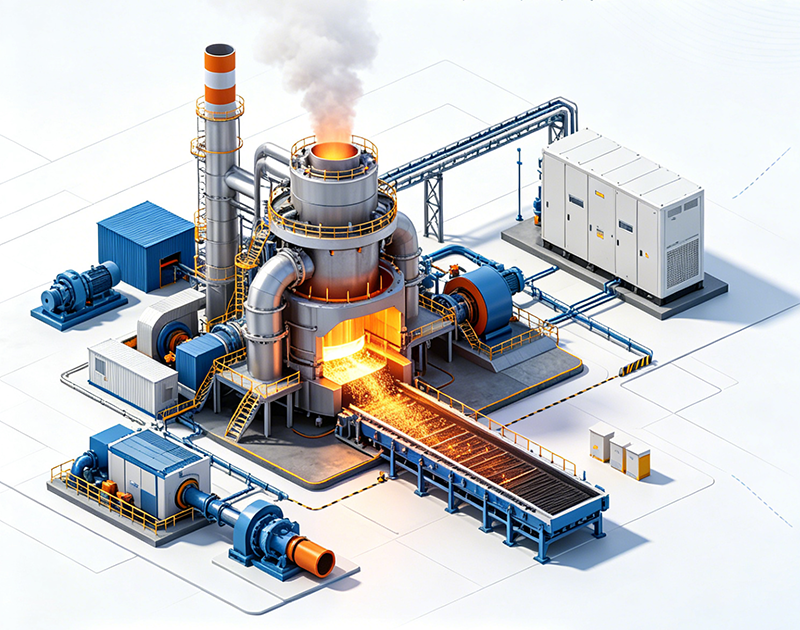
Steel plants are among the most electrically intensive industrial facilities in the world. From electric arc furnaces (EAF) and rolling mills to large motor drives and welding systems, the load profile is highly dynamic, nonlinear, and heavily inductive.
As a senior electrical engineer at CoEpower, I have seen firsthand how unmanaged reactive power leads to:
- Severe voltage fluctuations
- Low power factor penalties
- Overloaded transformers and cables
- Increased energy losses
- Reduced equipment lifespan
- Instability in furnace operations
At the core of these issues lies a fundamental concept in electrical engineering: Reactive Power Compensation, a key part of the broader field of Reactive Power Compensation.
To solve these challenges in modern steel plants, traditional capacitor banks are no longer sufficient. The industry is rapidly transitioning toward dynamic solutions such as the Static Var Generator (SVG), also known as Static Var Generator (SVG).
2. Understanding Reactive Power in Steel Plant Operations
2.1 What is Reactive Power?
In AC systems, electrical power is divided into:
- Active power (kW): Performs useful work
- Reactive power (kVAR): Supports magnetic fields in inductive loads
- Apparent power (kVA): Vector sum of both
Steel plants are dominated by inductive equipment such as:
- Arc furnaces
- Induction motors
- Large transformers
- Conveyor systems
These loads consume large amounts of reactive power, causing poor power factor.
2.2 Why Steel Plants Are Highly Sensitive
Unlike commercial buildings, steel plants experience:
- Rapid load fluctuations (especially EAF melting cycles)
- Sudden current surges
- Frequent arc instability
- Nonlinear harmonics from converters and drives
This makes traditional fixed compensation systems ineffective.
3. Limitations of Traditional Capacitor Banks
Many steel plants still rely on capacitor banks for power factor correction. However, they present significant drawbacks:
3.1 Step Response Delay
Capacitor banks switch in discrete steps. Steel plant loads change in milliseconds, while capacitor switching is slow.
3.2 Overcompensation Risk
When load drops suddenly (e.g., furnace pause), capacitors may overcompensate, causing:
- Overvoltage
- System resonance
- Equipment stress
3.3 Harmonic Amplification
Capacitors can interact with system harmonics, amplifying distortion and potentially damaging equipment.
3.4 Mechanical Wear
Frequent switching leads to contactor wear and maintenance costs.
4. SVG Technology: The Modern Solution
4.1 What is an SVG System?
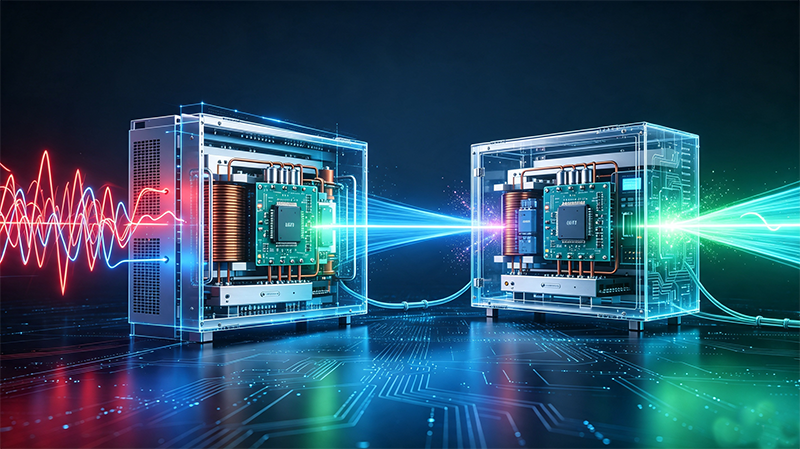
A Static Var Generator (SVG) is a power electronic device that dynamically generates or absorbs reactive power in real time.
Unlike capacitor banks, SVG uses IGBT-based inverter technology to respond within milliseconds.
As a result, SVG provides:
- Continuous reactive power compensation
- Fast dynamic response
- Bidirectional VAR support
- Stable voltage regulation
4.2 How SVG Works in Steel Plants
The operating principle is based on real-time current detection:
- Current transformers monitor load demand
- Controller calculates reactive power requirement
- IGBT inverter generates compensating current
- Reactive power is injected or absorbed instantly
This closed-loop system ensures near-perfect power factor correction.
5. Why Steel Plants Need SVG More Than Any Other Industry
From our engineering experience at CoEpower, steel plants represent one of the most challenging environments for power quality.
5.1 Electric Arc Furnace (EAF) Instability
EAFs create:
- Sudden load swings
- Arc extinction/re-ignition cycles
- Severe flicker and voltage dips
SVG compensates these fluctuations in real time, stabilizing furnace operation.
5.2 Rolling Mill Motor Drives
Large motors cause:
- Lagging power factor during start-up
- High inrush current
- Continuous reactive demand
SVG ensures smooth compensation during both startup and steady-state operation.
5.3 Harmonic Interaction
Modern steel plants use:
- Variable frequency drives (VFDs)
- Rectifiers
- Inverters
These generate harmonics that distort the power system. Advanced SVG systems include harmonic filtering capabilities to mitigate distortion.
6. Key Advantages of SVG in Steel Plants
6.1 Ultra-Fast Dynamic Response
SVG responds in less than 5 milliseconds, making it ideal for arc furnace fluctuations.
6.2 Precise Power Factor Control
Maintains power factor close to unity (0.99–1.0), significantly reducing utility penalties.
6.3 Voltage Stability Improvement
By injecting reactive power locally, SVG stabilizes bus voltage and reduces flicker.
6.4 Reduced Energy Losses
Lower reactive current means:
- Reduced I²R losses
- Lower transformer heating
- Improved cable efficiency
6.5 Modular and Scalable Design
SVG systems can be deployed in modular units, allowing gradual expansion as plant capacity grows.
7. SVG vs Capacitor Bank in Steel Plant Applications
| Feature | Capacitor Bank | SVG System |
| Response speed | Slow (seconds) | Ultra-fast (milliseconds) |
| Control | Step-based | Continuous dynamic |
| Harmonic handling | Poor | Excellent |
| Over/under compensation | Common | Eliminated |
| Maintenance | High | Low |
| Suitability for steel plants | Limited | Ideal |
8. Engineering Design Considerations for SVG Deployment
As a CoEpower senior engineer, I recommend considering the following during system design:
8.1 Load Analysis
A detailed load profile must include:
- Furnace duty cycles
- Motor start/stop patterns
- Peak demand periods
8.2 Harmonic Environment
Before SVG installation, measure:
- Total Harmonic Distortion (THD)
- Frequency spectrum
- Resonance points
8.3 System Capacity Selection
SVG capacity is typically designed as:
- 30%–70% of peak reactive load for steel plants
- Oversizing may be needed for EAF-heavy operations
8.4 Integration with Existing Systems
SVG can be integrated with:
- Capacitor banks (hybrid systems)
- SCADA systems
- Energy management platforms
9. Hybrid Compensation Strategy (Best Practice)
In many steel plants, the optimal solution is not SVG alone but a hybrid configuration:
- SVG handles fast dynamic fluctuations
- Capacitor banks handle steady-state reactive load
This combination reduces cost while maximizing performance.
10. Future Trends in SVG Technology
The future of reactive power compensation in steel plants is moving toward:
10.1 AI-Based Load Prediction
SVG systems will predict load changes before they occur.
10.2 Digital Twin Integration
Real-time simulation of plant power systems for optimization.
10.3 Multi-Function Power Quality Devices
Future SVG units will combine:
- Harmonic filtering
- Voltage regulation
- Unbalance correction
- Reactive compensation
11. Conclusion
Steel plants demand one of the most robust and intelligent power quality solutions available today. Traditional capacitor banks can no longer meet the dynamic requirements of modern steel production.
The adoption of Static Var Generator (SVG) technology provides:
- Real-time reactive power control
- Enhanced voltage stability
- Reduced operational costs
- Improved equipment reliability
From an engineering perspective at CoEpower, SVG is no longer an optional upgrade—it is a foundational component of modern steel plant electrical infrastructure.
As industrial systems continue to evolve toward higher automation and energy efficiency, SVG-based reactive power compensation will remain central to achieving stable, efficient, and sustainable steel production.
Keywords
Reactive power compensation, SVG system, Static Var Generator, steel plant power quality, power factor correction, harmonics mitigation, industrial energy efficiency, voltage stability, CoEpower SVG solution, dynamic reactive compensation, suppliers, manufacturers, factory, company, China, wholesale, buy, price, quotation, bulk, for sale, companies, stock, cost.