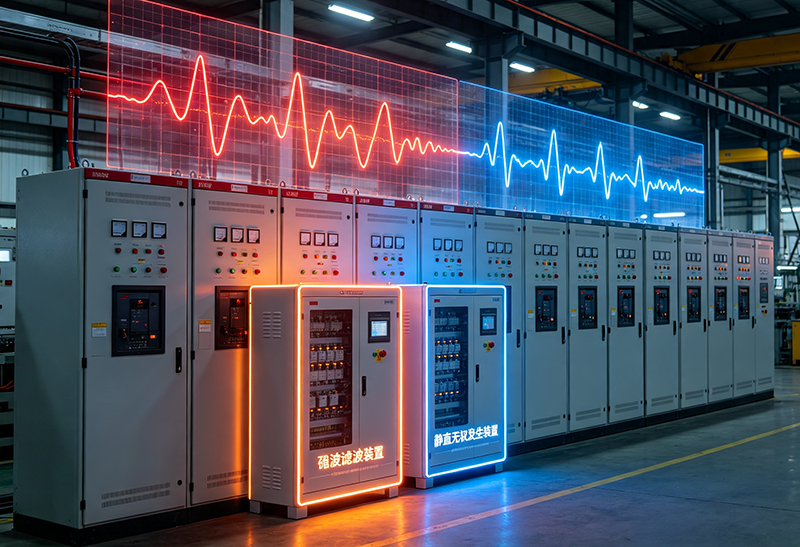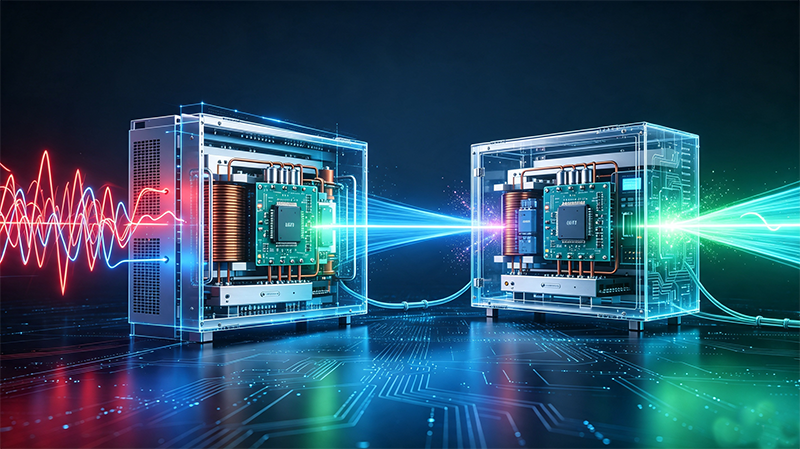
Dans des installations industrielles modernes, les secteurs manufacturiers particulièrement énergivores tels que la production de silicium monocristallin, le maintien d’une qualité d’énergie élevée est essentiel à la fiabilité opérationnelle, efficacité énergétique, et longévité des équipements. Alors que l’automatisation de la production et l’électronique de puissance deviennent de plus en plus répandues, la pollution harmonique est devenue l'un des problèmes de qualité de l'énergie les plus difficiles.
Chez CoEpower, nous avons récemment achevé avec succès un projet d'atténuation des harmoniques pour un important fabricant de silicium monocristallin situé à Ningxia, Chine. En déployant notre CoEpo-APF-1200/0.4 Filtre d'alimentation actif, nous avons considérablement réduit la distorsion harmonique, rétablissement d'un fonctionnement stable du système de compensation, et des performances électriques globales améliorées.
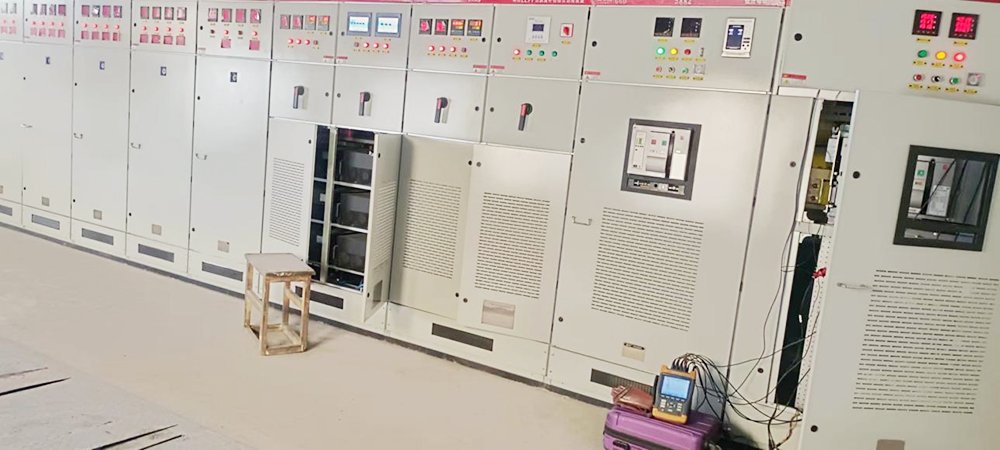
Cet article présente le contexte du projet, défis, conception de solutions, résultats de la mise en service, et les enseignements tirés du terrain.
Contexte du projet
Le client exploite une usine de fabrication de silicium monocristallin à grande échelle. Le processus de production repose fortement sur des fours monocristallins, qui sont des charges non linéaires qui génèrent des courants harmoniques importants.
Lors des inspections de routine de la qualité de l’énergie, le client a découvert une grave distorsion harmonique dans tout le réseau de distribution basse tension. Le système de compensation passive existant fonctionnait fréquemment mal et était incapable de fournir une compensation efficace de la puissance réactive en raison de problèmes de résonance harmonique..
Selon mesures sur place, le principal équipement concerné était un:
- 3150 transformateur kVA
- 10 kV / 0.4 système de distribution kV
- Fours multiples en silicium monocristallin
Le client avait besoin d'une solution immédiate et fiable, capable de:
- Réduire la distorsion harmonique
- Protéger les équipements électriques
- Restauration du fonctionnement de la batterie de condensateurs
- Améliorer le facteur de puissance
- Assurer le respect des normes de qualité de l’énergie
Pourquoi les harmoniques constituent un problème sérieux dans la fabrication du silicium
Les installations de production de silicium monocristallin utilisent un grand nombre de:
- Drives de fréquence variable (VFDS)
- Redresseurs
- Convertisseurs électroniques de puissance
- Équipement de chauffage de grande puissance
Ces appareils tirent des courants non sinusoïdaux du réseau, créer des harmoniques qui peuvent conduire à:
Surchauffe du transformateur
Les courants harmoniques excessifs augmentent les pertes de cuivre et de fer, réduire la durée de vie du transformateur.
Pannes de condensateur
Les batteries de condensateurs peuvent résonner avec l'inductance du système, provoquant une surchauffe et des déclenchements fréquents.
Dysfonctionnements de l'équipement
Les systèmes de contrôle sensibles peuvent subir de faux déclenchements, échecs de communication, et arrêts inattendus.
Augmentation des pertes d’énergie
Un contenu harmonique plus élevé entraîne des pertes supplémentaires dans le système et une efficacité énergétique réduite.
Mauvais facteur de puissance
Les harmoniques déforment les formes d'onde du courant, affectant négativement la puissance apparente et augmentant les pénalités des services publics.
Pour ce projet Ningxia, les niveaux d'harmoniques avaient déjà atteint un point où le système de compensation existant ne pouvait plus fonctionner de manière fiable.
Conception de solutions CoEpower
Après avoir effectué une étude complète du site et une analyse de la qualité de l'énergie, notre équipe d'ingénieurs a recommandé l'installation d'un système de filtrage actif des harmoniques de grande capacité.
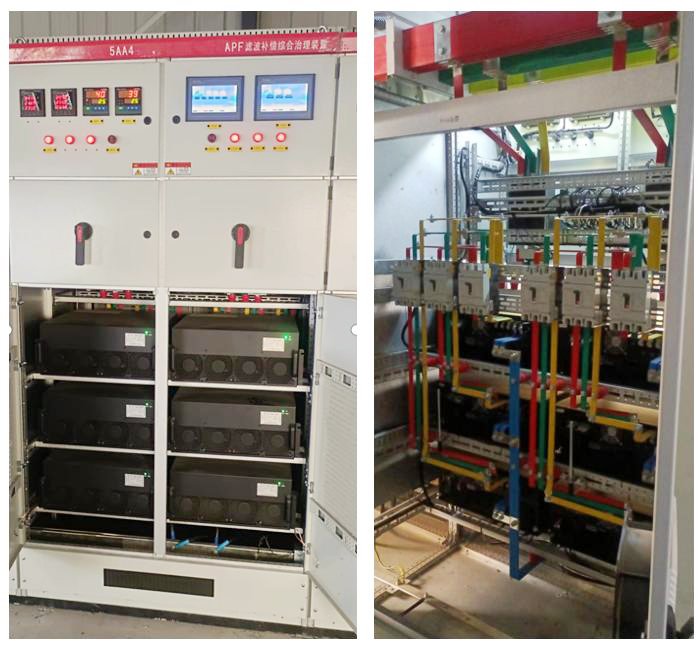
Équipement installé
| Paramètre | Spécification |
| Modèle de produit | CoEpo-APF-1200/0.4 |
| Capacité de rémunération totale | 1200UN |
| Quantité d'installation | 1 Armoire |
| Capacité du transformateur | 3150 kva |
| Tension du système | 400V |
| Emplacement d'installation | Derrière le cabinet de rémunération |
Les dimensions du coffret APF étaient:
1200mm × 1000 mm × 2200 mm
La solution a été conçue pour détecter et compenser dynamiquement les courants harmoniques en temps réel, assurer une amélioration continue de la qualité de l’énergie dans des conditions de charge variables.
Comment fonctionnent les filtres de puissance active
Contrairement aux filtres passifs traditionnels qui ciblent des fréquences harmoniques spécifiques, Les filtres de puissance actifs surveillent en permanence le système électrique et injectent des courants harmoniques égaux mais opposés..
Ce processus annule efficacement les harmoniques indésirables avant qu'elles ne se propagent à travers le réseau..
Les principaux avantages comprennent:
- Compensation harmonique en temps réel
- Adaptation dynamique de la charge
- Aucun risque de résonance
- Compensation simultanée de la puissance réactive
- Besoins de maintenance réduits
- Fiabilité améliorée du système
Pour les installations dont les charges de production évoluent rapidement, Les APF sont souvent la solution privilégiée par rapport aux technologies de filtrage passif.
Installation et mise en service
Le processus de mise en service a été effectué dans des conditions de production normales pour garantir une évaluation précise des performances..
Équipement d'essai
Les mesures ont été effectuées à l'aide d'un:
Analyseur de qualité d'énergie FLUKE 435-II
Spécifications clés incluses:
- IEC 61000-4-30 Conformité de classe A
- Précision de tension: 0.1%
- Précision actuelle: 0.5%
- Capacité complète d’analyse harmonique
Le lieu de test était l'armoire de distribution entrante, nous permettant d'évaluer les performances globales du système avant et après l'activation de l'APF.
Résultats d'atténuation des harmoniques
Les données de mise en service ont démontré des améliorations substantielles de la qualité du courant et de la tension..
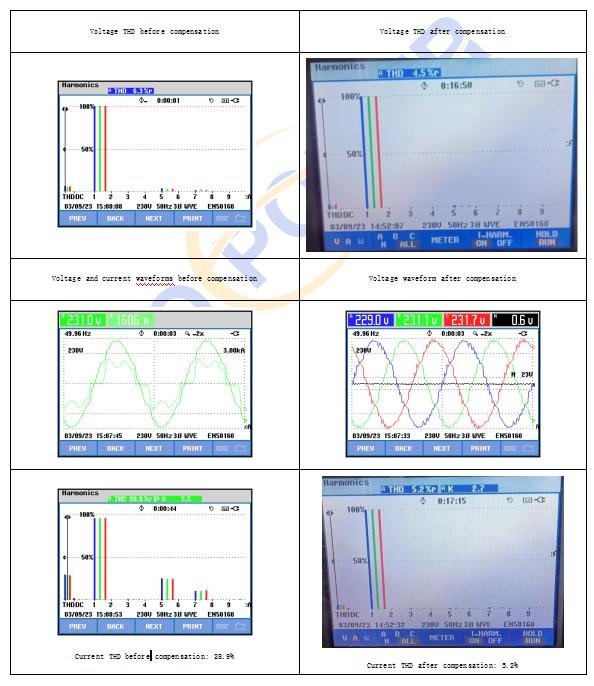
Réduction actuelle du THD
Avant indemnisation
Distorsion harmonique totale actuelle (THD):
28.9%
Après indemnisation
Distorsion harmonique totale actuelle (THD):
5.2%
Cela représente une approximation:
82% réduction de la distorsion harmonique du courant.
Amélioration de la qualité de la tension
Avant le fonctionnement de l'APF
Tension THD:
6.3%
Après l'opération APF
Tension THD:
5.2%
Bien que la distorsion de tension soit moins grave que la distorsion de courant, l'APF a quand même produit une amélioration mesurable de la qualité de la forme d'onde de tension.
Analyse de l'ordre harmonique
Les harmoniques les plus dominantes observées sur place étaient les:
- 5ème harmonique
- 7ème harmonique
- 11ème harmonique
L’APF a effectivement supprimé ces composants.
| Ordre Harmonique | Avant l'APF | Après l'APF | Réduction |
| 5ème | 398.3 UN | 19.6 UN | 95% |
| 7ème | 169 UN | 12.5 UN | 92.6% |
| 11ème | 123.9 UN | 10.5 UN | 91.5% |
La réduction de ces harmoniques dominantes a considérablement amélioré la stabilité globale du système et réduit les contraintes électriques sur les transformateurs et les batteries de condensateurs..
Amélioration de la forme d'onde
L'un des indicateurs les plus visibles de l'efficacité de l'APF était la transformation des formes d'onde du système..
Avant indemnisation:
- Distorsion sévère de la forme d'onde
- Contenu harmonique important
- Augmentation du stress électrique
Après indemnisation:
- Les formes d'onde sont devenues presque sinusoïdales
- Niveaux de distorsion inférieurs
- Efficacité de transmission de puissance améliorée
Cette amélioration contribue directement à une durée de vie plus longue des équipements et à une réduction des coûts de maintenance..
Optimisation du facteur de puissance
En plus de l'atténuation des harmoniques, le système APF a été configuré pour fournir une compensation de puissance réactive.
Après avoir activé le mode de compensation:
Facteur de puissance atteint
FP = 1.0
Atteindre le facteur de puissance unitaire offre plusieurs avantages:
- Pénalités réduites pour les services publics
- Utilisation améliorée du transformateur
- Réduction des pertes du système
- Efficacité électrique accrue
- Meilleure régulation de tension
Pour les utilisateurs industriels ayant une consommation énergétique mensuelle élevée, même de petites améliorations du facteur de puissance peuvent générer des économies substantielles au fil du temps.
Avantages sociaux
Après la mise en service, le client a bénéficié de plusieurs avantages immédiats:
Fiabilité de production améliorée
La réduction des interférences harmoniques minimise les risques d'arrêts inattendus des équipements.
Protection améliorée de l'équipement
Des courants harmoniques plus faibles réduisent les contraintes thermiques sur les transformateurs, câbles, et d'appareillage de commutation.
Fonctionnement stable du condensateur
Le système de compensation existant pourrait désormais fonctionner sans défaillances liées à la résonance.
Coûts de maintenance réduits
Une qualité d'énergie plus propre se traduit par une durée de vie plus longue de l'équipement et moins de réparations.
Préparation à l’expansion future
L’APF offre une compensation dynamique capable de s’adapter à la croissance future de la production.
Conclusion
Ce projet démontre comment la technologie avancée de filtre de puissance active peut résoudre efficacement de graves problèmes d'harmoniques dans les applications industrielles à haute énergie telles que la fabrication de silicium monocristallin..
En installant le CoEpower CoEpo-APF-1200/0.4 Filtre de puissance active, l'installation de Ningxia a réalisé:
✔ THD actuel réduit de 28.9% à 5.2%
✔ Tension THD réduite de 6.3% à 5.2%
✔ 5ème harmonique réduite de 95%
✔ Facteur de puissance amélioré à 1.0
✔ Formes d'onde de courant et de tension quasi sinusoïdales
✔ Fonctionnement fiable du système de compensation
Alors que les industries continuent d’adopter davantage d’équipements électroniques de puissance, l'atténuation des harmoniques deviendra de plus en plus importante pour maintenir la qualité de l'énergie et l'efficacité opérationnelle. CoEpower reste déterminé à fournir des solutions APF innovantes qui aident les clients industriels à atteindre des niveaux de sécurité plus élevés., nettoyeur, et des systèmes électriques plus fiables.
À propos de CoEpower
CoEpower se spécialise dans les solutions de qualité de l'énergie, notamment:
- Filtres de puissance active (APF)
- Générateurs de variables statiques (SVG)
- Filtres harmoniques hybrides
- Systèmes de correction du facteur de puissance
- Solutions d'efficacité énergétique
Si votre installation subit une distorsion harmonique, pannes de condensateur, surchauffe du transformateur, ou mauvais facteur de puissance, contactez l’équipe d’ingénierie de CoEpower pour discuter d’une solution personnalisée d’amélioration de la qualité de l’énergie.
Balises:
Filtre d'alimentation actif, Solution FAP, Atténuation harmonique, Filtrage harmonique, Amélioration de la qualité de l'énergie, Fabrication de silicium monocristallin, Harmoniques industrielles, Correction du facteur de puissance, CoEpower APF, Réduction de la distorsion harmonique, Efficacité énergétique électrique, Système d'alimentation industriel, IEC 61000-4-30, Compensation harmonique, Étude de cas sur la qualité de l'énergie, fournisseurs, fabricants, usine, entreprise, Chine, de gros, acheter, prix, citation, en gros, à vendre, entreprise, action, coût.