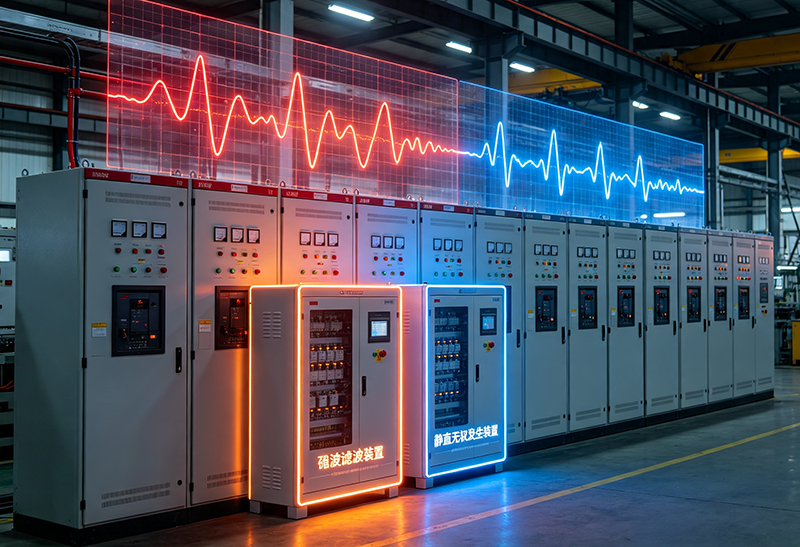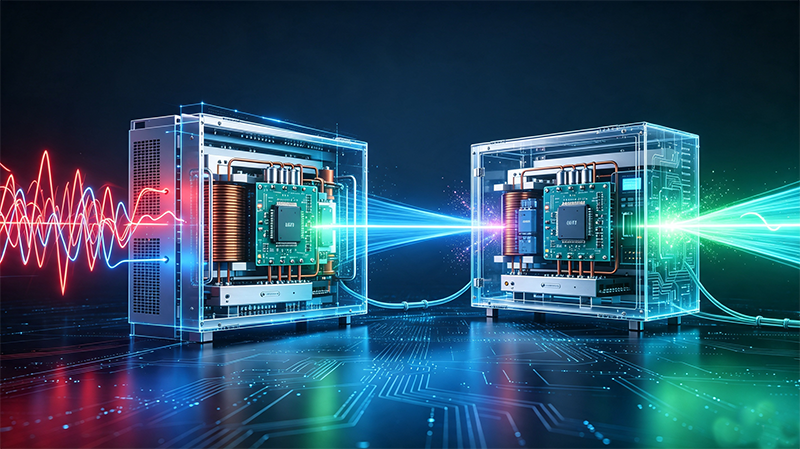
Introduction: Pourquoi la correction du facteur de puissance est importante dans les centres de données
En tant qu'ingénieur électricien senior chez CoEpower, J'ai passé des années à concevoir et optimiser des systèmes de qualité d'énergie pour les installations industrielles et les centres de données.. Un défi récurrent dans les infrastructures modernes consiste à maintenir un environnement stable et efficace. facteur de puissance (PF) sous des charges très dynamiques.
Centres de données, en particulier, sont des environnements extrêmement sensibles. Avec la commutation rapide des systèmes UPS, charges du serveur, systèmes de refroidissement, et électronique de puissance, la demande de puissance réactive fluctue constamment. Un mauvais facteur de puissance entraîne:
- Augmentation des factures d'électricité en raison des pénalités des services publics
- Pertes de transformateur et de câble plus élevées
- Capacité du système réduite
- Instabilité de tension dans des conditions de charge dynamique
Traditionnellement, banques de condensateurs ont été utilisés pour la correction du facteur de puissance. Cependant, avec la complexité croissante des charges modernes, SVG (Générateur VAR statique) la technologie devient la solution privilégiée dans les centres de données avancés.
Cet article fournit une comparaison technique et pratique approfondie de SVG vs batteries de condensateurs, aider les ingénieurs et les gestionnaires d'installations à prendre des décisions éclairées.
Comprendre la correction du facteur de puissance (PFC)
Le facteur de puissance est le rapport entre la puissance réelle (kW) et puissance apparente (kva). Idéalement, cette valeur doit être aussi proche de 1.0 que possible.
La plupart des centres de données fonctionnent avec des charges inductives et non linéaires, qui introduit:
- Puissance réactive en retard (charges inductives comme les transformateurs, moteurs, refroidisseurs)
- Distorsion harmonique (des systèmes UPS, redresseurs, serveurs)
La correction du facteur de puissance vise à compenser la puissance réactive (gauche) localement à:
- Améliorer l'efficacité du système
- Réduire les pertes de transmission
- Libérer de la capacité électrique
- Évitez les pénalités des services publics
Il existe deux technologies dominantes utilisées aujourd'hui:
- Banques de condensateurs
- SVG (Générateur VAR statique)
Qu'est-ce qu'une banque de condensateurs?
Une batterie de condensateurs est un système passif traditionnel de correction du facteur de puissance composé de plusieurs condensateurs connectés par étapes..
Comment ça marche
Les batteries de condensateurs fournissent une compensation de puissance réactive fixe ou échelonnée en générant une puissance réactive de pointe qui compense les charges inductives..
Types de banques de condensateurs
- Batteries de condensateurs fixes
- Batteries de condensateurs à commutation automatique
- Batteries de condensateurs à commutation de thyristors
Avantages
- Faible coût initial
- Une technologie simple
- Installation facile
- Convient aux conditions de charge stables
Limites des centres de données
Cependant, les batteries de condensateurs présentent des limites importantes dans les environnements modernes:
- Rémunération par échelons (pas continu)
- Réponse lente aux fluctuations de charge
- Risque de surcompensation
- Mauvaises performances sous distorsion harmonique
- Nécessite un entretien fréquent (contacteurs, fusibles, vieillissement des condensateurs)
En bref, les batteries de condensateurs sont les mieux adaptées pour charges industrielles stables, pas d'infrastructure numérique dynamique.
Qu'est-ce qu'un SVG (Générateur VAR statique)?
Un SVG, ou générateur de var statique, est un appareil moderne basé sur l'électronique de puissance qui fournit compensation dynamique de la puissance réactive en temps réel.
Contrairement aux batteries de condensateurs, Les SVG utilisent la technologie d'onduleur basée sur l'IGBT pour générer ou absorber instantanément de la puissance réactive..
Comment ça marche
- Surveille en permanence le courant de charge
- Calcule la demande de puissance réactive en temps réel
- Injecte un courant de compensation en quelques millisecondes
Caractéristiques clés
- Compensation entièrement dynamique (inductif et capacitif)
- Ajustement continu (pas basé sur les étapes)
- Réponse rapide (typiquement <10 MS)
- Fonctionne bien avec la distorsion harmonique
- Conception compacte et modulaire
SVG vs banque de condensateurs: Comparaison technique
Du point de vue de l'ingénierie, les différences sont significatives.
1. Vitesse de réponse
- Banque condensateur: Lent (commutation de niveau en secondes)
- SVG: Ultra-rapide (réponse au niveau de la milliseconde)
Pour les centres de données avec des charges de serveur fluctuantes, SVG surpasse clairement.
2. Précision de compensation
- Banque condensateur: Par étapes, précision limitée
- SVG: Rémunération continue et précise
SVG maintient PF proche de 0.99 constamment.
3. Performance harmonique
- Banque condensateur: Peut amplifier les harmoniques (risque de résonance)
- SVG: Atténue activement la distorsion harmonique
Ceci est essentiel dans les environnements utilisant beaucoup d'onduleurs..
4. Exigences d'entretien
- Banque condensateur: Nécessite le remplacement du condensateur, entretien des contacteurs
- SVG: Entretien minimal, conception à semi-conducteurs
5. Espace et évolutivité
- Banque condensateur: Volumineux, extension basée sur un panneau
- SVG: Compact, extension modulaire possible
6. Coût du cycle de vie
Alors que les batteries de condensateurs ont un coût initial inférieur, Offres SVG:
- Taux d'échec inférieur
- Risque de temps d'arrêt réduit
- Efficacité énergétique supérieure
- Meilleur retour sur investissement à long terme
Pourquoi les centres de données ont plus besoin du SVG que des banques de condensateurs
Les centres de données modernes sont fondamentalement différents des charges industrielles traditionnelles.
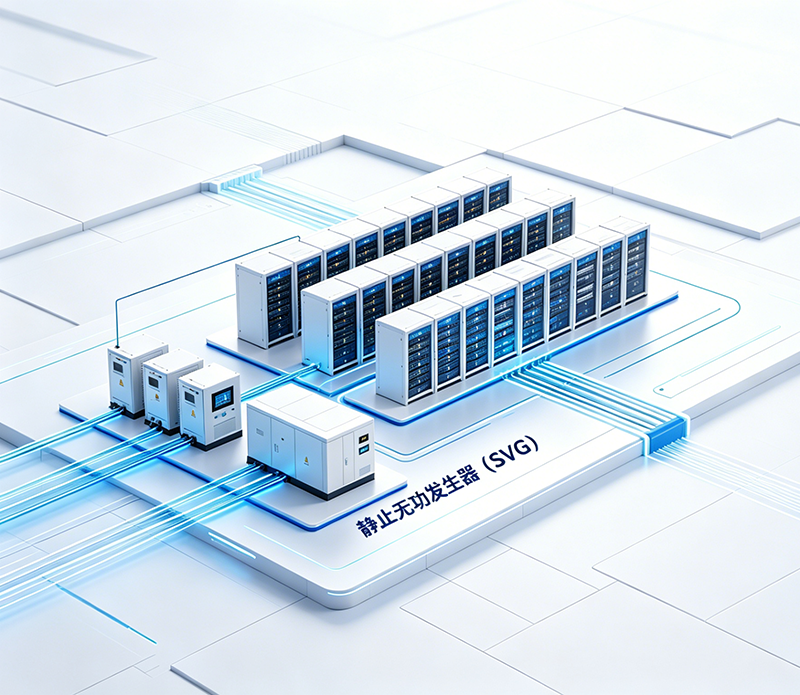
1. Profils de charge hautement dynamiques
Les charges de travail des serveurs fluctuent en quelques millisecondes en raison de la virtualisation et du cloud computing.
Les banques de condensateurs ne peuvent pas réagir assez vite, conduisant à:
- Oscillation du facteur de puissance
- Sur/sous-compensation
SVG résout ce problème avec un ajustement en temps réel.
2. Environnement riche en harmoniques
Les centres de données contiennent:
- Redresseurs UPS
- Alimentations à découpage
- Systèmes de refroidissement pilotés par VFD
Ceux-ci créent une distorsion harmonique (3rd, 5ème, 7ème harmonique).
Les batteries de condensateurs peuvent résonner dans de telles conditions, tandis que SVG supprime activement les courants harmoniques.
3. Exigences de fiabilité élevées
Les temps d'arrêt dans les centres de données sont extrêmement coûteux. Toute instabilité de la qualité de l'énergie peut entraîner:
- Le serveur plante
- Perte de données
- Déséquilibre du système de refroidissement
SVG fournit une stabilité, compensation continue sans défaillance de commutation mécanique.
4. Optimisation de l'efficacité énergétique
Même de petites améliorations dans PF (Par exemple, depuis 0.92 à 0.99) peut réduire considérablement:
- Pertes du transformateur
- Câble chauffant
- Pénalités des services publics
SVG garantit un PF constamment élevé dans toutes les conditions de charge.
Aperçu de l'ingénierie du monde réel grâce aux projets CoEpower
Dans plusieurs projets de centres de données CoEpower, nous avons observé une tendance cohérente:
- Les batteries de condensateurs ont bien fonctionné lors des tests de charge constante
- Mais n'a pas réussi à maintenir la stabilité lors des pics de trafic cloud.
Après avoir remplacé ou complété par des systèmes SVG:
- Stabilité du facteur de puissance améliorée de 8 à 15 %
- Distorsion harmonique réduite de manière significative
- Les interventions de maintenance ont diminué 60%
- L’efficacité énergétique globale s’est sensiblement améliorée
Cela démontre que SVG n'est pas seulement une mise à niveau : c'est un amélioration au niveau du système de l'architecture de la qualité de l'énergie.
Solution hybride: SVG + Banque condensateur
En tant qu'ingénieur, Je reconnais aussi que les batteries de condensateurs ne sont pas obsolètes.
Dans de nombreuses grandes installations, un configuration hybride est optimal:
- Les banques de condensateurs gèrent charge réactive de base
- Poignées SVG charge dynamique et évolutive
Avantages des systèmes hybrides
- Coût réduit par rapport au déploiement SVG complet
- Réactivité améliorée du système
- Moins de stress sur les unités SVG
- Coût du cycle de vie équilibré
Cette approche est particulièrement utile dans:
- Niveau II / Centres de données de niveau III
- Grands campus industriels
- Installations à chargement mixte
Comment choisir entre SVG et banque de condensateurs
Lors de la conception d'un système de correction du facteur de puissance, considérez ce qui suit:
Choisissez une banque de condensateurs si:
- La charge est stable et prévisible
- Le budget est très contraint
- La distorsion harmonique est minime
- Les moteurs industriels dominent la charge
Choisissez SVG si:
- La charge est très dynamique (centres de données, informatique en nuage)
- Les harmoniques sont significatives
- Une qualité d’alimentation élevée est requise
- Les temps d'arrêt sont extrêmement coûteux
Choisissez Hybride si:
- Installation à grande échelle avec comportement de charge mixte
- Besoin d’équilibre entre CAPEX et performance
L'avenir de la correction du facteur de puissance dans les centres de données
L'industrie s'oriente clairement vers:
- Numérisation complète des systèmes électriques
- Optimisation énergétique en temps réel
- Intégration du réseau intelligent
- Prédiction de charge basée sur l'IA
Dans ce contexte, La technologie SVG s’aligne parfaitement sur l’avenir des infrastructures électriques intelligentes.
Les banques de condensateurs existeront toujours, mais principalement dans des rôles de soutien plutôt que d'être la solution principale.
Conclusion
Du point de vue de l'ingénierie senior chez CoEpower, la comparaison entre SVG vs batterie de condensateurs ce n'est pas seulement une question de coût, c'est aussi une question de comportement du système dans des conditions réelles..
Les banques de condensateurs restent fiables, solution économique pour des charges stables. Cependant, pour moderne centres de données avec dynamique, environnements riches en harmoniques, SVG (Générateur VAR statique) offre une qualité supérieure:
- Vitesse de réponse
- Précision
- Performance harmonique
- Fiabilité
- Valeur du cycle de vie
Dans la plupart des applications de centres de données modernes, SVG n'est plus un luxe : il devient une exigence standard pour les systèmes de qualité d'énergie hautes performances..
Si vous concevez ou mettez à niveau un système d'alimentation de centre de données, l'évaluation de la compensation de puissance réactive basée sur SVG est une étape cruciale vers l'obtention d'un rendement plus élevé, stabilité, et fiabilité opérationnelle à long terme.
Balises de mots clés
Correction du facteur de puissance, SVG vs batterie de condensateurs, Générateur VAR statique, système de batterie de condensateurs, Qualité d'énergie du centre de données, compensation de puissance réactive, atténuation des harmoniques, correction du facteur de puissance industriel, compensation dynamique VAR, Solutions d'ingénierie CoEpower, fournisseurs, fabricants, usine, entreprise, Chine, de gros, acheter, prix, citation, en gros, à vendre, entreprise, action, coût.