1. Introduction: Pourquoi la puissance réactive est importante dans les aciéries
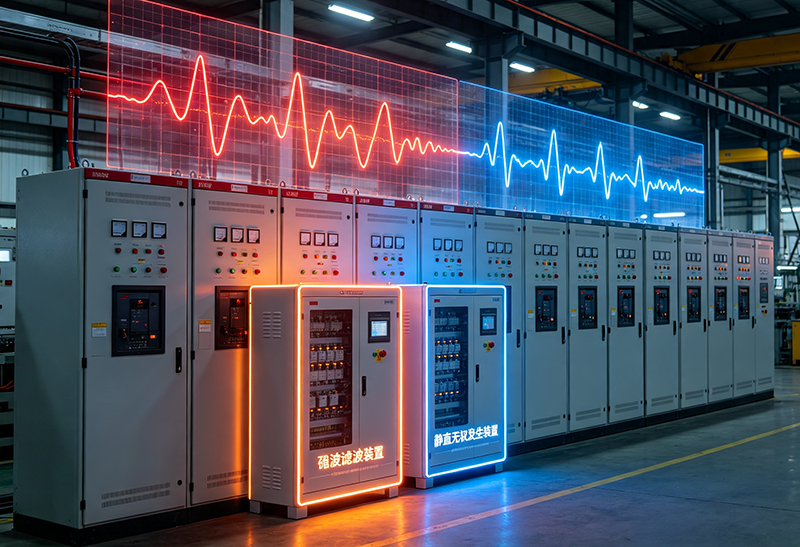
Les aciéries comptent parmi les installations industrielles les plus gourmandes en électricité au monde. Des fours à arc électrique (AEP) et laminoirs jusqu'aux grands entraînements moteurs et systèmes de soudage, le profil de charge est très dynamique, non linéaire, et fortement inductif.
En tant qu'ingénieur électricien senior chez Coopération, J'ai pu constater par moi-même comment une puissance réactive non gérée conduit à:
- Fortes fluctuations de tension
- Pénalités liées au faible facteur de puissance
- Transformateurs et câbles surchargés
- Augmentation des pertes d’énergie
- Durée de vie réduite des équipements
- Instabilité dans le fonctionnement du four
Au cœur de ces problématiques se trouve un concept fondamental en génie électrique: Compensation de puissance réactive, un élément clé du domaine plus large de la compensation de puissance réactive.
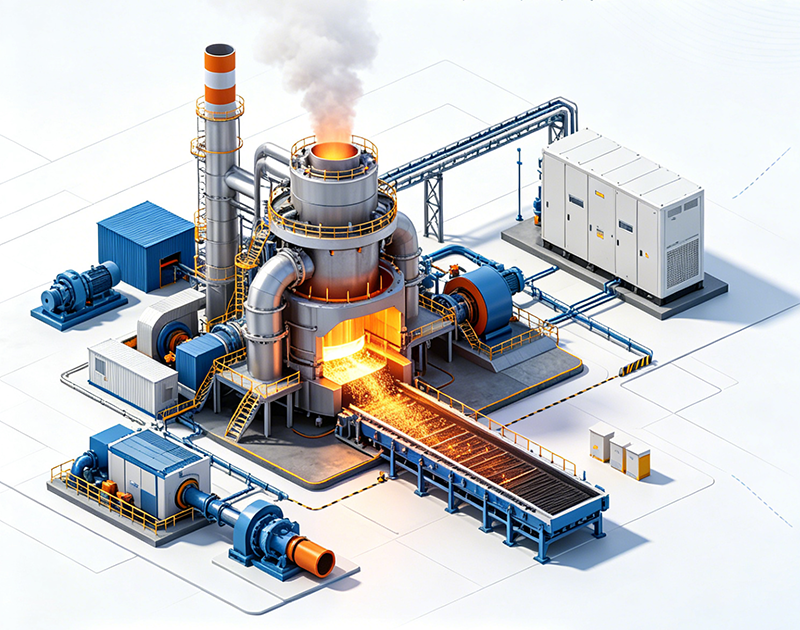
Pour résoudre ces défis dans les aciéries modernes, les batteries de condensateurs traditionnelles ne suffisent plus. L'industrie évolue rapidement vers des solutions dynamiques telles que le Générateur VAR statique (SVG), également connu sous le nom de générateur de variables statiques (SVG).
2. Comprendre la puissance réactive dans les opérations des aciéries
2.1 Qu'est-ce que la puissance réactive?
Dans les systèmes AC, l'énergie électrique est divisée en:
- Puissance active (kW): Effectue un travail utile
- Puissance réactive (gauche): Prend en charge les champs magnétiques dans les charges inductives
- Puissance apparente (kva): Somme vectorielle des deux
Les aciéries sont dominées par les équipements inductifs tels que:
- Fours à arc
- Moteurs asynchrones
- Gros transformateurs
- Systèmes de convoyeurs
Ces charges consomment de grandes quantités de puissance réactive, provoquant un mauvais facteur de puissance.
2.2 Pourquoi les aciéries sont très sensibles
Contrairement aux bâtiments commerciaux, expérience dans les aciéries:
- Fluctuations rapides de la charge (notamment les cycles de fusion EAF)
- Surtensions soudaines de courant
- Instabilité fréquente de l’arc
- Harmoniques non linéaires des convertisseurs et des variateurs
Cela rend les systèmes de rémunération fixe traditionnels inefficaces.
3. Limites des banques de condensateurs traditionnelles
De nombreuses aciéries s'appuient encore sur des batteries de condensateurs pour corriger le facteur de puissance.. Cependant, ils présentent des inconvénients importants:
3.1 Délai de réponse à l'étape
Les banques de condensateurs changent par étapes discrètes. Les charges des aciéries changent en millisecondes, alors que la commutation des condensateurs est lente.
3.2 Risque de surcompensation
Quand la charge chute soudainement (Par exemple, pause du four), les condensateurs peuvent surcompenser, provoquant:
- Surtension
- Résonance du système
- Contrainte de l'équipement
3.3 Amplification harmonique
Les condensateurs peuvent interagir avec les harmoniques du système, distorsion amplificatrice et équipement potentiellement dommageable.
3.4 Usure mécanique
Des commutations fréquentes entraînent une usure des contacteurs et des coûts de maintenance.
4. Technologie SVG: La solution moderne
4.1 Qu'est-ce qu'un système SVG?
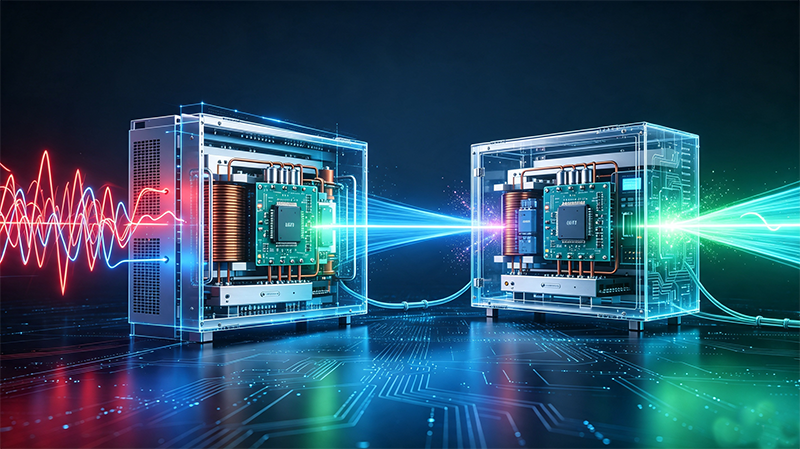
UN Générateur VAR statique (SVG) est un dispositif électronique de puissance qui génère ou absorbe dynamiquement de la puissance réactive en temps réel.
Contrairement aux batteries de condensateurs, SVG utilise la technologie d'onduleur basée sur l'IGBT pour répondre en quelques millisecondes.
Par conséquent, SVG fournit:
- Compensation continue de la puissance réactive
- Réponse dynamique rapide
- Prise en charge du VAR bidirectionnel
- Régulation de tension stable
4.2 Comment fonctionne SVG dans les aciéries
Le principe de fonctionnement est basé sur la détection du courant en temps réel:
- Les transformateurs de courant surveillent la demande de charge
- Le contrôleur calcule les besoins en puissance réactive
- L'onduleur IGBT génère un courant de compensation
- La puissance réactive est injectée ou absorbée instantanément
Ce système en boucle fermée assure une correction presque parfaite du facteur de puissance.
5. Pourquoi les aciéries ont plus besoin du SVG que toute autre industrie
De notre expérience en ingénierie chez CoEpower, les aciéries représentent l’un des environnements les plus difficiles en matière de qualité de l’énergie.
5.1 Four à arc électrique (AEP) Instabilité
Les EAF créent:
- Changements soudains de charge
- Cycles d’extinction/rallumage d’arc
- Fortes chutes de tension et scintillement
SVG compense ces fluctuations en temps réel, fonctionnement du four de stabilisation.
5.2 Entraînements de moteur de laminoir
Les gros moteurs causent:
- Facteur de puissance en retard lors du démarrage
- Courant d'appel élevé
- Demande réactive continue
SVG assure une compensation en douceur pendant le démarrage et le fonctionnement en régime permanent.
5.3 Interaction harmonique
Les aciéries modernes utilisent:
- Variateurs de fréquence (VFDS)
- Redresseurs
- Onduleurs
Ceux-ci génèrent des harmoniques qui déforment le système électrique. Les systèmes SVG avancés incluent des capacités de filtrage des harmoniques pour atténuer la distorsion.
6. Principaux avantages du SVG dans les aciéries
6.1 Réponse dynamique ultra-rapide
SVG répond en moins de 5 millisecondes, ce qui le rend idéal pour les fluctuations du four à arc.
6.2 Contrôle précis du facteur de puissance
Maintient le facteur de puissance proche de l’unité (0.99–1,0), réduisant considérablement les pénalités des services publics.
6.3 Amélioration de la stabilité de la tension
En injectant localement de la puissance réactive, SVG stabilise la tension du bus et réduit le scintillement.
6.4 Pertes d'énergie réduites
Un courant réactif inférieur signifie:
- Pertes I²R réduites
- Chauffage inférieur du transformateur
- Efficacité améliorée du câble
6.5 Conception modulaire et évolutive
Les systèmes SVG peuvent être déployés dans des unités modulaires, permettre une expansion progressive à mesure que la capacité de l'usine augmente.
7. SVG vs banque de condensateurs dans les applications d'aciéries
| Fonctionnalité | Banque condensateur | Système SVG |
| Vitesse de réponse | Lent (secondes) | Ultra-rapide (millisecondes) |
| Contrôle | Basé sur les étapes | Dynamique continue |
| Gestion harmonique | Pauvre | Excellent |
| Sur/sous-compensation | Commun | Éliminé |
| Entretien | Haut | Faible |
| Aptitude aux aciéries | Limité | Idéal |
8. Considérations de conception technique pour le déploiement SVG
En tant qu'ingénieur senior CoEpower, Je recommande de prendre en compte les éléments suivants lors de la conception du système:
8.1 Analyse des charges
Un profil de charge détaillé doit inclure:
- Cycles de service du four
- Modèles de démarrage/arrêt du moteur
- Périodes de pointe
8.2 Environnement harmonique
Avant l'installation de SVG, mesure:
- Distorsion harmonique totale (THD)
- Spectre de fréquence
- Points de résonance
8.3 Sélection de la capacité du système
La capacité SVG est généralement conçue comme:
- 30%–70% de charge réactive de pointe pour les aciéries
- Un surdimensionnement peut être nécessaire pour les opérations à forte intensité EAF
8.4 Intégration avec les systèmes existants
SVG peut être intégré à:
- Banques de condensateurs (systèmes hybrides)
- Systèmes SCADA
- Plateformes de gestion de l'énergie
9. Stratégie de rémunération hybride (Meilleure pratique)
Dans de nombreuses aciéries, la solution optimale n'est pas SVG seul mais une configuration hybride:
- SVG gère des fluctuations dynamiques rapides
- Les batteries de condensateurs gèrent une charge réactive en régime permanent
Cette combinaison réduit les coûts tout en maximisant les performances.
10. Tendances futures de la technologie SVG
L’avenir de la compensation de puissance réactive dans les aciéries se dirige vers:
10.1 Prédiction de charge basée sur l'IA
Les systèmes SVG prédisent les changements de charge avant qu'ils ne se produisent.
10.2 Intégration du jumeau numérique
Simulation en temps réel des systèmes électriques des centrales pour optimisation.
10.3 Appareils multifonctions de qualité d'énergie
Les futures unités SVG combineront:
- Filtrage harmonique
- Régulation de tension
- Correction du balourd
- Compensation réactive
11. Conclusion
Les aciéries exigent l’une des solutions de qualité d’énergie les plus robustes et intelligentes disponibles aujourd’hui. Les batteries de condensateurs traditionnelles ne peuvent plus répondre aux exigences dynamiques de la production sidérurgique moderne.
L'adoption de Générateur VAR statique (SVG) la technologie fournit:
- Contrôle de la puissance réactive en temps réel
- Stabilité de tension améliorée
- Coûts opérationnels réduits
- Fiabilité améliorée des équipements
Du point de vue de l'ingénierie à Coopération, SVG n'est plus une mise à niveau facultative : il s'agit d'un composant fondamental de l'infrastructure électrique des aciéries modernes..
Alors que les systèmes industriels continuent d’évoluer vers une automatisation et une efficacité énergétique plus élevées, La compensation de puissance réactive basée sur SVG restera essentielle pour parvenir à une stabilité, efficace, et production d'acier durable.
Mots-clés
Compensation de puissance réactive, Système SVG, Générateur VAR statique, qualité de l'énergie dans les aciéries, Correction du facteur de puissance, atténuation des harmoniques, efficacité énergétique industrielle, stabilité de tension, Solution CoEpower SVG, compensation réactive dynamique, fournisseurs, fabricants, usine, entreprise, Chine, de gros, acheter, prix, citation, en gros, à vendre, entreprise, action, coût.