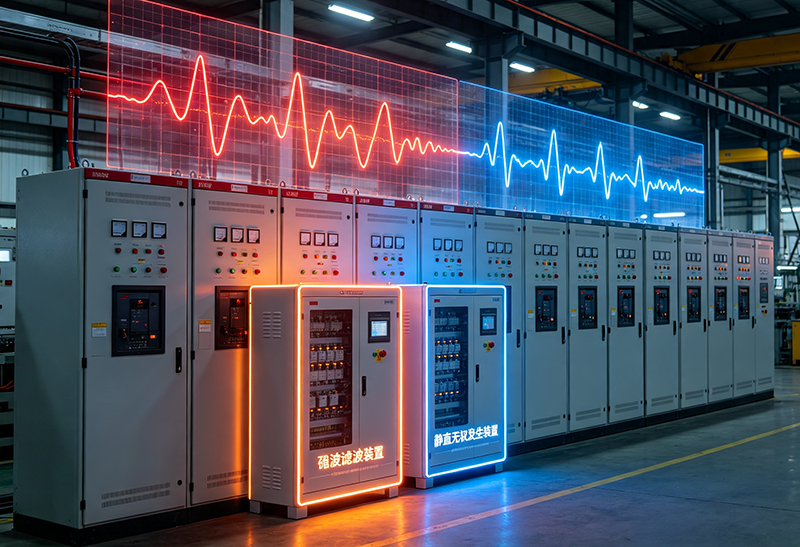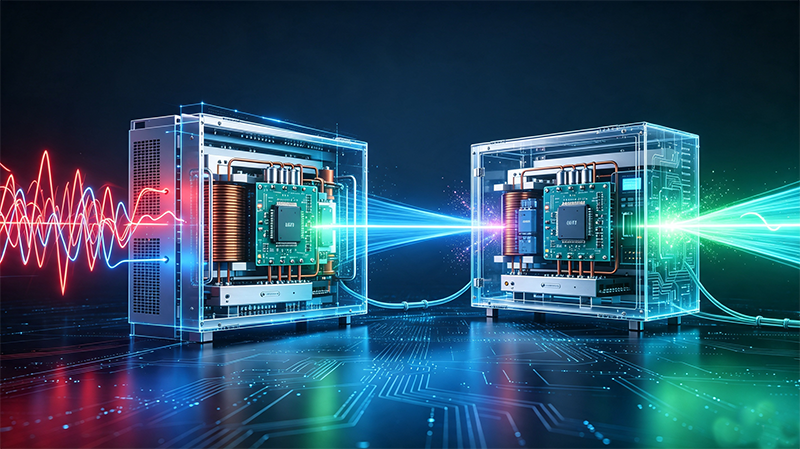
Introduction
Dans des installations industrielles modernes, L’efficacité énergétique électrique devient de plus en plus importante. En tant qu'ingénieur électricien senior chez CoEpower, Je rencontre fréquemment des usines aux prises avec un faible facteur de puissance, consommation excessive de puissance réactive, pénalités pour les services publics, fluctuations de tension, et une efficacité réduite du système. Ces problèmes augmentent non seulement les coûts de l'électricité, mais affectent également la fiabilité et la durée de vie des équipements critiques..
Un système de compensation de puissance réactive bien conçu peut améliorer considérablement la qualité de l’énergie, réduire les pertes d'énergie, augmenter la capacité du système, et des frais de services publics inférieurs. Que vous exploitiez une usine de fabrication, installation minière, aciérie, station de traitement de l'eau, ou centre de données, comprendre comment concevoir un système de compensation de puissance réactive efficace est essentiel.
Cet article fournit un guide complet sur la conception d'un système de compensation de puissance réactive, y compris l'analyse de la charge, sélection d'équipement de rémunération, atténuation harmonique, et des solutions modernes telles que Générateurs de variables statiques (SVG).
Comprendre la puissance réactive dans les installations industrielles
Avant de concevoir un système de rémunération, il est important de comprendre ce qu'est la puissance réactive.
Charges industrielles telles que:
- Moteurs asynchrones
- Transformateurs
- Machines à souder
- Compresseurs
- Drives de fréquence variable (VFDS)
- Équipement CVC
nécessitent à la fois une puissance active (kW) et puissance réactive (gauche).
La puissance active effectue un travail utile, tandis que la puissance réactive prend en charge les champs magnétiques nécessaires au fonctionnement de l'équipement. Une demande excessive de puissance réactive entraîne:
- Faible facteur de puissance
- Flux de courant plus élevé
- Charge accrue du transformateur
- Pertes de câble plus élevées
- Chutes de tension
- Pénalités du facteur de puissance du service public
L’objectif de la compensation de puissance réactive est de fournir localement la puissance réactive requise plutôt que de la puiser sur le réseau électrique public..
Étape 1: Analyser les caractéristiques de charge d'usine
La première étape de la conception d'un système de compensation consiste à réaliser une étude détaillée de la qualité de l'énergie..
Les paramètres clés à mesurer comprennent:
Puissance active totale (kW)
Déterminer la demande de puissance active moyenne et maximale de l’usine.
Facteur de puissance existant
Mesure:
- Facteur de puissance moyen
- Facteur de puissance de pointe
- Facteur de puissance minimum
La plupart des services publics exigent un facteur de puissance supérieur 0.90 ou 0.95.
Demande de puissance réactive (gauche)
Enregistrez la consommation de puissance réactive dans différentes conditions de fonctionnement.
Distorsion harmonique
Mesure:
- Thdi (Harmoniques actuelles)
- THDv (Harmoniques de tension)
Cette étape est cruciale car les harmoniques influencent grandement le choix des équipements de compensation..
Variation de charge
Évaluez si les charges sont:
- Constante
- Intermittent
- En évolution rapide
Les charges dynamiques nécessitent souvent des technologies de compensation avancées.
Étape 2: Définir les objectifs de rémunération
Différentes usines ont des objectifs différents.
Les objectifs typiques comprennent:
Améliorer le facteur de puissance
Par exemple:
PF actuel = 0.75
FP cible = 0.98
Réduire les pénalités des services publics
De nombreux services publics facturent des pénalités lorsque le facteur de puissance tombe en dessous des limites contractuelles..
Capacité du transformateur de libération
L'amélioration du facteur de puissance réduit la demande de courant et augmente efficacement la capacité disponible du transformateur.
Stabiliser la tension
La compensation de puissance réactive aide à maintenir les niveaux de tension dans toute l'usine.
Améliorer les performances des équipements
Une meilleure régulation de la tension améliore l'efficacité du moteur et la fiabilité de la production.
Étape 3: Calculer la compensation de puissance réactive requise
La capacité de compensation requise peut être calculée à l'aide de:
Qc = P× (tanφ1 − tanφ2)
Où:
- Qc = Rémunération requise (gauche)
- P = Puissance active (kW)
- φ1 = Angle du facteur de puissance existant
- φ2 = Angle du facteur de puissance cible
Exemple
Charge d'usine:
- Puissance active = 1000 kW
- PF existant = 0.75
- FP cible = 0.98
tanφ1 = 0.882
tanφ2 = 0.203
Qc = 1000 × (0.882 − 0.203)
Qc = 679 gauche
Un système de rémunération d'environ 680 kVAR est requis.
En pratique, les ingénieurs ajoutent généralement une marge de conception de 10 à 20 %.
Étape 4: Sélectionnez la technologie de rémunération appropriée
Plusieurs technologies sont disponibles pour la compensation de puissance réactive.
Banques de condensateurs fixes
Convient pour:
- Charges constantes
- Conditions de fonctionnement stables
Avantages:
- Faible coût
- Installation simple
Limites:
- Pas de réglage automatique
- Risque de surcompensation
Correction automatique du facteur de puissance (APFC) Banques de condensateurs
Convient pour:
- Charges industrielles variables
Avantages:
- Commutation automatique
- Meilleur contrôle du facteur de puissance
- Rentable
Applications:
- Usines de fabrication
- Installations de traitement de l'eau
- Bâtiments commerciaux
Condensateur changé de thyristor (TSC)
Convient pour:
- Des charges qui évoluent rapidement
Avantages:
- Réponse rapide
- Pas de transitoires de commutation
Applications:
- Installations de soudage
- Aciéries
- Laminoirs
Générateur VAR statique (SVG)
La technologie SVG représente la solution de compensation de puissance réactive la plus avancée disponible aujourd'hui.
Avantages:
Réponse rapide
Temps de réponse généralement inférieur à 10 millisecondes.
Rémunération précise
Ajuste continuellement la sortie en fonction des exigences du système.
Compensation capacitive et inductive
Contrairement aux condensateurs traditionnels, SVG peut à la fois générer et absorber de la puissance réactive.
Excellentes performances sous de faibles charges
Maintient une précision de compensation élevée dans toutes les conditions de fonctionnement.
Capacité de suppression des harmoniques
De nombreux systèmes SVG offrent des fonctions limitées de filtrage des harmoniques.
Applications:
- Industrie minière
- Centres de données
- Usines de semi-conducteurs
- Systèmes d'énergie renouvelable
- Installations de fabrication industrielle
Chez CoEpower, Les solutions SVG deviennent de plus en plus le choix privilégié pour les projets industriels modernes de correction du facteur de puissance..
Étape 5: Considérez les conditions harmoniques
De nombreuses usines utilisent aujourd'hui:
- Drives de fréquence variable
- Systèmes UPS
- Redresseurs
- Servomoteurs
Ces appareils génèrent des harmoniques qui peuvent endommager les batteries de condensateurs.
Les problèmes potentiels incluent:
- Surchauffe du condensateur
- Résonance
- Panne d'équipement
- Surchauffe du transformateur
Donc, l'analyse harmonique est essentielle.
Quand les harmoniques sont présentes
Banques de condensateurs désaccordées
Des réacteurs sont ajoutés aux batteries de condensateurs pour éviter la résonance.
Fréquences d'accord typiques:
- 189 HZ
- 210 HZ
Largement utilisé dans les applications industrielles.
Filtres harmoniques actifs (Ahf)
Pour les installations présentant une distorsion harmonique importante, Des filtres harmoniques actifs sont souvent recommandés.
Avantages:
- Élimination dynamique des harmoniques
- Compensation de puissance réactive
- Qualité de l’énergie améliorée
SVG + Solutions hybrides AHF
Les usines modernes déploient souvent:
- SVG pour la compensation de puissance réactive
- AHF pour le filtrage des harmoniques
Cette combinaison offre une amélioration complète de la qualité de l'énergie.
Étape 6: Déterminer l'emplacement d'installation de la rémunération
La rémunération peut être installée à différents niveaux.
Rémunération centralisée
Installé au tableau de distribution principal.
Avantages:
- Coût d’investissement réduit
- Entretien plus facile
Mieux pour:
- Petites et moyennes usines
Rémunération de groupe
Installé sur les panneaux de sous-distribution.
Avantages:
- Meilleure prise en charge de la tension
- Pertes d’alimentation réduites
Mieux pour:
- Grandes installations de fabrication
Rémunération Individuelle
Installé directement sur les moteurs ou les équipements.
Avantages:
- Efficacité maximale
Mieux pour:
- Gros moteurs fonctionnant en continu
Étape 7: Concevoir des systèmes de surveillance et de contrôle
Un système de rémunération moderne devrait inclure:
Surveillance de la qualité de l'énergie
Moniteur:
- Facteur de puissance
- Tension
- Actuel
- Harmonique
- Puissance réactive
Interfaces de communication
Les protocoles courants incluent:
- Modbus RTU
- Modbus-TCP
- Ethernet
Surveillance à distance
Les opérateurs d'usine peuvent surveiller les performances du système en temps réel via SCADA ou les systèmes de gestion de l'énergie (SME).
Étape 8: Évaluer les besoins d’expansion futurs
Une erreur de conception courante consiste à dimensionner les systèmes de compensation uniquement pour les charges actuelles..
Les usines augmentent souvent leur capacité de production.
Les ingénieurs devraient:
- Réserver de l'espace sur le panneau
- Réserver une capacité de communication
- Conception pour une croissance future de la charge de 20 à 30 %
Cela évite de futures mises à niveau coûteuses.
Erreurs de conception courantes à éviter
Surcompensation
Une compensation excessive peut créer des problèmes majeurs de facteur de puissance.
Ignorer les harmoniques
Les condensateurs installés sans études harmoniques tombent souvent en panne prématurément.
Rémunération sous-dimensionnée
Une compensation insuffisante ne parvient pas à atteindre le facteur de puissance cible.
Choisir des condensateurs traditionnels pour les charges dynamiques
Les fluctuations rapides de charge nécessitent la technologie SVG ou TSC.
Manque de surveillance
Sans surveillance, la dégradation des performances peut passer inaperçue.
Pourquoi la technologie SVG devient la solution privilégiée
L’environnement énergétique industriel évolue rapidement.
Les usines utilisent de plus en plus:
- Systèmes d'automatisation
- Moteurs entraînés par VFD
- Robotique
- Intégration des énergies renouvelables
Les batteries de condensateurs traditionnelles ont souvent du mal à répondre aux exigences de compensation modernes.
Offre Générateurs de Var Statique:
- Réponse instantanée
- Haute précision de compensation
- Pas de surcompensation
- Contrôle de puissance réactive bidirectionnel
- Compatibilité avec les environnements riches en harmoniques
Par conséquent, La technologie SVG est devenue la solution privilégiée pour de nombreux projets industriels de qualité de l'énergie dans le monde entier..
Conclusion
La conception d'un système de compensation de puissance réactive efficace nécessite une compréhension approfondie des caractéristiques de charge de l'usine., exigences en matière de facteur de puissance, conditions harmoniques, et les projets d'expansion futurs.
Un système bien conçu peut:
- Réduire les coûts d’électricité
- Éliminer les pénalités liées au facteur de puissance
- Améliorer la stabilité de la tension
- Augmenter la capacité du transformateur
- Prolonger la durée de vie des équipements
- Améliorer la qualité globale de l’énergie
Alors que les batteries de condensateurs traditionnelles restent adaptées à certaines applications, les installations industrielles modernes bénéficient de plus en plus de solutions avancées telles que les générateurs statiques Var (SVG) et filtres harmoniques actifs (Ahfs).
Chez CoEpower, nous sommes spécialisés dans la fourniture de solutions personnalisées de compensation de puissance réactive adaptées aux exigences uniques de l'industrie, exploitation minière, commercial, et applications utilitaires. Grâce à une analyse professionnelle de la qualité de l'énergie et à des technologies de compensation avancées, nous aidons nos clients à atteindre une plus grande efficacité, des coûts d'exploitation réduits, et des systèmes électriques plus fiables.
Balises de mots clés
Système de compensation de puissance réactive, Correction du facteur de puissance, Compensation de puissance réactive en usine, Générateur VAR statique, Correction du facteur de puissance SVG, Qualité de l’énergie industrielle, Banque de condensateurs automatique, Filtre harmonique actif, Conception de compensation de puissance réactive, Amélioration du facteur de puissance, Atténuation harmonique, Économie d'énergie industrielle, Système de distribution électrique, Solution CoEpower SVG, Efficacité énergétique des usines, fournisseurs, fabricants, usine, entreprise, Chine, de gros, acheter, prix, citation, en gros, à vendre, entreprise, action, coût.