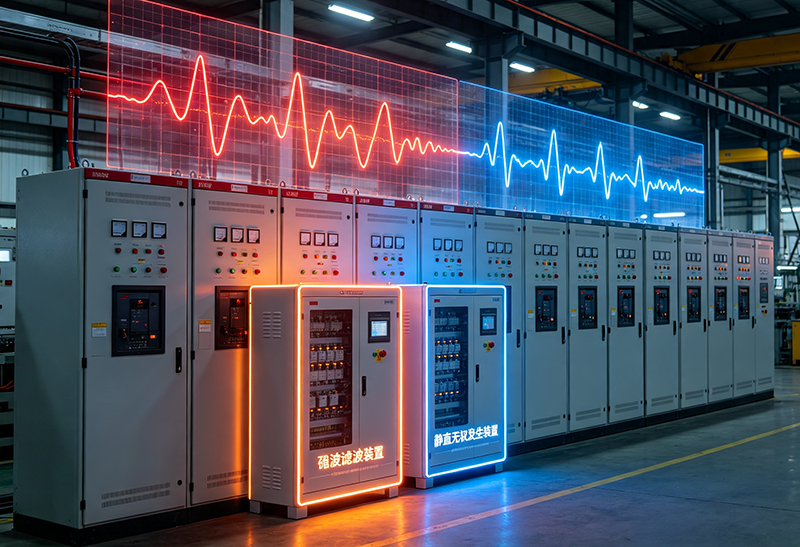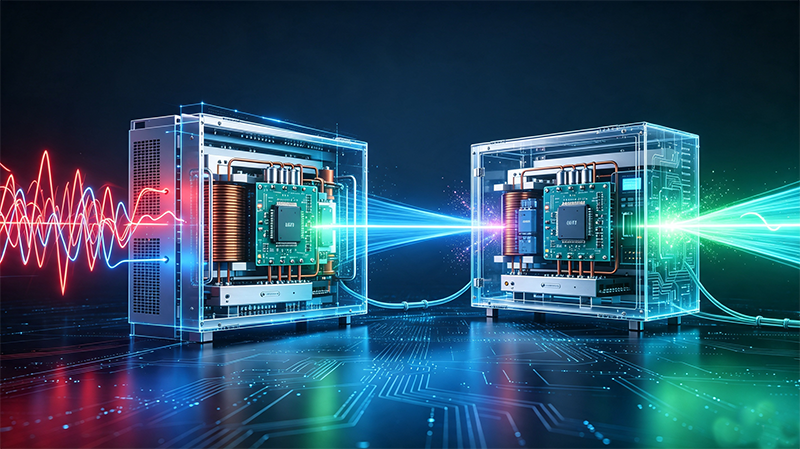
Dans les systèmes électriques industriels d’aujourd’hui, les problèmes de qualité de l'énergie sont de plus en plus courants en raison de l'utilisation généralisée de charges non linéaires telles que les variateurs de fréquence (VFDS), redresseurs, Systèmes UPS, machines de soudage, et équipements de production automatisés. La distorsion harmonique réduit non seulement l'efficacité énergétique, mais provoque également une surchauffe, pannes d'équipement, dommages au condensateur, et même des temps d'arrêt coûteux.
En tant qu'ingénieur électricien senior chez Coopération, Je reçois souvent des questions de clients industriels sur les différences entre une banque de condensateurs avec filtre harmonique et un Filtre harmonique actif (Ahf). Les deux solutions améliorent la qualité de l’énergie, mais ils servent des objectifs différents et fonctionnent en utilisant des technologies différentes.
Dans cet article, nous vous expliquerons comment fonctionnent ces systèmes, comparer leurs avantages et leurs inconvénients, et vous aider à déterminer quelle solution convient le mieux à votre application.
Comprendre les harmoniques dans les systèmes électriques industriels
Avant de comparer les deux technologies, il est important de comprendre ce que sont les harmoniques.
Les harmoniques sont des fréquences électriques indésirables générées par des charges électriques non linéaires. Dans un système d'alimentation standard fonctionnant à 50 Hz ou 60 Hz, les harmoniques apparaissent comme des multiples de la fréquence fondamentale.
Les sources harmoniques courantes comprennent:
- Drives de fréquence variable (VFDS)
- Systèmes UPS
- Servomoteurs
- Systèmes d'automatisation contrôlés par PLC
- Systèmes d'éclairage LED
- Fours à arc
- Chargeurs de batterie
- Centres de données
Des harmoniques excessives peuvent provoquer:
- Surchauffe du transformateur
- Pannes de batterie de condensateurs
- Augmentation des pertes de câble
- Déclenchement intempestif du disjoncteur
- Durée de vie du moteur réduite
- Problèmes de correction du facteur de puissance
- Distorsion de tension
C'est pourquoi les équipements d'atténuation des harmoniques sont devenus essentiels dans les systèmes de distribution électrique modernes..
Qu'est-ce qu'une banque de condensateurs avec filtre harmonique?
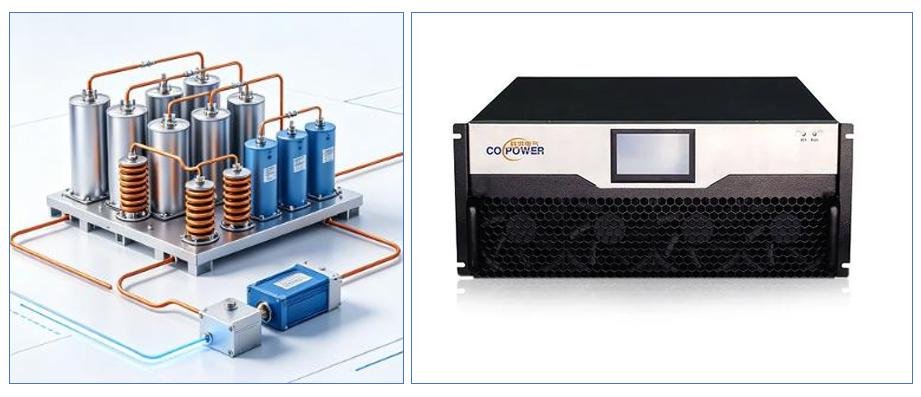
Une banque de condensateurs avec filtre harmonique est une solution traditionnelle de qualité d'énergie qui combine:
- Condensateurs de correction du facteur de puissance
- Réacteurs désaccordés ou réacteurs filtrants
Le système est principalement conçu pour améliorer le facteur de puissance tout en empêchant la résonance harmonique.
Comment ça marche
La batterie de condensateurs fournit une compensation de puissance réactive pour améliorer le facteur de puissance. Entre-temps, le réacteur de filtre harmonique empêche les courants harmoniques de pénétrer dans la batterie de condensateurs et de provoquer une résonance.
La combinaison de réacteur et de condensateur forme un circuit de filtre accordé ou désaccordé qui bloque ou absorbe des fréquences harmoniques spécifiques..
Les configurations typiques incluent:
- 5.67% filtre désaccordé
- 7% filtre désaccordé
- 14% filtre harmonique
Ces systèmes sont largement utilisés dans:
- Usines de fabrication
- Systèmes CVC
- Installations de traitement de l'eau
- Bâtiments commerciaux
- Usines textiles
- Cimenteries
Avantages des banques de condensateurs avec filtres harmoniques
1. Correction simultanée du facteur de puissance
Le plus grand avantage est que le système corrige le faible facteur de puissance tout en réduisant les risques d'harmoniques..
Cela aide les installations industrielles à éviter les pénalités des services publics causées par un faible facteur de puissance..
2. Investissement initial inférieur
Comparé aux systèmes de filtrage actif des harmoniques, les batteries de condensateurs équipées de filtres anti-harmoniques ont généralement des coûts initiaux inférieurs.
Pour les installations avec des niveaux d'harmoniques modérés, cela peut être une solution rentable.
3. Structure simple et technologie mature
Cette technologie est utilisée depuis des décennies et est bien maîtrisée par les ingénieurs et les équipes de maintenance..
Il offre un fonctionnement fiable dans des environnements de charge stables.
4. Risque de résonance réduit
Les batteries de condensateurs standard sans réacteurs peuvent amplifier les harmoniques par résonance. L'ajout de réacteurs de filtrage d'harmoniques réduit considérablement ce risque.
Limites des banques de condensateurs avec filtres harmoniques
1. Capacité limitée de filtrage des harmoniques
Les filtres harmoniques passifs ciblent uniquement des fréquences harmoniques spécifiques.
Ils ne peuvent pas compenser dynamiquement les conditions harmoniques changeantes.
2. Risque de surcompensation
Dans les systèmes avec des charges fluctuantes, Une compensation excessive de la puissance réactive peut se produire dans des conditions de faible charge.
Cela peut entraîner des problèmes de facteur de puissance majeurs.
3. Efficacité réduite dans les systèmes complexes
Les installations industrielles modernes contiennent souvent des charges non linéaires évoluant rapidement. Le filtrage passif peut ne pas fournir une suppression suffisante des harmoniques dans ces conditions.
Qu'est-ce qu'un filtre harmonique actif (Ahf)?
Un filtre harmonique actif est un dispositif électronique avancé de qualité de l'énergie qui détecte et élimine dynamiquement les harmoniques en temps réel..
Contrairement aux systèmes de filtrage passif, Les AHF utilisent l'électronique de puissance et la technologie de contrôle DSP intelligente pour injecter des courants de compensation dans le système..
Le résultat est une annulation harmonique.
Comment fonctionnent les filtres harmoniques actifs
L'AHF surveille en permanence le réseau électrique à l'aide de transformateurs de courant (CT).
Une fois la distorsion harmonique détectée, le contrôleur calcule la forme d'onde harmonique opposée et injecte un courant de compensation dans le système.
Cela annule efficacement les courants harmoniques avant qu'ils ne se propagent dans le réseau électrique..
La technologie est similaire aux écouteurs antibruit, mais pour les harmoniques électriques.
Avantages des filtres harmoniques actifs
1. Compensation harmonique dynamique
Les AHF s'adaptent automatiquement aux conditions de charge changeantes en temps réel.
Cela les rend idéaux pour les installations avec des charges fluctuantes et des processus de production très dynamiques..
2. Large plage de filtrage des harmoniques
Les filtres actifs peuvent supprimer plusieurs ordres harmoniques simultanément, généralement de la 2ème à la 50ème harmonique.
Cela fournit une atténuation des harmoniques beaucoup plus complète que les systèmes passifs.
3. Excellentes performances dans les systèmes industriels modernes
Les AHF sont très efficaces dans les environnements avec:
- VFDS
- Robotique
- Centres de données
- Lignes de production automatisées
- Bornes de recharge EV
- Systèmes d'énergie renouvelable
4. Capacité de compensation de puissance réactive
De nombreux AHF modernes peuvent également fournir une compensation de puissance réactive et un équilibrage de phase.
Cela signifie qu'un seul appareil peut améliorer à la fois la distorsion harmonique et le facteur de puissance..
5. Aucun risque de résonance
Étant donné que les filtres actifs ne reposent pas sur des circuits de résonance LC, ils éliminent les problèmes de résonance associés aux batteries de condensateurs traditionnelles.
Limites des filtres harmoniques actifs
1. Coût initial plus élevé
Les AHF nécessitent une électronique de puissance avancée et des contrôleurs intelligents, ce qui les rend plus chers au départ.
Cependant, les économies à long terme résultant d'une fiabilité améliorée et d'une réduction des temps d'arrêt justifient souvent l'investissement.
2. Une technologie plus complexe
L'installation et la mise en service peuvent nécessiter des ingénieurs expérimentés en qualité de l'énergie.
La maintenance exige également plus d’expertise technique par rapport aux systèmes passifs.
Banque de condensateurs avec filtre harmonique vs filtre harmonique actif
1. Type de technologie
Banque de condensateurs avec filtre harmonique
- Technologie de filtrage passif
- Utilise des condensateurs et des réacteurs
Filtre harmonique actif
- Compensation électronique active
- Utilise des contrôleurs DSP et des modules IGBT
2. Performances de filtrage des harmoniques
Banque de condensateurs avec filtre harmonique
- Cible des fréquences harmoniques spécifiques
- Flexibilité limitée
Filtre harmonique actif
- Filtre dynamiquement un large spectre harmonique
- Compensation adaptative en temps réel
3. Correction du facteur de puissance
Banque de condensateurs avec filtre harmonique
- Excellent pour la compensation de puissance réactive
Filtre harmonique actif
- Disponible dans les modèles avancés, mais pas toujours fonction première
4. Comparaison des coûts
Banque de condensateurs avec filtre harmonique
- Investissement initial réduit
Filtre harmonique actif
- Coût initial plus élevé mais meilleures performances à long terme
5. Meilleurs scénarios d'application
Banque de condensateurs avec filtre harmonique
Mieux pour:
- Systèmes de charge stables
- Harmoniques modérées
- Projets sensibles au budget
Filtre harmonique actif
Mieux pour:
- Charges hautement dynamiques
- Forte distorsion harmonique
- Installations industrielles critiques
Quelle solution choisir?
La bonne solution dépend de l’environnement électrique de votre installation et des objectifs opérationnels.
Choisissez une banque de condensateurs avec filtre harmonique si:
- Votre principal problème est le faible facteur de puissance
- Les niveaux de distorsion harmonique sont modérés
- Les charges sont relativement stables
- Le budget est limité
- Vous avez besoin d'une solution simple et fiable
Choisissez un filtre d'harmoniques actif si:
- Votre installation présente une grave distorsion harmonique
- Les charges changent fréquemment
- Vous exploitez des équipements sensibles
- La disponibilité de la production est essentielle
- Vous souhaitez une optimisation avancée de la qualité de l’énergie
Solutions hybrides: Combiner les deux technologies
Dans de nombreux projets industriels modernes, les ingénieurs combinent les deux technologies pour des résultats optimaux.
Une stratégie commune comprend:
- Banques de condensateurs pour la compensation globale de la puissance réactive
- Filtres d'harmoniques actifs pour une suppression dynamique des harmoniques
Cette approche hybride offre:
- Excellente correction du facteur de puissance
- Atténuation complète des harmoniques
- Efficacité énergétique améliorée
- Pertes électriques réduites
- Meilleure protection des équipements
À Coopération, nous recommandons souvent des solutions hybrides pour les grandes installations industrielles dotées de réseaux électriques complexes.
Pensées finales
À mesure que les systèmes électriques industriels deviennent plus complexes, l'atténuation des harmoniques n'est plus facultative. Une mauvaise qualité d’énergie peut entraîner des pannes d’équipement coûteuses, pertes d'énergie, et perturbations opérationnelles.
Les deux banques de condensateurs avec filtres d'harmoniques et filtres d'harmoniques actifs jouent un rôle important dans l'ingénierie électrique moderne..
Une batterie de condensateurs avec filtrage des harmoniques offre une solution pratique et économique pour la correction du facteur de puissance et la suppression modérée des harmoniques.. Entre-temps, un filtre d'harmoniques actif offre des performances avancées, compensation harmonique en temps réel pour les applications industrielles exigeantes.
Choisir la bonne solution nécessite une analyse minutieuse de:
- Niveaux harmoniques
- Caractéristiques de charge
- Exigences en matière de facteur de puissance
- Stabilité du système
- Considérations budgétaires
En sélectionnant la solution de qualité d’énergie appropriée, les installations industrielles peuvent améliorer leur efficacité, prolonger la durée de vie des équipements, et maintenir un fonctionnement électrique fiable.
Si vous évaluez des solutions d'atténuation des harmoniques pour votre projet, l'équipe d'ingénierie de Coopération peut aider à fournir une analyse personnalisée de la qualité de l’énergie et des recommandations système.
Balises: Banque de condensateurs avec filtre harmonique, Filtre harmonique actif, Filtre harmonique vs filtre harmonique actif, Qualité de l’énergie industrielle, Correction du facteur de puissance, Atténuation harmonique, Harmoniques électriques, Filtre harmonique passif, Filtre d'alimentation actif, Solutions de distorsion harmonique ,Systèmes électriques industriels , Solutions de qualité de l'énergie, Suppression harmonique, Compensation de puissance réactive, Solutions de qualité d’énergie CoEpower, fournisseurs, fabricants, usine, entreprise, Chine, de gros, acheter, prix, citation, en gros, à vendre, entreprise, action, coût.