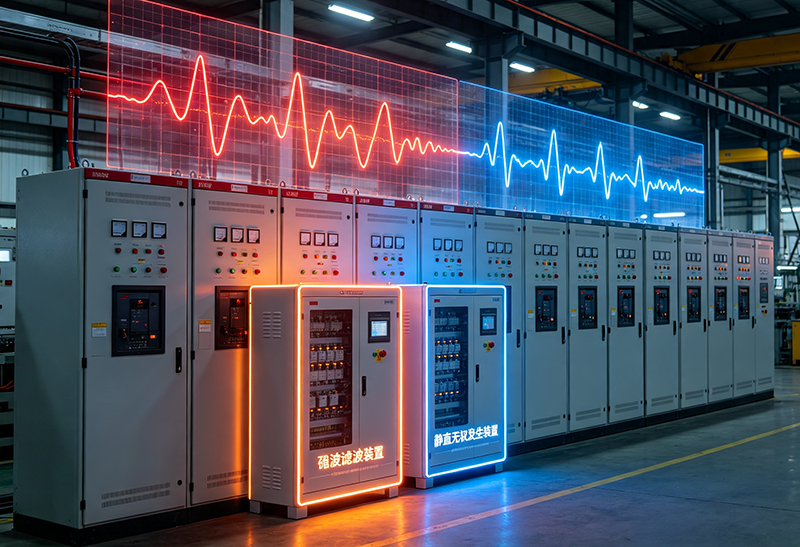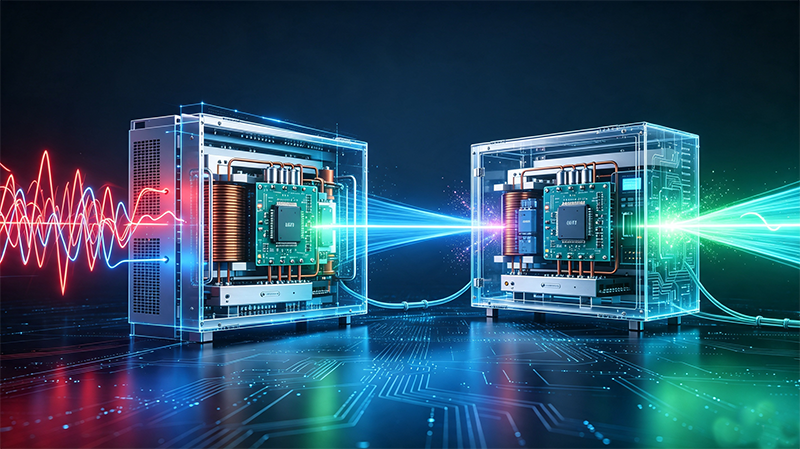
Dans les systèmes électriques industriels et commerciaux d’aujourd’hui, la distorsion harmonique est devenue un défi croissant. Alors que de plus en plus d'installations dépendent de charges électriques non linéaires telles que les entraînements à fréquence variable (VFDS), Systèmes UPS, Éclairage LED, Chargeurs de VE, machines de soudage, et équipements de centres de données, la question des harmoniques ne peut plus être ignorée.
À Coopération, nous aidons fréquemment les ingénieurs, Entrepreneurs EPC, et les gestionnaires d'installations résolvent les problèmes de qualité de l'énergie causés par les harmoniques. Deux des solutions les plus fréquemment évoquées sont filtres d'harmoniques monophasés et Filtres harmoniques actifs (Ahfs).
Bien que les deux technologies soient conçues pour réduire la distorsion harmonique, ils diffèrent considérablement dans les principes de conception, scénarios d'application, performance, et le coût. Dans cet article, nous expliquerons les principales différences entre les filtres d'harmoniques monophasés et les filtres d'harmoniques actifs du point de vue d'un ingénieur électricien senior.
Que sont les harmoniques dans les systèmes électriques?
Les harmoniques sont des formes d'onde de tension ou de courant qui fonctionnent à des fréquences multiples de la fréquence fondamentale. (50Hz ou 60 Hz). Ils sont principalement générés par des charges non linéaires qui consomment du courant sous forme d'impulsions brusques au lieu d'ondes sinusoïdales douces..
Les sources courantes d'harmoniques comprennent:
- Variateurs de fréquence (VFDS)
- Alimentations à découpage
- Centres de données
- Onduleurs solaires
- Bornes de recharge EV
- Systèmes UPS
- Systèmes d'éclairage LED
- Fours à arc
Une distorsion harmonique excessive peut provoquer:
- Surchauffe du transformateur
- Pannes de batterie de condensateurs
- Déclenchements intempestifs
- Efficacité du moteur réduite
- Augmentation des pertes d’énergie
- Surchauffe du câble
- Dysfonctionnement de l'équipement
- Facteur de puissance réduit
- Coûts de maintenance plus élevés
Pour atténuer ces problèmes, des technologies de filtrage des harmoniques sont déployées.
Qu'est-ce qu'un filtre harmonique monophasé?
UN filtre harmonique monophasé est un dispositif de filtrage spécialement conçu pour les systèmes électriques monophasés. Il est couramment utilisé pour supprimer les courants harmoniques générés par les charges monophasées..
Ces filtres sont généralement des filtres passifs composés de:
- Condensateurs
- Inducteurs
- Résistances
Le filtre est réglé sur des fréquences harmoniques spécifiques, comme le 3ème, 5ème, ou 7ème harmonique.
Comment fonctionnent les filtres harmoniques monophasés
Les filtres harmoniques monophasés fonctionnent en créant un chemin à faible impédance pour les courants harmoniques. Au lieu de retourner dans le système électrique, les courants harmoniques sont détournés vers le circuit de filtrage.
La plupart des filtres monophasés sont passifs, ce qui signifie qu'ils n'injectent pas activement de courants de compensation. Plutôt, ils s'appuient sur des circuits LC accordés pour absorber les harmoniques ciblées.
Les emplacements d'installation typiques incluent:
- Systèmes résidentiels
- Petits bâtiments commerciaux
- Matériel de bureau
- Instruments de laboratoire
- Équipement télécom
- Systèmes UPS monophasés
- Petits appareils médicaux
Qu'est-ce qu'un filtre harmonique actif (Ahf)?
Un Filtre harmonique actif (Ahf) est un dispositif électronique avancé de qualité de l'énergie qui détecte et compense dynamiquement les courants harmoniques en temps réel.

Contrairement aux filtres passifs, Les AHF utilisent l'électronique de puissance et la technologie de traitement du signal numérique pour injecter des courants harmoniques inverses dans le système..
Cela annule efficacement les harmoniques indésirables sur une large gamme de fréquences..
Comment fonctionnent les filtres harmoniques actifs
Les filtres d'harmoniques actifs surveillent en permanence les courants de charge à l'aide de transformateurs de courant (CT). Le contrôleur analyse le spectre harmonique et génère des courants de compensation égaux en amplitude mais opposés en phase..
Le résultat est une annulation harmonique et une qualité de forme d'onde améliorée.
Les AHF peuvent généralement:
- Réduisez le THDi ci-dessous 5%
- Compenser plusieurs ordres harmoniques simultanément
- Améliorer le facteur de puissance
- Équilibrer les charges triphasées
- Réduire les courants neutres
- S'adapter dynamiquement aux charges changeantes
Les filtres d'harmoniques actifs sont largement utilisés dans:
- Plantes industrielles
- Centres de données
- Hôpitaux
- Fabrication de semi-conducteurs
- Bâtiments commerciaux
- Systèmes d'énergie renouvelable
- Infrastructure de recharge pour véhicules électriques
- Usines intelligentes
Différences clés entre les filtres harmoniques monophasés et les filtres harmoniques actifs
1. Principe de fonctionnement
Filtre harmonique monophasé
Les filtres d'harmoniques monophasés sont généralement des dispositifs passifs. Ils absorbent des fréquences harmoniques spécifiques à l'aide de circuits LC accordés.
Leur performance dépend fortement de:
- Impédance du système
- Conditions de charge
- Stabilité de la fréquence harmonique
Filtre harmonique actif
Les AHF génèrent activement des courants de compensation en temps réel à l'aide de l'électronique de puissance et des algorithmes DSP.
Ils peuvent réagir instantanément aux conditions harmoniques changeantes et compenser de manière dynamique.
2. Plage de compensation harmonique
Filtre harmonique monophasé
Les filtres passifs sont généralement réglés pour un ou plusieurs ordres harmoniques.
Par exemple:
- 3filtre harmonique
- 5filtre d'harmoniques
- 7filtre d'harmoniques
Ils sont moins efficaces pour l’atténuation des harmoniques à large spectre.
Filtre harmonique actif
Les AHF peuvent compenser:
- 2ème à 50ème harmonique
- Plusieurs harmoniques simultanément
- Charges harmoniques dynamiques et fluctuantes
Cela offre une protection beaucoup plus large.
3. Flexibilité du système
Filtre harmonique monophasé
Les filtres passifs sont relativement fixes une fois installés.
Si la charge change de manière significative, les performances du filtre peuvent diminuer.
Filtre harmonique actif
Les AHF sont hautement adaptatifs et répondent automatiquement aux variations de charge en temps réel.
Cela les rend idéaux pour les systèmes électriques modernes avec des charges dynamiques.
4. Complexité de l'installation
Filtre harmonique monophasé
L’installation est généralement simple et rentable.
Ils conviennent pour:
- Petits systèmes
- Problèmes harmoniques simples
- Budgets limités
Filtre harmonique actif
Les AHF exigent:
- Transformateurs de courant
- Configuration du contrôleur
- Analyse harmonique appropriée
- Mise en service plus sophistiquée
Cependant, ils offrent des performances bien supérieures.
5. Risque de résonance
Filtre harmonique monophasé
Les filtres harmoniques passifs peuvent créer des problèmes de résonance avec le système électrique.
Cela peut potentiellement amplifier les harmoniques au lieu de les réduire.
Des études système sont souvent nécessaires avant l’installation.
Filtre harmonique actif
Les AHF ne dépendent pas du réglage de la résonance et évitent donc les risques de résonance.
Cela améliore considérablement la fiabilité du système.
6. Correction du facteur de puissance
Filtre harmonique monophasé
Certains filtres passifs peuvent également améliorer le facteur de puissance.
Cependant, la capacité de correction est limitée.
Filtre harmonique actif
De nombreux AHF modernes intègrent:
- Atténuation harmonique
- Compensation de puissance réactive
- Correction du facteur de puissance
- Équilibrage de charge
Cela en fait une solution multifonctionnelle de qualité d’énergie.
7. Exigences d'entretien
Filtre harmonique monophasé
Les filtres passifs nécessitent généralement un entretien minimal.
Cependant, Le vieillissement des condensateurs et les contraintes thermiques peuvent éventuellement réduire les performances.
Filtre harmonique actif
Les AHF contiennent des systèmes électroniques et de refroidissement avancés.
Une inspection régulière est recommandée, mais les AHF modernes sont très fiables et intelligents.
8. Comparaison des coûts
Filtre harmonique monophasé
Avantages:
- Investissement initial réduit
- Conception simple
- Économique pour les petites applications
Inconvénients:
- Capacité de compensation limitée
- Moins flexible
- Problèmes de résonance potentiels
Filtre harmonique actif
Avantages:
- Suppression des harmoniques supérieure
- Performances dynamiques
- Capacité multifonction
Inconvénients:
- Coût initial plus élevé
- Installation plus complexe
Cependant, Les AHF génèrent souvent des coûts opérationnels inférieurs à long terme grâce à une efficacité énergétique améliorée et à une réduction des pannes d'équipement..
Table de comparaison: Filtre harmonique monophasé vs filtre harmonique actif
| Fonctionnalité | Filtre harmonique monophasé | Filtre harmonique actif |
|---|---|---|
| Technologie | Circuit LC passif | Compensation électronique de puissance |
| Type de rémunération | Fixé | Dynamique |
| Gamme harmonique | Harmoniques spécifiques | Harmoniques à large spectre |
| Adaptabilité | Limité | Excellent |
| Risque de résonance | Possible | Aucun |
| Correction du facteur de puissance | Partiel | Avancé |
| Installation | Simple | Modéré |
| Coût | Inférieur | Plus haut |
| Idéal pour | Petits systèmes | Systèmes industriels complexes |
| Entretien | Faible | Modéré |
Quand choisir un filtre harmonique monophasé?
Les filtres d'harmoniques monophasés sont idéaux lorsque:
- Les problèmes harmoniques sont relativement simples
- La charge est stable
- Le budget est limité
- L'application est à petite échelle
- Seules les fréquences harmoniques spécifiques doivent être supprimées
Les applications typiques incluent:
- Installations résidentielles
- Petits bureaux
- Matériel de laboratoire
- Systèmes de télécommunications
- Petits systèmes UPS
Quand devriez-vous choisir un filtre harmonique actif?
Les filtres d'harmoniques actifs sont le choix préféré lorsque:
- Les niveaux harmoniques fluctuent fréquemment
- Plusieurs ordres harmoniques existent
- Les exigences en matière de qualité de l'énergie sont strictes
- La fiabilité des équipements est essentielle
- L'installation contient des appareils électroniques sensibles
- Une future expansion de la charge est attendue
Les applications idéales incluent:
- Automatisation industrielle
- Centres de données
- Usines de semi-conducteurs
- Hôpitaux
- Bâtiments intelligents
- Centrales d'énergie renouvelable
- Bornes de recharge EV
Pourquoi l'atténuation des harmoniques est plus importante que jamais
Avec l’adoption rapide de l’automatisation, énergie renouvelable, et électronique de puissance, la pollution harmonique augmente à l’échelle mondiale.
Les installations modernes sont de plus en plus vulnérables:
- Temps d'arrêt inattendu
- Gaspillage d'énergie
- Dommages à l'équipement
- Problèmes de conformité
Normes internationales telles que IEEE 519 impose désormais des limites plus strictes à la distorsion harmonique.
Un filtrage adéquat des harmoniques n’est plus une option : il s’agit d’un élément essentiel de la conception d’un système électrique moderne..
Solutions de filtres harmoniques CoEpower
À Coopération, nous fournissons des solutions avancées de qualité d’énergie adaptées aux applications industrielles et commerciales.
Nos offres comprennent:
- Filtres harmoniques actifs (Ahf)
- Générateurs VAR statiques (SVG)
- Banques de condensateurs
- Filtres harmoniques passifs
- Systèmes de correction du facteur de puissance
- Solutions personnalisées d'atténuation des harmoniques
Notre équipe d'ingénierie effectue une analyse harmonique détaillée pour aider les clients à sélectionner la solution la plus efficace et la plus rentable pour leur installation..
Que vous ayez besoin d'un filtre d'harmoniques monophasé compact ou d'un filtre d'harmoniques actif de grande capacité pour un système industriel complexe, CoEpower peut fournir des solutions de qualité d'énergie fiables et efficaces.
Pensées finales
Les filtres d'harmoniques monophasés et les filtres d'harmoniques actifs jouent un rôle important dans la gestion de la qualité de l'énergie..
Un filtre harmonique monophasé offre une solution rentable pour une stabilité, problèmes d'harmoniques à petite échelle. En revanche, un filtre d'harmoniques actif fournit une, dynamique, et une compensation harmonique complète pour les environnements industriels modernes.
Le choix de la bonne solution dépend:
- Sévérité harmonique
- Caractéristiques de charge
- Complexité du système
- Budget
- Plans d'expansion futurs
Alors que les systèmes électriques continuent d’évoluer, la technologie de filtrage actif des harmoniques devient de plus en plus importante pour maintenir des, efficace, et des opérations conformes aux normes.
Si votre installation connaît des problèmes liés aux harmoniques, consulter des ingénieurs expérimentés en qualité de l’énergie est la meilleure première étape vers la recherche de la solution optimale.
Balises: Filtre harmonique monophasé, Filtre harmonique actif, Qualité de l'énergie AHF, Filtre harmonique vs filtre harmonique actif, Solutions d'atténuation des harmoniques, Filtre d'harmoniques industriel, Amélioration de la qualité de l'énergie, Suppression des harmoniques électriques, Filtre harmonique passif, Compensation harmonique dynamique, IEEE 519 conformité harmonique, Solutions de distorsion harmonique, Filtre harmonique CoEpower, Système de filtrage des harmoniques, Filtre d'harmoniques actif triphasé, fournisseurs, fabricants, usine, entreprise, Chine, de gros, acheter, prix, citation, en gros, à vendre, entreprise, action, coût.