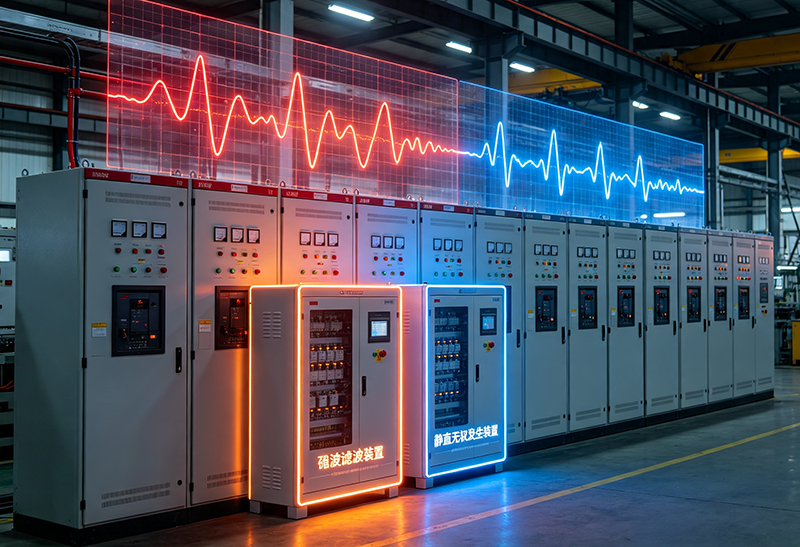
In modern industrial environments, maintaining high power quality is no longer optional—it is critical. As a senior electrical engineer at CoEpower, I’ve seen firsthand how harmonic distortion can disrupt operations, damage sensitive equipment, and increase operational costs.
Two of the most widely used solutions for harmonic mitigation are the Active Harmonic Filter (AHF) and the Harmonic Suppression Filter (HSF) (commonly referred to as passive harmonic filters). While both aim to reduce harmonic distortion, they operate differently and are suited to different applications.
This article provides a comprehensive, practical guide to help you choose the right solution for your industrial system.
What Are Harmonics and Why Do They Matter?
Harmonics are voltage or current distortions in electrical systems caused primarily by non-linear loads such as:
- Variable Frequency Drives (VFDs)
- Rectifiers and inverters
- UPS systems
- Industrial automation equipment
These distortions can lead to:
- Overheating of transformers and cables
- Increased energy losses
- Equipment malfunction or failure
- Penalties for non-compliance with standards like IEEE 519
Effectively managing harmonics is essential for ensuring system reliability and efficiency.
What Is an Active Harmonic Filter?
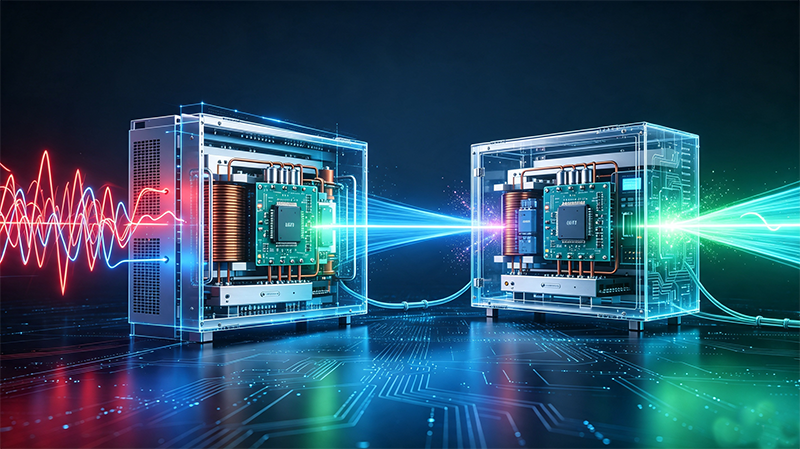
An Active Harmonic Filter (AHF) is an advanced electronic device that dynamically detects and compensates for harmonic currents in real time.
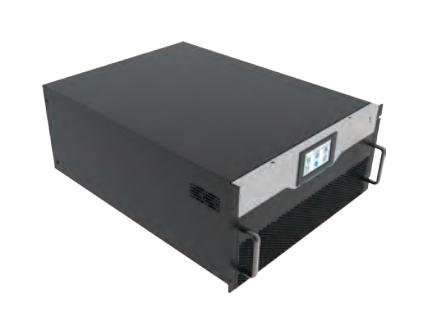
Key Features of AHF:
- Real-time harmonic compensation
- Adaptive to load changes
- Capable of filtering multiple harmonic orders simultaneously
- Also improves power factor and balances loads
How It Works:
AHFs use power electronics (IGBT-based converters) to inject counteracting currents into the system, effectively canceling out harmonics.
What Is a Harmonic Suppression Filter?
A Harmonic Suppression Filter (HSF), typically a passive filter, is designed using combinations of capacitors, inductors, and resistors tuned to specific harmonic frequencies.
Key Features of HSF:
- Fixed compensation for specific harmonic orders
- Lower initial cost compared to AHFs
- Simple structure and operation
How It Works:
HSFs provide low impedance paths for targeted harmonic frequencies, diverting them away from the power system.
Active Harmonic Filter vs Harmonic Suppression Filter: Key Differences
| Feature | Active Harmonic Filter | Harmonic Suppression Filter |
|---|---|---|
| Working Principle | Real-time dynamic compensation | Fixed frequency tuning |
| Flexibility | High (adapts to load changes) | Low (designed for specific harmonics) |
| Harmonic Coverage | Wide range (multiple orders) | Limited to tuned frequencies |
| Installation | More complex | Simpler |
| Cost | Higher initial investment | Lower upfront cost |
| Risk of Resonance | None | Possible resonance issues |
| Power Factor Correction | Yes (multi-function) | Limited |
When Should You Choose an Active Harmonic Filter?
From my engineering experience, AHFs are the best choice in the following scenarios:
1. Highly Variable Loads
Industries such as manufacturing, mining, and data centers often experience fluctuating loads. AHFs adapt in real time, making them ideal.
2. Strict Power Quality Requirements
If your facility must comply with IEEE 519 or similar standards, AHFs provide precise harmonic control.
3. Complex Harmonic Profiles
When multiple harmonic frequencies are present, AHFs outperform passive filters significantly.
4. Need for Multi-Functionality
AHFs can:
- Compensate harmonics
- Correct power factor
- Balance three-phase loads
This makes them a comprehensive solution.
When Should You Choose a Harmonic Suppression Filter?
HSFs (passive filters) still have their place in industrial systems, particularly in these cases:
1. Stable and Predictable Loads
If your system operates under consistent conditions with known harmonic frequencies, passive filters can be effective.
2. Budget Constraints
HSFs are more cost-effective upfront, making them suitable for projects with limited budgets.
3. Simple Applications
For systems with a dominant harmonic (e.g., 5th or 7th), a tuned passive filter can work well.
Cost Considerations: Initial vs Long-Term Investment
One of the most common questions I get from clients is:
“Which solution is more cost-effective?”
Active Harmonic Filter:
- Higher upfront cost
- Lower maintenance
- Energy savings over time
- Reduced risk of equipment failure
Harmonic Suppression Filter:
- Lower initial cost
- Potential hidden costs (resonance, detuning, inefficiency)
- May require redesign if system conditions change
Engineering Insight:
While AHFs may seem expensive initially, they often deliver better ROI in dynamic industrial environments.
Performance and Reliability Comparison
Active Harmonic Filter:
- Consistent performance under varying loads
- No detuning issues
- High reliability in complex systems
Harmonic Suppression Filter:
- Performance depends heavily on system stability
- Susceptible to resonance and overload
- Efficiency decreases if system parameters change
Typical Industrial Applications
Active Harmonic Filter Applications:
- Data centers
- Steel plants
- Automotive manufacturing
- Renewable energy systems (solar/wind)
- Hospitals and critical facilities
Harmonic Suppression Filter Applications:
- Cement plants
- Water treatment facilities
- HVAC systems
- Fixed-speed motor applications
Hybrid Solutions: The Best of Both Worlds?
In some cases, combining both technologies provides optimal results.
A hybrid system may use:
- Passive filters for bulk harmonic reduction
- Active filters for fine-tuning and dynamic compensation
This approach balances cost and performance effectively.
Practical Selection Checklist
When choosing between an Active Harmonic Filter and a Harmonic Suppression Filter, consider the following:
- Load variability (stable vs dynamic)
- Harmonic spectrum complexity
- Compliance requirements (IEEE 519, IEC standards)
- Budget (initial vs lifecycle cost)
- Space and installation constraints
- Future system expansion plans
Conclusion
Choosing between an Active Harmonic Filter and a Harmonic Suppression Filter is not simply a technical decision—it’s a strategic investment in your facility’s efficiency, reliability, and compliance.
From my experience at CoEpower, the general rule is:
- Choose Active Harmonic Filters for dynamic, complex, and high-performance systems
- Choose Harmonic Suppression Filters for stable, predictable, and cost-sensitive applications
If your system is evolving or expected to scale, investing in an AHF will almost always provide greater long-term value.
About CoEpower
At CoEpower, we specialize in advanced power quality solutions, including Active Harmonic Filters and customized harmonic mitigation systems tailored to industrial needs.
If you’re unsure which solution is right for your application, consulting with experienced engineers can save both time and cost in the long run.
Tags: Active Harmonic Filter, Harmonic Suppression Filter, harmonic mitigation, power quality solutions, industrial power systems, harmonic distortion filter, AHF vs passive filter, harmonic filtering solutions, suppliers, manufacturers, factory, company, China, wholesale, buy, price, quotation, bulk, for sale, companies, stock, cost.