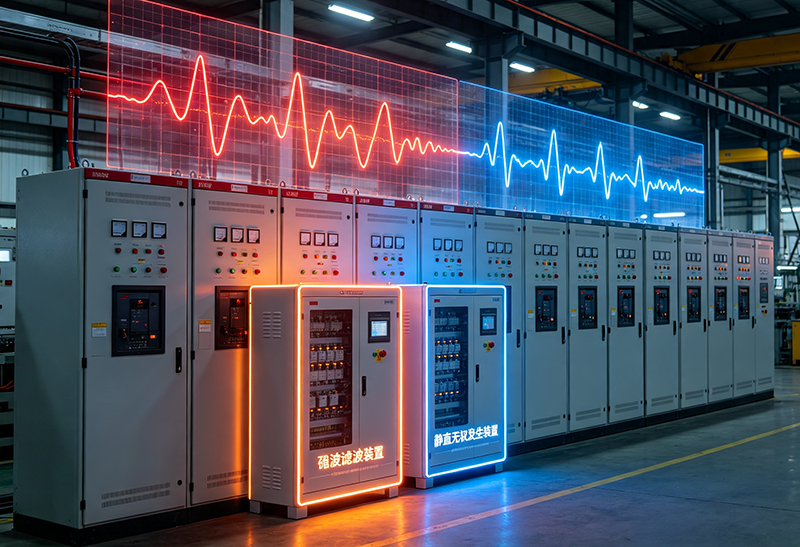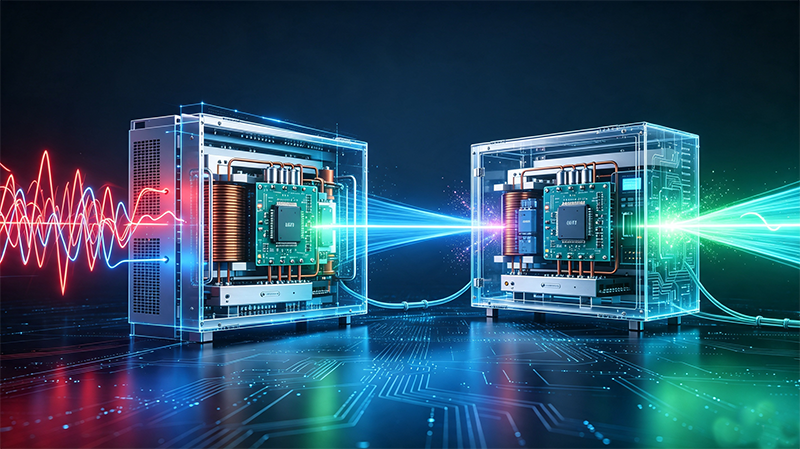
Modern industrial facilities rely heavily on power electronics, variable frequency drives (VFDs), servo systems, UPS units, EV chargers, robotic production lines, and renewable energy systems. While these technologies improve efficiency and productivity, they also introduce new power quality challenges that traditional capacitor banks can no longer solve effectively.
As a senior electrical engineer at CoEpower, I frequently receive the same question from customers:
“Should we install an Active Harmonic Filter (AHF), a Static Var Generator (SVG), or both?”
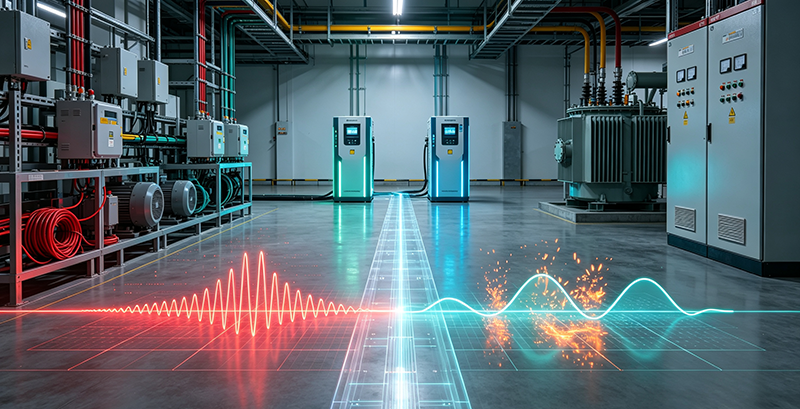
The answer depends entirely on the power quality problems present in your electrical system. Installing the wrong solution can waste money while failing to solve the actual issue.
In this guide, I’ll explain the differences between Active Harmonic Filters and Static Var Generators, how they work, their ideal applications, and how to determine whether your facility requires one—or both.
Understanding Today’s Power Quality Problems
Power quality generally involves four major issues:
- Harmonic distortion
- Low power factor
- Voltage fluctuations
- Three-phase imbalance
In modern factories, these problems often occur simultaneously.
Common sources include:
- Variable Frequency Drives (VFDs)
- Servo motors
- UPS systems
- CNC machines
- Welding equipment
- Data centers
- Renewable energy inverters
- EV charging stations
- Medical imaging equipment
These nonlinear loads generate harmonic currents while consuming reactive power, resulting in higher electricity costs, equipment overheating, transformer overload, and unexpected downtime.
What Is an Active Harmonic Filter (AHF)?
An Active Harmonic Filter (AHF) is an intelligent power electronic device designed to eliminate harmonic currents in real time.
Instead of using passive inductors and capacitors tuned to specific frequencies, an AHF continuously monitors the load current and injects equal but opposite harmonic currents into the electrical network.
The unwanted harmonics are effectively canceled before they can propagate throughout the power system.
Main Functions of an Active Harmonic Filter
- Eliminate 2nd–50th order harmonics
- Reduce Total Harmonic Distortion (THD)
- Prevent transformer overheating
- Protect sensitive equipment
- Reduce neutral conductor current
- Improve power system reliability
- Extend equipment lifespan
Modern AHFs can achieve harmonic compensation efficiencies exceeding 95%, making them ideal for facilities with rapidly changing loads.
Typical Applications for Active Harmonic Filters
AHFs are commonly installed in:
- Manufacturing plants
- Data centers
- Semiconductor factories
- Hospitals
- Commercial buildings
- Water treatment facilities
- Oil & gas facilities
- Steel plants
- Mining operations
- EV charging stations
These environments contain significant nonlinear loads that continuously generate harmonics.
What Is a Static Var Generator (SVG)?
A Static Var Generator (SVG) is an advanced reactive power compensation device designed to improve power factor dynamically.
Unlike conventional capacitor banks, an SVG uses high-speed IGBT technology to generate leading or lagging reactive current instantly according to load demand.
Instead of waiting for contactors to switch capacitor stages, an SVG responds within milliseconds.
This enables continuous, precise power factor correction without overcompensation.
Main Functions of an SVG
An SVG provides several important benefits:
- Dynamic reactive power compensation
- Power factor correction up to 0.99
- Voltage stabilization
- Reduction of line losses
- Increased transformer capacity utilization
- Improved energy efficiency
- Compensation of inductive and capacitive loads
Unlike capacitor banks, SVGs are unaffected by harmonic resonance and remain stable under rapidly fluctuating loads.
Typical Applications for Static Var Generators
SVGs perform exceptionally well in:
- Automotive manufacturing
- Steel mills
- Cement plants
- Textile factories
- Ports
- Airports
- Wind farms
- Solar power plants
- Commercial complexes
- Large HVAC systems
Any installation with fluctuating inductive loads can benefit significantly from SVG technology.
Active Harmonic Filter vs Static Var Generator
| Feature | Active Harmonic Filter (AHF) | Static Var Generator (SVG) |
| Primary Function | Harmonic mitigation | Reactive power compensation |
| Solves Harmonics | ✔ Excellent | ✘ No |
| Improves Power Factor | Limited | ✔ Excellent |
| Voltage Stability | Moderate | Excellent |
| Dynamic Response | <1 ms | <10 ms |
| Eliminates Resonance | ✔ Yes | ✔ Better than capacitor banks |
| Best For | Nonlinear loads | Low power factor |
| Main Benefit | Lower THD | Lower reactive power charges |
One common misconception is that an SVG can eliminate harmonics.
It cannot.
Similarly, while some AHFs can provide limited reactive power compensation, their primary purpose is harmonic suppression rather than full power factor correction.
When Should You Install an Active Harmonic Filter?
An AHF is the right choice if your facility experiences:
High Harmonic Distortion
Typical indicators include:
- THDi > 20%
- THDv exceeding IEEE 519 recommendations
- Frequent breaker trips
- Transformer overheating
- Motor overheating
- Sensitive equipment malfunction
Large Numbers of VFDs
Facilities with many variable speed drives often experience severe harmonic pollution.
UPS Systems
Large UPS installations produce significant harmonic currents.
Data Centers
Servers, switch-mode power supplies, and UPS systems generate harmonics continuously.
Production Lines with Power Electronics
Modern automated manufacturing relies heavily on inverters and servo drives.
When Should You Install a Static Var Generator?
An SVG is recommended when:
Low Power Factor Increases Electricity Bills
Utilities often impose penalties when power factor falls below required levels.
An SVG can improve power factor close to unity.
Rapidly Changing Loads
Examples include:
- Cranes
- Elevators
- Spot welding
- Compressors
- Injection molding machines
Traditional capacitor banks cannot respond quickly enough.
Voltage Fluctuation
SVGs provide dynamic reactive support to stabilize voltage.
Capacitor Bank Failures
Many facilities replace aging capacitor banks with SVGs because SVGs:
- require less maintenance,
- eliminate switching transients, and
- avoid capacitor degradation.
When Should You Install Both an AHF and an SVG?
In many industrial facilities, both harmonic distortion and reactive power problems exist simultaneously.
Typical examples include:
- Automotive manufacturing
- Steel production
- Semiconductor fabrication
- Data centers
- Petrochemical plants
- Smart factories
- EV charging stations
In these cases, installing both technologies delivers the best long-term results.
Benefits of a Combined AHF + SVG Solution
By integrating an Active Harmonic Filter with a Static Var Generator, facilities can achieve:
- Harmonic suppression
- Dynamic power factor correction
- Reduced electricity penalties
- Improved voltage stability
- Lower transformer temperature
- Increased system efficiency
- Longer equipment life
- Greater production reliability
- Compliance with IEEE 519 and other power quality standards
Many modern power quality cabinets integrate both AHF and SVG modules into one compact solution, reducing installation space while simplifying maintenance.
Why Traditional Capacitor Banks Are No Longer Enough
For decades, capacitor banks were the standard solution for power factor correction.
However, today’s electrical systems are dramatically different.
Capacitor banks have several limitations:
- Slow response speed
- Mechanical contact wear
- Harmonic resonance risk
- Fixed compensation steps
- Poor performance under fluctuating loads
As facilities adopt automation, renewable energy, and digital manufacturing, intelligent compensation devices have become the preferred solution.
SVGs and AHFs provide real-time compensation without the drawbacks associated with conventional capacitor banks.
How CoEpower Helps Improve Power Quality
At CoEpower, we understand that every electrical system is unique. Selecting the right power quality solution requires more than simply choosing a product—it requires a thorough analysis of your electrical network.
Our engineering team begins by evaluating key parameters such as:
- Total Harmonic Distortion (THD)
- Power factor
- Load profile
- Transformer loading
- Voltage fluctuations
- Reactive power demand
- Future capacity expansion
Based on this assessment, we recommend the most cost-effective solution:
- Active Harmonic Filter for harmonic mitigation,
- Static Var Generator for dynamic reactive power compensation, or
- A combined AHF + SVG solution for comprehensive power quality improvement.
Our systems feature advanced DSP control, fast dynamic response, modular design for flexible capacity expansion, and reliable performance in demanding industrial environments. Whether your facility is upgrading an existing electrical system or designing a new installation, CoEpower solutions help reduce energy losses, improve equipment reliability, and ensure long-term compliance with international power quality standards.
Final Thoughts
There is no universal solution to power quality issues.
If your facility struggles primarily with harmonic distortion, an Active Harmonic Filter is the appropriate investment.
If poor power factor and fluctuating reactive power are increasing operating costs, a Static Var Generator offers a more effective solution than conventional capacitor banks.
However, many modern industrial facilities experience both problems simultaneously. In these cases, combining an AHF with an SVG delivers the highest level of power quality, improved system reliability, reduced energy costs, and better protection for critical electrical equipment.
As industrial power systems become increasingly complex, proactive power quality management is no longer optional—it is essential for maximizing efficiency, minimizing downtime, and supporting sustainable operations.
Frequently Asked Questions (FAQ)
Can an Active Harmonic Filter replace a Static Var Generator?
Not completely. While some AHFs can provide limited reactive power compensation, they are primarily designed to eliminate harmonics. For significant power factor correction, an SVG is the better solution.
Does an SVG eliminate harmonics?
No. An SVG is designed to compensate reactive power and stabilize voltage. It does not actively suppress harmonic currents.
Can I use both an AHF and an SVG in the same electrical system?
Yes. In fact, many industrial facilities benefit from installing both devices to address harmonic distortion and reactive power compensation simultaneously.
Are AHFs and SVGs better than capacitor banks?
For modern electrical systems with nonlinear and rapidly changing loads, AHFs and SVGs offer faster response, greater accuracy, and improved reliability compared with conventional capacitor banks.
Keyword Tags
Active Harmonic Filter, AHF, Static Var Generator, SVG, Power Quality Improvement, Power Factor Correction, Harmonic Filter, Reactive Power Compensation, Harmonic Mitigation, Total Harmonic Distortion, THD Reduction, Dynamic Reactive Power Compensation, Capacitor Bank Replacement, Industrial Power Quality, Electrical Power Quality Solutions, IEEE 519 Compliance, Power Quality Equipment, CoEpower, Smart Factory Power Quality, Energy Efficiency, Voltage Stabilization, suppliers, manufacturers, factory, company, China, wholesale, buy, price, quotation, bulk, for sale, companies, stock, cost.
Related Products
Related Blogs
Get A Quote Today