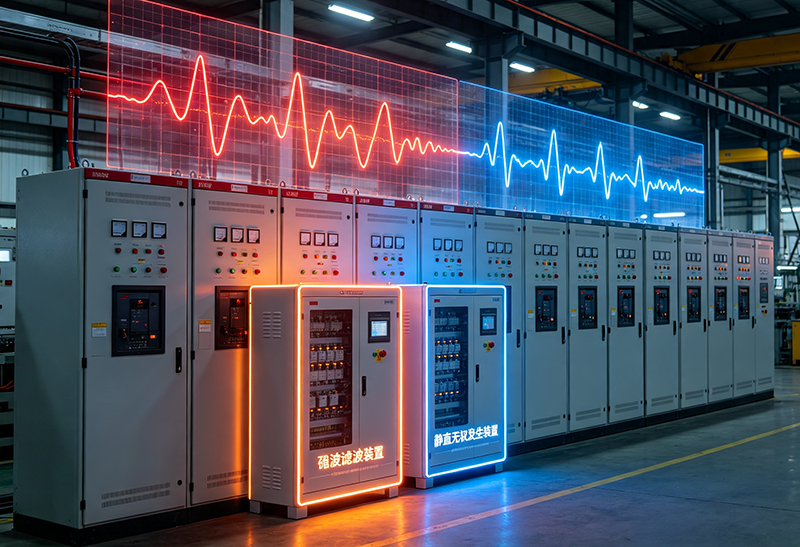
Modern factories are becoming increasingly automated, efficient, and intelligent. From CNC machines and robotic production lines to variable frequency drives (VFDs), industrial robots, welding equipment, and automated control systems, advanced electrical equipment has transformed manufacturing processes.
However, these technologies have also created a new challenge: power quality problems.
As a senior electrical engineer at CoEpower, I have worked with industrial customers across manufacturing, automotive, steel, chemical, water treatment, and renewable energy sectors. One common issue we observe is that many factories invest heavily in production equipment but overlook the quality of the electrical power supplying those systems.
Poor power quality can silently increase operating costs, reduce equipment lifespan, cause unexpected shutdowns, and decrease production efficiency.
Two of the most effective technologies for solving these challenges are:
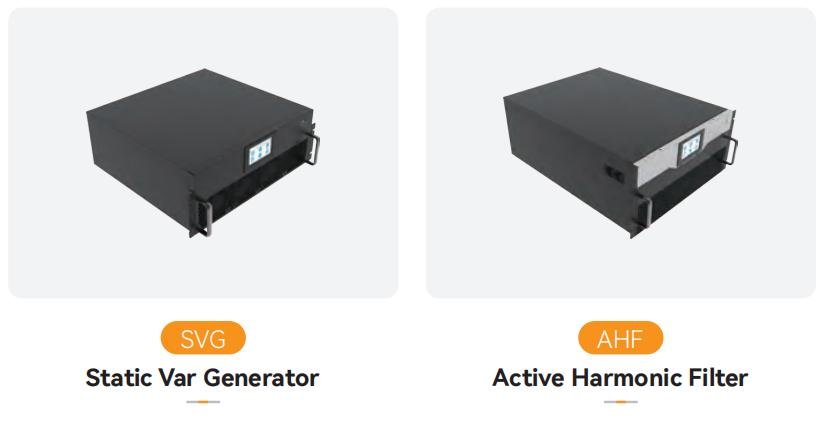
- Active Harmonic Filters (AHF) — designed to eliminate harmonic distortion
- Static Var Generators (SVG) — designed for dynamic reactive power compensation and power factor correction
Although these two devices are often discussed separately, the best industrial power quality strategy is usually to combine both technologies.
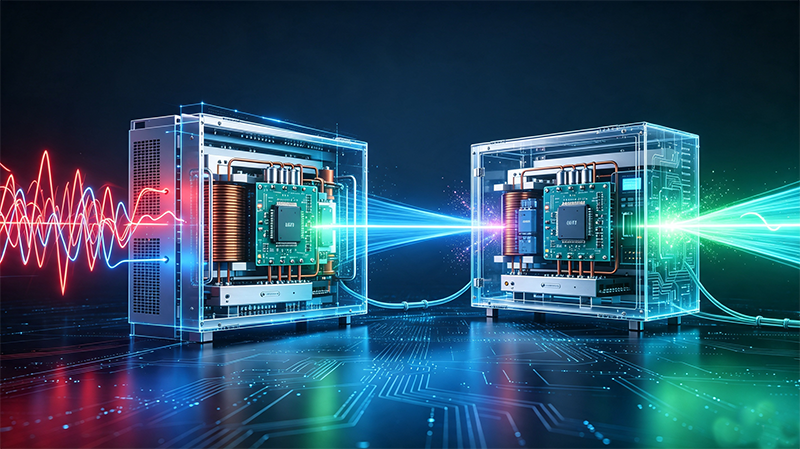
An Active Harmonic Filter + Static Var Generator solution provides comprehensive protection against harmonic pollution, reactive power issues, voltage instability, and energy losses.
In this article, I will explain why modern factories need both an Active Harmonic Filter and a Static Var Generator.
1. Modern Factories Are Facing More Complex Power Quality Problems
Traditional electrical systems were mainly designed for linear loads such as motors, heaters, and lighting systems.
Today’s factories, however, rely heavily on power electronic equipment, including:
- Variable Frequency Drives (VFDs)
- Servo drives
- UPS systems
- Welding machines
- Industrial robots
- Battery charging systems
- EV charging stations
- Solar inverters
- Rectifiers
Most of these devices are nonlinear loads, meaning they do not consume current in a smooth sinusoidal waveform.
Instead, they generate electrical disturbances such as:
- Harmonic currents
- Voltage distortion
- Low power factor
- Reactive power fluctuations
- Current imbalance
These problems affect the entire electrical distribution system.
A factory may experience:
- Transformer overheating
- Motor efficiency reduction
- Frequent circuit breaker trips
- PLC communication failures
- Production interruptions
- Higher electricity costs
This is why relying on only one power quality device is often insufficient.
2. Active Harmonic Filters Solve Harmonic Distortion Problems
What Are Harmonics?
Harmonics are unwanted frequency components that distort the normal electrical waveform.
For example, a clean AC power supply operates at the fundamental frequency, typically 50Hz or 60Hz. Nonlinear loads introduce additional frequencies such as:
- 3rd harmonic
- 5th harmonic
- 7th harmonic
- Higher-order harmonics
High harmonic levels increase Total Harmonic Distortion (THD), which can negatively affect industrial equipment.
Problems Caused by Harmonic Distortion
Excessive harmonics can cause:
Transformer overheating
Harmonic currents increase additional losses inside transformers, causing higher temperatures and reducing insulation life.
Cable overheating
Higher RMS current increases cable losses and may require larger cable capacity.
Motor problems
Harmonics create additional heating, vibration, and torque losses in motors.
Equipment malfunction
Sensitive equipment such as PLCs, automation systems, and communication devices may fail due to distorted power.
How Active Harmonic Filters Work
An Active Harmonic Filter (AHF) continuously monitors the electrical system and detects harmonic currents.
It then generates an opposite compensation current to cancel the unwanted harmonics.
The result is:
- Lower THD
- Cleaner current waveform
- Reduced electrical losses
- Improved equipment reliability
Compared with passive harmonic filters, Active Harmonic Filters provide several advantages:
- Real-time compensation
- Multiple harmonic elimination
- No resonance risk
- Suitable for changing industrial loads
- Easy system expansion
For factories with many VFDs, automation equipment, and electronic loads, AHF is an essential power quality solution.
3. Static Var Generators Improve Power Factor and Voltage Stability
While Active Harmonic Filters focus on harmonic problems, many factories also suffer from reactive power issues.
What Is Reactive Power?
Electrical equipment such as motors and transformers require reactive power to create magnetic fields.
Although reactive power does not perform useful work, it increases current demand from the grid.
Low power factor results in:
- Higher electricity bills
- Utility penalties
- Increased transformer loading
- Higher distribution losses
How Static Var Generators Work
A Static Var Generator (SVG) uses advanced power electronics to dynamically generate or absorb reactive power.
It automatically adjusts compensation according to load conditions.
SVG provides:
- Fast reactive power compensation
- Power factor correction
- Voltage stabilization
- Three-phase balancing
Unlike traditional capacitor banks, SVG responds instantly to load changes.
This makes it ideal for factories with rapidly changing loads, such as:
- Welding operations
- Cranes
- Rolling mills
- Injection molding machines
- Large motor systems
4. Why Factories Need Both AHF and SVG
A common misunderstanding is that installing either an Active Harmonic Filter or a Static Var Generator is enough.
However, they solve different electrical problems.
Active Harmonic Filter Addresses:
✔ Harmonic distortion
✔ High THD
✔ Nonlinear load pollution
✔ Equipment overheating caused by harmonics
Static Var Generator Addresses:
✔ Low power factor
✔ Reactive power demand
✔ Voltage fluctuation
✔ Load imbalance
A factory with only AHF may still experience high reactive power consumption.
A factory with only SVG may still suffer from harmonic distortion.
Therefore, combining both provides a complete solution.
5. Benefits of Installing AHF and SVG Together
1. Improved Equipment Reliability
Cleaner electrical power reduces stress on:
- Transformers
- Motors
- Switchgear
- Automation equipment
This extends equipment lifespan and reduces maintenance requirements.
2. Reduced Energy Costs
AHF reduces unnecessary harmonic current, while SVG improves power factor.
Together they reduce:
- Line losses
- Transformer losses
- Reactive power charges
Many factories achieve measurable energy savings after implementing power quality improvements.
3. Increased Production Stability
Unexpected downtime is one of the biggest costs for manufacturers.
Power quality improvements help prevent:
- PLC failures
- Machine shutdowns
- Control system errors
- Production interruptions
4. Compliance With Power Quality Standards
Many industrial facilities must meet power quality requirements such as:
- IEEE 519 harmonic standards
- Utility power quality regulations
- Industrial grid connection requirements
AHF helps reduce harmonic distortion, while SVG improves power factor performance.
6. Industries That Benefit Most From AHF + SVG Solutions
Based on our experience at CoEpower, industries with high-power electronic loads benefit significantly from combined AHF and SVG systems.
Typical applications include:
Manufacturing Plants
- CNC machines
- Automated production lines
- Robotics
Steel Industry
- Arc furnaces
- Rolling mills
- Heavy motors
Automotive Factories
- Welding systems
- EV production equipment
- Automated assembly lines
Data Centers
- UPS systems
- Server power supplies
- Sensitive electronic loads
Water Treatment Plants
- Pumps
- Variable frequency drives
- Motor control systems
Renewable Energy Projects
- Solar inverters
- Energy storage systems
- Grid-connected equipment
7. How to Select the Right AHF and SVG System
Choosing the correct power quality solution requires professional analysis.
At CoEpower, we recommend evaluating:
- Existing harmonic levels
- THD measurements
- Load characteristics
- Power factor
- Reactive power demand
- Transformer capacity
- Future expansion requirements
The correct solution depends on the actual electrical environment.
Oversizing equipment increases investment costs, while undersizing reduces effectiveness.
A professional power quality assessment ensures maximum performance and return on investment.
Conclusion: The Best Power Quality Strategy Is a Combination of AHF and SVG
Factories today cannot afford unstable electrical systems.
With increasing automation and the growing use of power electronic equipment, harmonic distortion and reactive power problems are becoming more common.
An Active Harmonic Filter and a Static Var Generator solve different but complementary problems:
- AHF eliminates harmonic pollution and reduces THD.
- SVG improves power factor, compensates reactive power, and stabilizes voltage.
Together, they create a cleaner, more efficient, and more reliable electrical system.
At CoEpower, we provide advanced power quality solutions designed for modern industrial applications. By combining Active Harmonic Filters and Static Var Generators, factories can reduce energy costs, protect valuable equipment, improve production reliability, and build a more efficient electrical infrastructure.
If your factory is experiencing high electricity costs, equipment overheating, frequent shutdowns, or unstable power supply, investing in an AHF + SVG solution can be the key step toward achieving better power quality and long-term operational efficiency.
Tags: Active Harmonic Filter, Static Var Generator, AHF, SVG, Industrial Power Quality, Harmonic Mitigation, Power Factor Correction, Reactive Power Compensation, Harmonic Distortion, THD Reduction, Factory Energy Efficiency, Electrical Power Quality Solution, IEEE 519 Compliance, Industrial Electrical System, suppliers, manufacturers, factory, company, China, wholesale, buy, price, quotation, bulk, for sale, companies, stock, cost.